A Goddess Arrives: Nineteenth Century Sources of the New Age Triple Moon Goddess

Abstract

The Triple Moon Goddess of contemporary Pagan and New Age thought is generally assumed to be an invention ex nihilo of the 20th century, with no precursor in classical antiquity, created by the poetic imagination of Robert Graves (1895-1985), with possible inspiration from the classicist and anthropologist Jane Ellen Harrison (1850-1928). However this hypothesis is incorrect. The Triple Goddess was presented in the 20th century before Graves. In addition, this paper is the first to reveal some astrological and esoteric as well as scholarly writings of the 19th century which presented and discussed a triple moon goddess from the ancient world whose identity would have been familiar to most educated men (and a few women) of the time.

Present-day Wicca and Goddess religion take as one of their central deities a threefold Moon goddess who is allegedly of great antiquity. In their influential book The Witches’ Way (1984), Janet and Stewart Farrar state ‘The concept of the Triple Goddess is as old as time; it crops up again and again in widely differing mythologies, and its most striking visual symbol is the Moon in her waxing, full and waning phases’.[i]

 The American witch Starhawk in her seminal book The Spiral Dance writes: ‘The Moon Goddess has three aspects: As She waxes, She is the Maiden; full, She is the Mother; as She wanes, She is the Crone’.2 Outside Wicca, Jungian analyst Nor Hall describes ‘the labyrinthine realm of the goddess, where the reigning trinity was feminine’, and claims: These [lunar] phases variously became associated with three weird sisters, three fates, or three goddesses who, when seen together, represented the life span of women from beginning to end.3 The founder of Wicca, Gerald B. Gardner, gives these three phases or aspects names: ‘She is often represented in ancient art as three figures in one, Artemis, Selene and Hecate. Artemis is the waxing moon, Selene the full moon, and Hecate the dark moon.4

The Triple Moon Goddess is thus claimed to be ancient and (by some authors) universal. Recent commentators, however, for example Michael York and Miranda Seymour, have attributed this goddess’s development specifically to the poetic imagination of Robert Graves (1895-1985), whose ‘historical grammar of poetic myth’ The White Goddess develops the Triple Goddess’s imagery in detail. Ronald Hutton adds that before Graves the poet and occultist Aleister Crowley had also described a triple moon goddess, and concurs with Miranda Seymour that Graves at least may have drawn on the work of the Cambridge academic Jane Ellen Harrison at the turn of the twentieth century.5 Since then we have learned more. The Triple Moon has a much more ancient provenance. In 2000 the present author published a lecture which identified descriptions of a triple Moon in passages by commentators from the ancient world, identified Jane Harrison’s explicit use of these in works not considered by the earlier commentators, and highlighted the role of Hecate, a triple goddess who was specifically linked with the triple moon in this context, as well as with both the murkier side of witchcraft and the exalted heights of mysticism. Parts of this were summarised by Ronald Hutton, together with his own findings, in his collection Witches, Druids and King Arthur, and in 2004 I published a further article investigating the astro-cosmological background to the development of the triple Moon deity in classical and late antiquity.6 This is a beginning, but the question of the importance or otherwise of the Triple Moon Goddess in the public, as opposed to the philosophical, religion of antiquity remains open, and in addition there has been no further investigation of earlier discussions of her in the modern period. Investigating the latter question sheds some light on the former.
Ancient scholiasts and the Triple Moon

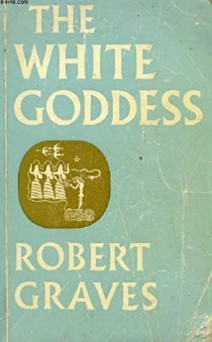
In The White Goddess and other works, Graves claims that all goddesses are patterned on the White Goddess archetype. He speaks of her (named after Leukothea, a sea goddess worshipped widely in the Greek maritime colonies) as if she were all goddesses and he identifies her with the moon, saying ‘the New Moon is the white goddess of birth and growth; the Full Moon, the red goddess of love and battle; the Old Moon, the black goddess of death and divination’.6a The harsh, destructive side of the Moon’s symbolism is regularly present in Graves’ writings and is traced by him to English vernacular tradition. Two of his early poems, I Hate the Moon (1915) and The Cruel Moon (1917), attribute to his nurse the belief that ‘the look of the Moon drives people mad’, and references to ‘the horrible strong stare’ of that celestial body recur throughout his poems. Nevertheless, as we shall see, the symbolism of the waning Moon as a cruel goddess was current long before Graves or his nurse. The White Goddess reads as an inspired work interpreting mythological themes both projectively into their use for the practising poet and retrospectively into speculations about the nature of prehistoric religion. Although Graves’ assumptions about prehistoric matriarchy and sacrificial religion were conventional enough at the time, 7 his specific illustrations, for example, the notorious ‘tree alphabet’, and his interpretations of the underlying meaning of historically documented rituals, such as the coronation of the medieval Irish king who bathed in mare’s broth,7a were not. Yet although The White Goddess is a work of interpretation rather than a historical textbook, it still invites historical questions about the extent to which the Triple Moon Goddess figured in the common imagery and interpretation of antiquity. How similar was Graves’ presiding deity to any goddess known from the ancient world?

Graves describes the White Goddess most fully in chapter 22, ‘The Triple Muse’. Here, he cites a precedent from the Renaissance, a poem by the Tudor poet John Skelton, a pioneer of the new Classical learning which was infiltrating the universities at that time, whom Erasmus called ‘the first scholar in the land’, that is, in England.8 This poem, The Garland of Laurell, written in 1523, conjures a spirit:

by these names three:

Diana in the woodes green,

Luna that so pale doth sheen,

Proserpina in Hell.

Graves adds that these three names refer to but a single goddess. He continues:

As Goddess of the Underworld [Persephone] she was concerned with Birth, Procreation and Death. As Goddess of the Earth [Diana] she was concerned with the three seasons of Spring, Summer, and Winter: she animated trees and plants and ruled all living creatures. As Goddess of the Sky she was the Moon, in her three phases of New Moon, Full Moon, and Waning Moon … As the New Moon or Spring she was girl; as the Full Moon or Summer she was woman; as the Old Moon or Winter she was hag.8a

Graves’ equation of this goddess with the three ages of woman is, he says, derived from the ‘Triple Goddess, as worshipped for example at Stymphalus’, that is, Hera, who had three temples there where she was worshipped as a girl, as a married woman and as a widow; Graves cites Pausanias, the second century BCE author of an extant ‘Description of Greece’.8b

As a competent classicist, a product of the normal education of a young gentleman in the early twentieth century, Graves’ poetic talent was trained in the composition of Latin and (to a lesser extent) Greek verse. His version of the Argonautica, his translation of Apuleius’ Golden Ass, his accounts of the Greek and Hebrew myths9 are exhaustively researched, albeit embellished, and later, in The Greek Myths, published seven years after The White Goddess, he meticulously lists the ancient sources of his information and interpretations. He is not likely to have invented these interpretations out of thin air. The identity of Luna, Diana and Proserpina had in fact been given long before Skelton by one of Graves’ ancient sources, the fifth-century commentator Servius. Glossing Vergil’s Aeneid IV 511, which mentions ‘triple Hecate, the three faces of the virgin Diana’. Servius comments: ‘When [Diana] is above the earth she is believed to be Luna; when on earth, Diana; when below the earth, Proserpina.’ Servius’ commentaries were available in Skelton’s day, and a paraphrase of this passage even appears as a note to modern school editions of the Aeneid, which implies that it has been a standard interpretation for some time.10 Graves mentions Servius and other commentators (as well as the Greek magical papyri) in his footnotes to The Greek Myths (for example chapter 31, ‘The Gods of the Underworld’), in which he also observes that Hesiod’s account of Hecate (in the Theogony 411-52) shows her to have been ‘the original Triple-Goddess, supreme in Heaven, on Earth and in Tartarus’.
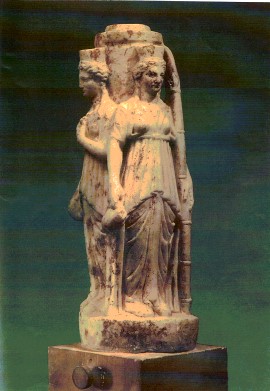
(From N. Papamatzis, Ancient Corinth, Ekdotike Hellados, Athens, 1978)

Graves’ further comments on these three levels of lunar rulership (heaven, earth and underworld) amalgamate several ancient sources. Those on the first and last levels are straightforward. Continuing his explanation of the Triple Moon in the Aeneid IV 511, Servius continues, ‘to the one goddess people assign the powers of birth, active life and death’. He does not identify that goddess specifically with the underworld goddess Proserpina, as Graves does, but with the Moon. We should note however that birth, active life and death are the powers of the three Fates, who will appear in what follows. Concerning the celestial level, a goddess of the sky identical with the three phases of the Moon is described in many philosophical commentaries, e.g. Cornutus on Theocritus’ Idylls 2.12 (a different section of which is quoted by Graves in The Greek Myths 31), but not for the phases given by Graves. The ancient scholiasts’ phases are explained as the crescent, half and full moon, not the waxing, full and waning phases. However every classically-trained schoolboy would have known that waxing, full and waning lunar phases were recognised in the ancient Greek calendar. This was measured by the lunar month, divided into three ten-day phases beginning at the new moon. These phases were actually called ‘waxing’, ‘middle’ and ‘waning’ (as in Hesiod’s Works and Days 819-21), which gives all three instances of the fourth day of each ten-day period (called ‘decanate’ in the remainder of the present paper). At a fundamental level then for the ancient Greeks the moon was the month and was divided into three equal phases. 

J.E. Harrison: the Moon as mother of the Seasons

Graves’ version of the waxing full and waning moon draws not only on these sources, who are listed in the footnotes to The Greek Myths, but also, it seems, on an early twentieth-century commentator, as we see when we investigate his middle image, that of the goddess Diana as spring, summer and winter, the three seasons of the ancient Greek year. A link between the decanates of the triple month and the three seasons was offered by Jane Ellen Harrison, who is indeed proposed by Seymour and Hutton as a major influence on Graves. Her theory is found not in Prolegomena to the Study of Greek Religion, where it is sought by these researchers, but in her even more influential book Themis. Here Harrison claims explicitly that triple goddesses such as the Fates, Charities and Hours (i.e. Seasons) are derived from the triple Moon and she links them with the triple Hekate as the latter’s attendants. In two rather dense passages she states (the interpolations in square brackets are mine):

The triple Charites who dance round the column [of Hekate in the museum at Prague] are triple because of the three phases of the Moon. . . . The Horae or seasons of the Moon, her Moirae, are preceded by the earlier Horae, the Seasons of Earth’s fertility: at first two, spring for blossoming, autumn for fruit, then under the influence of a moon-calendar three.11

The three Horae [Seasons] are the three phases of the Moon, the Moon waxing, full and waning … the Moon is the true mother of the triple Horae, who are themselves Moirae [apportionments, Fates], and the Moirae, as Orpheus tells us, are but the three moirae or divisions (mere) of the Moon herself, the three divisions of the old Year [already explained by Harrison as the lunar month: Servius: Aeneid V 284]. And these three Moirae or Horae are also Charites.12

In The Greek Myths Graves offers what is effectively a paraphrase of the second passage, with an additional gloss on the three ages of woman:

The Moerae, or Three Fates, are the Triple Moon-goddess … Moera means ‘a share’ or ‘a phase’, and the moon has three phases and three persons: the new, the Maiden-goddess of the spring, the first period of the year; the full moon, the Nymph-goddess of the summer, the second period; and the old moon, the Crone-goddess of autumn, the last period.12a
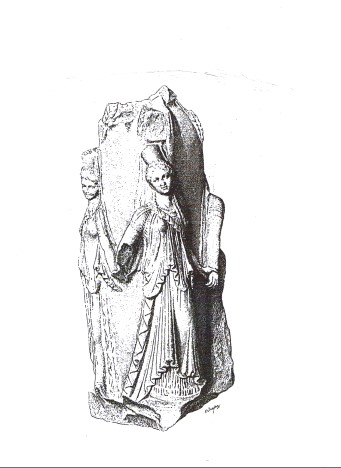
The Three Graces dancing round a (headless) statue of Artemis/Hekate Epipyrgidia

Since Graves tells us (in the introduction to The Greek Myths) that he had read Harrison’s Prolegomena at least, these two passages suggest that he had also read Themis and borrowed directly from its author, particularly in his linking of the moon’s phases with the seasons. Their association with the three stages of a woman’s life is alluded to not only in The White Goddess (see above) but also in Graves’ introduction to The Greek Myths,13 where he introduces the three phases of the moon as, once more, the three ages of woman and the three seasons of the year, also as the three levels of air, earth and sea with their three presiding goddesses, as in Servius above, and ends with a reference to their attribution to a single goddess in the three shrines of Hera at Stymphalus. If Graves was not actually drawing on this passage in Harrison’s work, he appears to have read the same ancient authors and drawn exactly the same conclusions.

Jane Harrison’s own assertion is referred by her to the Orphic commentators of antiquity. Texts attributed to Orpheus, the legendary poet and musician who may or may not have lived in the unchronicled age before the Trojan War, were claimed as inspiration by religious and philosophical sects from the sixth century BCE onwards, with a major burst of composition during the first two centuries of our era. This latter period was itself a time of syncretism and the systematisation of previously unrelated cults, but the process had been going on among scholars at least since Ptolemy I of Egypt founded the great library at Alexandria around 300 BCE. It is from this earlier period that Harrison’s footnoted reference to Orpheus comes. She refers the reader to Epigenes, a Greek grammarian who was active in the third century BCE.14 Epigenes is quoted by the 2nd-century Christian martyr Clement of Alexandria as reporting that Orpheus ‘said the Fates are … divisions of Selene: the thirtieth and the fifteenth and the first [literally “the new moon”]’.14a In other words, the days (or longitudinal degrees, another meaning of moira) of the New Moon, Full Moon and Dark Moon, the first, middle and last day of each of the three decanates of the 30-day lunar month described above, are equated to the Spinner, Measurer and Cutter of the thread of life, the three Fates. (The ancient calendrical and astrological theories which formed the background to Epigenes’ interpretation are discussed in my 2004 article; see footnote 6.)

Here then is our threefold Moon of the waxing, full and waning phases, and here is her link to triads of goddesses such as the Fates and the Graces. Harrison’s second footnote to the passage in Themis refers us back to an earlier book, Mythology and Monuments of Ancient Athens (1890), in which she discusses the joint worship of the three Graces and ‘Hekate the Moon’, although, as she tells us in Themis, ‘I did not then see that the triple form had any relation to the Moon’.15 In this earlier study she links the Graces not with the Fates, the three stages of human life, but with the Seasons, which in Greece were also triple. Later, in Themis, two pages after the passage quoted above, Harrison emphasises the likely importance and antiquity of the worship of the Moon ‘in her triple phases’ from Cretan times on, and later asserts that ‘Moon-elements are found in nearly all goddesses and many heroines’.16

Jane Harrison’s writings, then, are a clear prototype of some passages in Graves’ work. Moreover, both authors refer to ancient texts which explicitly state the existence of a Triple Moon Goddess who is also identified with three other goddesses of independent origin. It was not only professional academics who drew attention to the composite lunar deity, however. The esoteric current of the late nineteenth century also knew of the Triple Moon.

Astrologers and mystics: the esoteric tradition

A similar figure to the Graves’ Triple Goddess had been described fifteen years earlier by the magician, poet and novelist Aleister Crowley (1875-1947) in his own novel Moonchild:

For she [i.e. the Moon] is Artemis or Diana, sister of the sun, a shining Virgin Goddess; then Isis-initiatrix, who brings to man all light and purity, and is the link of his animal soul with his eternal self; and she is Persephone or Proserpine, a soul of double nature, living half upon the earth and half in Hades … and thirdly she is Hecate, a thing altogether of Hell, barren, hideous and malicious, the queen of death and evil witchcraft.17

These are three of the usual goddesses, plus a fourth, Isis, herself most famously described as the Moon in the second-century novel by Apuleius, the Metamorphoses, or The Golden Ass. A note to the first edition of Moonchild states that the novel was written in 1917, when the author was in America, and indeed a very similar passage appears in the unfinished Treatise on Astrology (Liber 536), which Crowley wrote also, in collaboration with the American astrologer Evangeline Adams, in 1917-18 but which was not published until 1974, long after his death, and so is unlikely to have been available to Graves and Gardner. (According to Crowley’s diaries, Gardner met with Crowley on three separate days in May 1947 and discussed not the Moon Goddess but the establishment of a branch of the latter’s magical order, the OTO, in Britain. Gardner met Graves only in January 1961, after the publication of The White Goddess and of Gardner’s books and magical rituals, when he and the Sufi writer Idries Shah came to visit Graves in Majorca.18) Crowley’s passage runs:

One of the favourite epithets of the Moon-Goddess among the Romans was Trivia, she of the three ways, because she had three forms. She is woman, both as mother and as child … There is however a certain sinister aspect of the life of a woman to understand. … Among superstitious peoples, [the embittered post-menopausal woman] would . . . obviously acquire the reputation of being a witch. The waning moon was, therefore, taken as the symbol of every kind of devilry. She is Hecate, the Queen of the Stryges. A good modern picture of this idea is given in “Macbeth”.19

Crowley too was a poet of some ability and great learning, like Graves thoroughly competent in the ancient classics but equally a creative writer rather than a scholarly analyst. He read Hebrew and Persian as well as Latin and Greek,20 and was familiar with the literature of these languages, as a glance at his opus will demonstrate. His early poem Orpheus: a Lyrical Legend (1905) displays a formidable grasp of versification; he wrote an account of the voyage of the Argonauts (as did Graves) as also of the legends of Osiris, of Ahab and of Jezebel; and, looking forward to the creation of a new Irish republic, he named one of his poems after Horace’s Carmen Saeculare, the festival ode with which the emperor Augustus inaugurated the Roman ‘New Republic’ in 17 BCE. Quotations and adaptations from the works of ancient authors pepper his texts.21 With this background, Crowley’s description of his lunar goddess, like that of Graves, is likely to be drawing directly on ancient originals.

Crowley’s identification of the moon with womanhood is however partly a modern phenomenon. As Hutton has demonstrated in detail,22 the symbolism of the Moon Goddess became increasingly prominent in European art and literature from the Renaissance onwards, gaining strength as a counter-cultural image after the Enlightenment. In English literature indeed she ousted the native Sun Goddess. Milton’s lines from the mid-seventeenth century:

For yet the Sun

Was not; shee in a cloudie Tabernacle

Sojourn’d the while,22a

could not have been written fifty years later. During the Enlightenment, the Moon Goddess began to be seen as the archetype of Woman.

Crowley’s comments in Moonchild and the Treatise on Astrology, to the effect that the Moon is Woman, are however also consonant with an astrological commonplace, going back to the earliest astrological texts from the ancient world. The Roman poet Manilius in his Astronomica (c. 9 BCE) describes the third and ninth houses of the horoscope as complementary realms, called “Goddess” and “God”, the abodes of the Moon and the Sun respectively. The Moon, the poet tells us, also “mirrors what is fated in the fading edges of her face”, recalling Epigenes’ identification of the three Fates with the Moon’s successive phases.22b Later the astrologer Ptolemy, writing in the second century CE, tells us:

since there are two primary kinds of natures, male and female, and of the forces already mentioned that of the moist is especially feminine … the moon and Venus are feminine, because they share more largely in the moist.22c

In medieval and early modern astrology the Moon primarily signified women, and this has continued into modern psychological astrology.23 Crowley’s description of the Moon as a threefold being, by contrast, is not part of mainstream astrology, despite Manilius’ gentle hint. Nor is Crowley’s emphasis on the Moon’s baleful influence, reiterated in his and Adams’ section on Neptune and the Moon:

Venus has a certain ease and jollity: the Moon is cold, dim, mother of illusions … Alone she is but the planet of witches; strange beasts prowl in the darkness; poisoners gather their deadly herbs beneath her as she wanes … in combination [Neptune and Luna] bring the maximum deviation from balance, and all unbalanced force is evil.

His American co-author Evangeline Adams, in her own later book Astrology, Your Place Among the Stars, omits both Crowley’s threefold imagery and his negative attitude. She names the Moon ‘Selene, or Diana, or Luna’, and describes her as ‘complete woman, in all phases, untouched by male caresses’. But these three names are used practically as synonyms, with no reference to Proserpina or Hecate, and Adams goes on only to describe two phases, the waxing phase (‘the child, innocent and receptive … also huntress like her brother Apollo’), and the full moon (‘glorious … She is now Sophia, the Virgin Wisdom of the Father’). Madness and infatuation are ascribed by Adams to the waxing moon, but only in response to an impious approach by the human seeker, and the prevailing tone of her whole description is rapturous and positive.24 So is Crowley’s jaundiced attitude and emphasis on a threefold astrological Moon merely the product of his own background and imagination?

Of his background, certainly, but not necessarily in the psychoanalytic sense. Crowley trained as an occultist in the Golden Dawn, which he joined in November 1898. The training manuals of the Golden Dawn at the time included a brief coverage of astrology,25 and published versions include, in the Third Knowledge Lecture, a reference to that luminary’s three phases ( ‘In its increase [the Moon] embraces the side of Mercy; in its decrease the side of Severity, and at the full, it reflects the Sun of Tiphereth’)26 and a possible allusion to triplicity in the assignation of the triple number 369 to ‘Chasmodai, the Spirit of the Moon’. 27 More important however is the fact that the Golden Dawn, founded in 1888, came into being some thirteen years after, and partly in response to, the Theosophical movement of Helena Petrovna Blavatsky (1831-89). One of the founders of the Golden Dawn had allegedly turned down Mme Blavatsky’s offer to co-found the Theosophical Society with her, and in their early years the two organisations had members in common.28 Israel Regardie, the great exponent of Golden Dawn teachings from the 1930s on, as well as sometime secretary to Crowley, regularly refers the reader to Blavatsky’s writings, and Crowley himself published her mystical work The Voice of the Silence in his own periodical The Equinox (III, 1). Blavatsky’s work permeated the occult circles of the late 19th and early 20th centuries; her synthesis of Oriental and Western mystical doctrines, published in Isis Unveiled (1877) and The Secret Doctrine (1888), as well as the work of the Theosophical Society, laid the foundation for twentieth-century New Age spirituality and stimulated existing magical lodges to reformulate their teachings in response to hers.

Here is where we find unambiguous reference to the malevolent Triple Moon. For Blavatsky, writing about esoteric systems generally rather than the specifically astrological, the Moon was:

“the cold residual quantity, the shadow dragged after the new body [the Earth], into which her living powers and ‘principles’ are transfused. for she is a dead, yet a living body. Constantly vampirised by her child, she revenges herself on it by soaking it through and through with the nefarious, invisible and poisoned influence which emanates from the occult side of her nature … The particles of her decaying corpse are full of active and destructive life, although the body which they had formed is soulless and lifeless. Therefore its emanations are at the same time beneficent and maleficent – this circumstance finding its parallel on earth in the fact that the grass and plants are nowhere more juicy and thriving than on the graves; while at the same time it is the graveyard or corpse-emanations which kill. And like all ghouls or vampires, the moon is the friend of the sorcerers and the foe of the unwary.”29

This jaundiced view is presented as a scientific description of the physical nature of the Moon. The satellite’s ‘metaphysical and psychic nature’ is kept as ‘an occult secret’ (ibid.), but it may perhaps be guessed at from Blavatsky’s description of lunar symbolism:

For the ‘Fathers’ – such as Origen or Clemens Alexandrinus [elsewhere described as initiates of the pagan temples – PHJ] – the Moon was Jehovah’s living symbol: the giver of Life and the giver of Death, the disposer of our being … For, if Artemis was Luna in heaven and, with the Greeks, Diana on earth, who presided over child-birth and life: with the Egyptians, she was Hekat (Hecate) in Hell, the goddess of death, who ruled over magic and enchantments. More than this: as the personified moon, whose phenomena are triadic, Diana-Hecate-Luna is the three in one. For she is Diva triformis, tergemina, triceps – three heads on one neck [footnote: “The goddess Trimorphos in the statuary of Alkmenes”], like Brahma-Vishnu-Siva. Hence she is the prototype of our Trinity, which has not always been entirely male.30

Here then is the threefold Moon of antiquity, presented in a standard text of the nineteenth-century occult revival, earlier than Harrison’s writings, with references to commentators both ancient and modern. In this passage Blavatsky refers to the poet, journalist and amateur Egyptologist Gerald Massey (1828-1907); elsewhere to the ancient authors Damaskios, Porphyry and Hesiod, and to the eighteenth-century Cambridge Platonist Thomas Taylor.31 As the passage above demonstrates, Blavatsky’s work is a polemic rather than a critical study, yet it is a polemic based on wide critical reading or discussion. Who were her informants? It turns out that Jane Harrison was far from being an isolated thinker. When we turn to academic theories contemporary with Blavatsky and the Golden Dawn, we find the Threefold Moon Goddess traced – and debated – in detail.

A nineteenth-century link? Diana Nemorensis

One ancient example of a triple Moon goddess achieved great prominence in the English-speaking world at the turn of the twentieth century. The monumentally influential work of Sir James Frazer, The Golden Bough, expanding through three editions between 1890 and 1912, made a Roman triple Moon goddess and her priest-king into the paradigm image of archaic, prehistoric religion for the twentieth century. All three editions of Frazer’s work open with the same vivid description of the grove of Diana Nemorensis, Diana of the Woodland Glade, whose shrine lay in the Alban Hills within sight of Rome. Although Frazer does not mention the fact, every classical scholar and public schoolboy would have known that this particular Diana was known by classical times as a goddess of the Moon who was three in one. As Crowley observes, she was surnamed Trivia: ‘She of the Three Ways’.

Poetic references to the threefold Diana from the ancient world which would have been familiar to all educated people (thus Graves and Crowley) in the early twentieth century include the first century poet Martial, congratulating the emperor Domitian on his property: ‘From here (the Alban hills) you can see Trivia’,31a and mentioning the ‘kingdom of Trivia of the grove’.31b Horace describes her as ‘thrice invoked … a triple goddess’,31c and Virgil in the Aeneid VII 516 calls Lake Nemi, known as the ‘mirror of Diana’ in her grove, ‘Trivia’s lake’.31d The epithet Trivia, a translation of the Greek Trioditis, ‘She of the Three Ways’, is properly used not of Diana but of Hekate, whom Graves mentioned as the original Triple Goddess. As we have already seen, Hekate, an Anatolian goddess known from earliest times in Greece, was associated there with three roads (perhaps originally the three celestial ‘Ways’ of heaven, earth and underworld), as well as with death, harmful magic and the underworld. By the first century BCE, the ‘Golden Age’ of Latin literature with which nineteenth-century schoolboys were generally familiar, the name ‘Trivia’ retained sinister overtones but was regularly used of Diana and of the Moon generally, not simply of Hekate or even of Diana Nemorensis. Catullus, in a poem to Diana, first apostrophises her in her familiar form as maiden, daughter of Jove and Latona, mistress of mountains, woods, chasms and other wild places, then adds: ‘You are called Juno Lucina by women suffering in childbirth, you are mighty Trivia and by its familiar light are called the Moon; you, Goddess, measur[e] the monthly course of the year.’31e Likewise equating Diana with Trivia and the Moon, the learned Varro, Catullus’ contemporary, speculates how ‘Titan-born Trivia is Diana, and she is called Trivia … perhaps because she is said to be the moon, which moves along three paths in heaven: in altitude, latitude and longitude.’31f Here then is Diana, in literature with which all well-read Victorian gentlemen would be familiar, as a triple Moon goddess. She is seen the as goddess of three ways and equated with the moon, but she is not specifically identified with the waxing, full and waning Moon.

The Roman poets knew, although Graves and Crowley would not have known, that Diana at her temple in the grove was actually portrayed as triple. At the very time that Graves was producing his final revision of The White Goddess, archaeologists were in the process of identifying the goddess of Nemi’s image at the site. The temple image, as imagined or recorded on a series of coins minted in 43 BCE at Aricia, had the form of three figures standing side by side, linked together by a crossbar in an archaic design typical of the fifth century BCE. Each figure carried the attribute of a particular goddess: a bow for Diana, a poppy for the moon goddess Luna, ruler of sleep, or perhaps for Hekate, and an indistinct object, possibly a pomegranate, for the underworld goddess Hekate or Proserpina. In the imagination of coiners and possibly in the temple image itself, it thus seems that Diana Nemorensis was indeed portrayed, at least in the first century BCE, as the trinity described by the scholiasts and later by Skelton as Diana/Artemis, Luna/Selene, and Proserpina/Hekate.32 Luna and Hekate/Trivia are identified with Diana in the texts above, and we have already seen Servius’ much later explanation, c. 400 CE, of another contemporary reference, that of Virgil in the Aeneid IV 511 to the vengeful Dido invoking ‘triple Hecate, the three faces of the virgin Diana’.32a
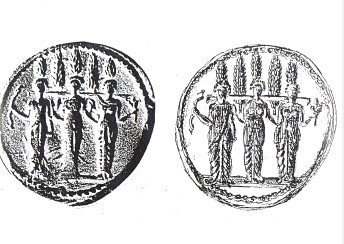
(The Lariscolus coin image is from Alfoldi 1960)

Here then is another available inspiration for Graves’ and Crowley’s Triple Moon Goddess, and interestingly, when Gerald Gardner’s witch religion was challenged in the 1960s by a rival contender, the latter adopted the very title of the priest of Diana at Aricia: Rex Nemorensis. 33 The implication is that he was re-enacting the ritual combat described by Frazer as conferring the priesthood of the grove. To gain this each contender, usually a runaway slave with little to lose, had tear a branch from a sacred tree in the grove and then fight the existing holder, known as the King of the Grove, rex nemorensis, to the death. Yet whatever might later have become the case in Gardner’s witch cult, Diana Nemorensis does not figure as the prototype of Graves’ Triple Moon Goddess. Graves refers to her in The White Goddess33a and briefly mentions her feast-day on the Ides of August (itself described by Statius, another poet of the Golden Age, in his Silvae, referring to the ‘Aricinian grove of Trivia’33b), but does not discuss her triplicity and uses a late source, the fifth-century CE poet Commodianus, to identify her with Nemesis, the Greek goddess of retribution. Chapters 101 and 116 of The Greek Myths give the origin myth of the holy site at Aricia, specifically identifying the bloodthirsty Artemis of Taurus, the supposed prototype of Diana Nemorensis, with Hekate and adding ‘to the Latins she is Trivia’ (with a reference to Servius).33c Thus we have the equation of a particularly savage version of Artemis with the Greek Nemesis and Hekate and with Diana Trivia in her grove at Aricia, but neither of these chapters mentions the three phases of the Moon. Chapter 31, identifying Hekate on Hesiod’s authority as ‘the original Triple Goddess, supreme on heaven, on earth, and in Tartarus’,33d adds that the Greeks had emphasised her destructive qualities at the expense of her beneficent ones and made her into the queen of the (destructive) witches and companion of Proserpina the underworld queen. Graves therefore does not present Diana Nemorensis as the prime image of his triple goddess of the waxing, full and waning Moon, but as a being of savagery who is only incidentally triple.

Frazer too emphasises not the Aricinian goddess’s triplicity but her savagery, suggesting that this is a primeval form of religion. He refers to Virgil’s description, in Aeneid VI 136, of the ‘golden bough’ which the mythical ancestor of the Roman ruling family, Aeneas, was obliged to offer to Proserpina the underworld queen,33e and which Servius says was the same bough that featured in the ritual combat which characterised Diana’s priesthood and which Frazer presents as the opening image of his book. It was this bloody combat, and not the threefold nature of Diana, which drew Frazer’s attention. Frazer intimated that the ‘king’ and his office were an example of ‘primitive’, magical religion which had somehow persisted unchanged into a civilised age.34 The priesthood of Diana Nemorensis was in a sense to be taken as the paradigm of all priesthoods, an early model of pre-civilised humanity, and Diana herself was thus available be seen as the prototypical ancient goddess. Yet Frazer did not even mention Diana Nemorensis’ triple nature. He stresses her role as a goddess not of the Moon but of wild Nature, of healing and midwifery, and as patroness of prisoners and slaves: a powerful counter-cultural image. He dwells on the bloodthirstiness of her priesthood and her apparent origin as a Great Goddess in Asia, presiding over fertility but not marriage, worshipped with orgiastic rites and paired with a subordinate god who in Sparta, for example, was called Karneios, a name which seems to have produced variants in modern Wicca.35 Indeed, later in The Golden Bough Frazer’s model of a many-faceted Great Goddess is not triple but dual, not lunar but chthonic, that of the corn-mother Demeter and her daughter Kore or Persephone.36 All these features resurface in present-day Pagan nature-worship, but with the addition of the goddess’s triple nature as recorded by the Roman poets and presumably thought by them to be archaic, the sanctuary ‘sacred to an ancient rite’ as Ovid has it in his Fasti36a.

The Golden Bough then does not offer a direct clue to the re-emergence of the Triple Moon Goddess, but the wide-ranging impact of Frazer’s central image, the bloodthirsty ritual of Diana of Aricia, may well have reminded Edwardian classicists of that goddess’s triple nature. In any case, Graves does not present his Triple Moon as an established goddess of Roman or even Greek religion, but as a dimly-glimpsed shadow from the Stone Age, whose worship had been distorted (according to the archaeological orthodoxy of the time) by patriarchal invaders attacking late Minoan culture.37 The present investigation does however suggest that that the Moon goddess acquired increased importance during the late Republic and early Empire in Rome. As we have seen, a poem from that period, the Astronomica of Marcus Manilius, hints at soli-lunar duotheism, describing how astrologers allot ninth house activity to ‘the God’, who is the Sun, and the opposite third house to ‘the Goddess’, the Moon, though she is not in this case a triple being (see note 22b). At the inauguration of his ‘New Republic’ at the Secular Games in 17 BCE, the emperor Augustus had inaugurated the worship of Apollo (as Sun god) and Diana (as Moon goddess) as the prime celestial deities, apparently dominating the traditional deities of Rome and of Olympus. In addition it is also from the early Common Era that the first astrological commentaries on the identity of Luna, Diana and Hekate/Proserpina come. These clues require fuller investigation separately, but as far as precursors of Graves are concerned, Franz Cumont, who in 1912 published a series of lectures on astral religion in the ancient world, was of the opinion that by the early third century CE this stellar philosophy, originally the preserve of a few intellectuals, had become the all-pervading theology of the Roman Empire. Graves, according to his own boast, had certainly read much of the literature of later antiquity, if not Cumont’s lectures themselves.38 In the same way, the process by which in fifth-century Athens links were forged between Artemis, the prototype of the triple goddess of Nemi, Selene, Hekate and Persephone, would seem less self-evident than is normally supposed. 39 To develop these topics would however be a diversion from the present subject, the nineteenth-century precursors of Graves.

Scholarly sources: the German encyclopaedists

Jane Harrison’s own sources, credited in her footnotes and acknowledgements, are the academic commentators, particularly the German researchers, of the previous fifty years. The great scholarly compendia of the nineteenth century, dictionaries of classical antiquity which continue to be used as reference works today, debated the issue with some gusto. Here we find many prototypes of the twentieth-century Triple Moon Goddess. Harrison’s own argument that the Charites are triple under the lunar rulership of Artemis-Hekate, which she refers to ‘the mythological acumen of Dr Robert … from whom the whole of this view is taken’, had also appeared in W.E. Roscher’s lexicon of Greek and Roman mythology.40 In these discussions the triple goddess is generally seen as Hekate rather than Luna or Artemis, though not invariably. Thus Roscher’s Lexikon explains the image of the waxing, full and waning Moon as the three faces of Hekate, although Preller-Robert’s Griechische Mythologie dismisses the lunar interpretation of Hekate’s three faces as an invention of the philosophers of late antiquity but still sees Artemis as primarily a Moon goddess rather than, as present-day scholars generally believe, a goddess of the wilds.41 Other commentators such as Pauly and Wissowa and the Oxford classicist L.R. Farnell stood out against the lunar interpretation of both goddesses, seeing Artemis primarily as a deity of agriculture and fertility, attributing her lunar rulership essentially to the poetic imagination of the Roman writers of the Golden Age quoted above, and seeing Hekate as primarily the triple goddess of heaven, earth and underworld, or rather sea, described by Hesiod.42 Two extended articles require special mention. In 1880-1 Eugen Petersen’s three-part article ‘The Triple Hekate’ in the Archäologisch-Epigraphische Mittheilungen aus Oesterreich 43 exhaustively surveys the then-extant triple statues from the ancient world, the Hekataia, catalogues them by salient features and discusses their interpretation by ancient commentators, including Hekate’s association with various triads of goddesses, lunar phases and calendar decanates, three-way junctions and cosmic strata that we have already encountered above. Petersen writes of Hekate and Artemis throughout as Moon goddesses. His discussion of the triads of maidens dancing around some triple Hekataia, the impossibility of deciding whether they are Nymphs, Hours or Charities, and the association of these and the Muses with ecstasy, mania and prophecy,44 anticipates some of Harrison’s and Graves’ themes, as does his attempt to interpret the images on the robe of the Hekate of Hermannstadt in the third of his articles, which Harrison also attempted in Mythology and Monuments.45 Petersen’s line drawings of the Hekataia are reproduced facsimile by Harrison and credited as such by her.46 The other article, also cited by Harrison, is that on ‘Triplicity’ by Dr H. Usener (1902-3), 47 again a systematic overview but this time of triads of deities from a wide range of cultures. Its third section includes an investigation of the alleged development of Hekate from a double to a triple form, supposedly occasioned by the increasing importance of the concept of triplicity and thus the introduction, at an unspecified date, of the triple lunar month, which ‘unavoidably affected the depiction of the Moon Goddess and led to her three-bodied form with its resultant manifestations’.47a Here once more a triple Moon Goddess is taken for granted, is identified primarily with Hekate and is explained with reference to the three decanates of the lunar month, the waxing, full and waning moon, and later47b to the other triplicities given by the poets and their scholiasts.

These examples demonstrate the existence of an extensive discussion in the nineteenth century, long preceding Robert Graves, of the nature of a triple Moon-goddess already familiar from the images, poetry and philosophy of antiquity.

What was its impetus? As mentioned above (p.10), an interest in the Moon Goddess as a romantic symbol of femininity had been growing throughout the modern period in western Christendom. Interest in triple deities may also have been linked with the new Biblical scholarship of the time, placing Hebrew and New Testament religion within the same historical and anthropological spectrum as other religions, with the result that for example Usener could confidently assert, ‘The Christian dogma of the Trinity of God the Father, Son and Holy Ghost was not revealed, but developed and grew under the influence of the same internal pressures whose effects we have seen among the religions of antiquity,’ a conclusion which is now accepted historiography.48 In the preface to the second edition of Themis in 1928, Jane Harrison observed that the present generation of scholars, to her great relief, took almost as ‘matter of historical certainty based on definite facts’ the ‘heresies’ which she had proposed and which had seemed ‘rash’ to her colleagues at the turn of the century. These included ‘that gods and religious ideas generally reflect the social activities of the worshipper’ and ‘that the Great Mother is prior to the masculine divinities’.49 These were the orthodoxies which Robert Graves took for granted.

The Triple Goddess takes definitive form: Briffault, The Mothers

However the first systematic presentation of the Triple Moon Goddess in the twentieth century was not made by Robert Graves but, so it would appear, by Robert Briffault in his three-volume set The Mothers, some 2100 pages of text published in 1927, over twenty years before The White Goddess.50 Here we see all the main features of the New Age Triple Moon Goddess, particularly encapsulated in chapter xix, ‘The Witch and the Priestess’, and chapter xx, ‘The Lord of Women’. The Moon deity, at first a god, later a goddess, is here said to be a feature of primitive matriarchy, part of a religion which ‘in its primitive stages is indistinguishable from magic’,50a a women’s religion which is ‘not speculative, but practical’, owing to the ‘inaptitude of women for abstract speculation’,50b in which it is believed that ‘woman derives her powers as a witch, like her powers of reproduction, from the moon’.50c Chapter xx tells us that Moon deities are ‘commonly triune’, and gives examples from around the world including the Greek goddesses and the commentaries of their interpreters already discussed. It adds that the moon is seen by many cultures as dangerously ambivalent and taboo, a feature that recalls to us Graves’ cruel Goddess; that it is seen as the source of divine inspiration as well as lunacy; that it is the source of magic power; and that it is associated worldwide with such attributes as the hare, the dog and the serpent. Chapters. xxi and xxii argue that the waxing and waning of the moon are the prototype not only of human ideas of immortality and reincarnation but of all mathematical cosmology and calendration ands thus that the moon is the source of the “higher” cosmic, abstract religion. These same features also make the moon the personification of fate and of the threefold goddesses of fate.50d Here Briffault reproduces the Orphic and philosophical passages which we have already seen in Harrison and her German predecessors, interpreting the three Fates as the powers or ‘divisions’ of the Moon and claiming likewise that in origin and functions it is difficult to distinguish the Musae from the Horae from the Charites etc. Every assertion has a footnote, including not only the ancient writers discussed above, but also interpreters and ethnographers from the nineteenth century going far beyond (though of course including) Harrison, Roscher, Petersen and Usener. Later Briffault criticises Farnell’s disputation of the triple nature of the lunar deity:50e in brief, his work is not only a seminal presentation of the Triple Moon Goddess theory but also through its extensive references allows the development of its argument to be traced.

Briffault’s work, with its accumulation of (alleged) examples from around the world, can be placed in the anthropological tradition which immediately followed Frazer, before the professionalisation of the field, aiming at universal generalisations about human society rather than the isolated findings within a narrow field of expertise which both preceded it and have followed it. Like Frazer’s work it is open to criticism because of overgeneralisation and misinterpretation of its sources: vol. II p. 602 for example claims, on the authority of an article published in 1863 about Arabian concepts of fate, that the Arabian goddess Manat was threefold, a moon goddess and the goddess of fate, as well as (following an 1880 book of German folk-tales) that the Teutonic Norns, like the Greek and Roman Fates, were likewise moon-goddesses. Such a wide-ranging approach however has the strength of being able to challenge special pleading based on ignorance of relevant data outside one’s own field – a charge levelled by the new anthropologists at, among others, Christian theologians of the time. Like The Golden Bough, The Mothers also spoke the twentieth-century language of science, which would gain it readers in a scientific age. Whereas Graves’ thesis, albeit a commentary “logically deduced from reputable ancient documents”,51 on the then-orthodox theory of Stone Age matriarchy and the Great Goddess, is a work of poetic interpretation, Briffault’s study is presented non-poetically, anthropologically, and as a series of incontrovertible observations. The lunar deity of The Mothers is described not as an archetypal being, the poet’s muse or the wellspring of femininity, but simply as a naïve personification of the visible moon in its various phases, explained in the evolutionary paradigm of Briffault’s age as a pre-scientific attempt to explain and control the world, to be replaced in the fulness of time by proper scientific theory.

As a literal description Briffault’s account appealed to systematic as well as to inspired thinkers. Its attempt to describe a universally widespread pattern of social ordering attracted the attention of a Jungian theorist, Dr M. Esther Harding. Her book Women’s Mysteries Ancient and Modern, published in 1955,52 generously acknowledges Briffault’s work as ‘invaluable in making the present study’ but does not so much as mention Graves. Harding also draws on nineteenth-century and earlier theorists of the triple Moon, including Goblet d’Alviella, La Migration des Symboles, (1894), Félix Lajard Sur le Culte de Mithra (1847), and apparently a publication from 1774, A New System or Analysis of Ancient Mythology, by Jacob Bryant.53 D’Alviella’s commentary on the coin from Metapontus, bearing a triscele image, which Harding reproduces as ‘Coin of Mesopotamia entitled “Hecate Triformis”’ and explains as the crescent, full and dark moon, is in fact to the effect that this coin is of later date than the solar trisceles he has already identified but that the three aspects of the crescent, half and full moon, explained as the source of the three faces of Hecate Triformis by the commentator Cleomedes [in the second century CE], gradually caused the simple symbolism of the lunar crescent to multiply to a triad shaped in imitation of the pre-existing solar triscele.54 Harding, whose much shorter book of some 250 pages is cited as a reference by Nor Hall in the book quoted at the opening of this article, gives what is effectively an accessible précis of Briffault, including the threefold lunar deity, first god then goddess, many examples from the Near East rather than simply from Greece, Rome and Northern Europe, an interpretation of lunar cycles as signifying rebirth or immortality and prompting mathematical cosmology, as well as Briffault’s idiosyncratic spelling of the name of the Babylonian moon god, ‘Sinn’, and his description of Ishtar, goddess of the morning and evening star, as a Moon goddess. Harding does not however emphasise Briffault’s theory of witchcraft as early matriarchal religion, and whereas he sees the supposed matriarchal stage of religion as part of a primitive past which evolution has fortunately left behind, Harding uses his examples to illustrate her own Jungian account of the continued importance of the feminine and of the primitive in the functioning of the healthy psyche.

Here then is another chain of derivation of today’s triple Moon goddess, one which may prove to be entirely independent of Graves. Briffault is not listed in the index of Graves’ White Goddess or Greek Myths, nor in those of his biographers, Martin Seymour-Smith, Miranda Seymour and Richard Percival Graves,55 and so it may be that, amazingly, the erudite Graves had not read him.

Conclusion

Two conclusions emerge clearly from this investigation. The first is that Graves and Crowley were not the first to propose a triple Moon goddess in the modern age, but that such a being, known from ancient texts, had already been the subject of lively discussion in the nineteenth and early twentieth centuries. Furthermore, a comprehensive theory of the importance of a moon deity, usually triple, in ‘primitive’ religion and magic had already been published by Briffault in a systematic and influential work some twenty years before Graves.

The second is that far from this goddess being a pure invention of the modern age, the ancient world has indeed left us a substantial number of texts describing a triple Moon goddess, whose importance or otherwise in the broader society of the time remains to be investigated. In particular the association (later identification) of Selene, Artemis, Hekate and Persephone beginning in the fifth century BCE, the possible importance of a Moon goddess at the start of the Roman imperial era, and her re-emergence (or continuance?) in late antiquity, since the ‘three in one’ trinity of Ceres/Proserpina, Luna and Diana is singled out for criticism by Arnobius,56 are all matters which have received little critical discussion since the great nineteenth-century polemics.

Prudence Jones 

First published – Prudence Jones, ‘A Goddess Arrives: Nineteenth Century Sources of the New Age Triple Moon Goddess’, Culture And Cosmos, Vol. 9 no 1, Spring 2005 pp. 45-70. Published in Wiccan Rede Online with permission, many thanks to Prudence.

CULTURE AND COSMOS
A Journal of the History of Astrology and Cultural Astronomy Vol. 9 no 1, Spring/Summer 2005 Published by Culture and Cosmos and the Sophia Centre Press, in partnership with the University of Wales Trinity Saint David, in association with the Sophia Centre for the Study of Cosmology in Culture, University of Wales Trinity Saint David, Faculty of Humanities and the Performing Arts
Lampeter, Ceredigion, Wales, SA48 7ED, UK.
www.cultureandcosmos.org

References

  1. Janet and Stewart Farrar, The Witches’ Way (London 1984), p.71.
  1. Starhawk, The Spiral Dance (San Francisco 1979), p. 78.
  1. Nor Hall, The Moon and the Virgin (London 1980), pp. 1, 3.
  1. Gerald B. Gardner, The Meaning of Witchcraft (London 1959), p. 133.
  1. Robert Graves, The White Goddess, a historical grammar of poetic myth (1948, revised edition London 1961) [hereafter Graves, Goddess]; Michael York, The Divine versus the Asurian, Bethesda, Maryland, 1995), p. 387); Miranda Seymour, Robert Graves, Life on the Edge, (New York, 1995) [hereafter Seymour, Graves], pp. 306-7, 311; and Hutton, Ronald, The Triumph of the Moon (Oxford, 1999) [hereafter Hutton, Triumph], pp. 41, 179.
  1. Prudence Jones, ‘Triads and Trinities’, Pagan Dawn 135: 14-16; 136: 26-28 (London 2000); Ronald Hutton, Witches, Druids and King Arthur (London, 2003), pp.97-8; Prudence Jones, ‘”Aspects” of Deity’, Astrology and the Academy, ed. Nicholas Campion et al. (Bristol 2004), 25-48.  6a.          Graves, Goddess, p.70.
  1. See e.g. summary in Hutton, Triumph, 25-40, 123-125. 7a Graves, Goddess, p.384.
  1. Seymour, Graves, p. 62, referring to Graves’ Collected Letters I: 66-7. 8a. Graves, Goddess, (p.386). 8b. Pausanias, Description of Greece, VIII 22, 2.
  1. The Golden Fleece (London, 1944); (tr.) The Golden Ass, by Lucius Apuleius (London, 1950); The Greek Myths (Harmondsworth, (1960; 1st ed. 1955) [hereafter Graves, Myths]; (with Raphael Patai) Hebrew Myths, (London and New York, 1964)
  1. References to Renaissance quotations of Servius are in e.g. Edgar Wind, Pagan Mysteries in the Renaissance (2nd ed. London 1968) p. 28 no. 5. Schoolroom text: The Aeneid of Virgil, ed. T.E. Page (London & New York, 1967, 1st printing 1894) IV. 511 and 382-3 schol. ad loc.
  1. J.E. Harrison, Themis (2nd edition 1928; London 1963), p. 408.
  1. Harrison, Themis, pp. 189-90. 12a. Graves, Myths, chapter 10.1, on the Fates.
  1. Graves, Myths, p. 14.
  1. The best fit in Pauly-Wissowa, Real-Encyclopedie der classischen Altertumswissenschaft, vol. VI,1 (Stuttgart, 1907), is the sixteenth Epigenes it lists, described as ‘griechischer Grammatiker der alexandrinischen Zeit’, adding that he was older than Callimachus (the poet, fl. 270 BCE), and that his paper on Orpheus was reported by Clement. 14a Clement of Alexandria, Stromata: Abel, frg. 253.
  1. J.E. Harrison, Mythology and Monuments of Ancient Athens, (London, 1890),
  2. 373-385, and Themis, p.192 no.4.  and Harrison, Themis, p.192, p.392 no.2.
  1. Aleister Crowley, Moonchild (London, 1929), pp.187-8.
  1. Gardner meets Crowley: Hutton, Triumph, pp. 216-23; Gardner meets Graves: Seymour, Graves, p.399.
  1. Aleister Crowley, The Complete Astrological Writings (ed. J. Symonds and K. Grant) (London.1987), pp. 47-8.
  1. T. Duquesne in Crowley The Rites of Eleusis (Thame, 1990), p. 62.
  1. Quotations e.g. in Complete Works (London 1905; 1913), p.24 and adaptations e.g. in The Rites of Eleusis p. 102) Hutton, Triumph, ch.2.
  2. 22a. Paradise Lost VII 247-9. 22b. Astronomica II.906-917. 22c. Tetrabiblos I, 6.
  1. For early modern astrology see W. Lilly, Christian Astrology, (1647; London 1984), p. 81: ‘[The Moon] signifieth … all manner of Women’. For psychological astrology, see e.g. Alan Oken, As Above, So Below (New York, 1973) p. 260: ‘the female aspect of God [is] the Moon’, Isobel M. Hickey, Astrology, a Cosmic Science (London, 1975), p. 31: ‘the Moon represents … Mother and female influence in a male chart, Femininity’.
  1. Evangeline Adams, Astrology, Your Place Among the Stars (London, c. 1931), pp. 151-2.
  1. Israel Regardie, The Golden Dawn (River Falls, Wisconsin, 1970), v.1 p.78.
  1. ibid. p.132.
  1. R.G. Torrens, The Secret Rituals of the Golden Dawn (Wellingborough, 1973), p.132. Torrens’ edition claims to give the original, pre-1903 rituals and differs in some respects from Regardie’s version, which is explicitly edited for practical utility..
  1. Ithell Colquhoun, Sword of Wisdom (London, 1975), pp. 77, 119, 170. For the members in common see also individual biographical passages)
  1. H.P. Blavatsky, The Secret Doctrine (1888; facsimile edition, Los Angeles, California, 1982), p. 156.
  1. Ibid. p. 387.
  1. Ibid. p. 425.  31a. Martial, Epigrams V.1, 2; available in parallel text ed. & tr. D. R. Shackleton Bailey (Loeb edition, Harvard U.P.,1993).  31b.  Ibid. IX 64, 3.  31c. Horace, Odes III 22, 4, ed./tr. Niall Rudd (Loeb edition, Harvard U.P., 2004). 31d.  Vergil, Æneid VII 516, ed. T.E. Page (Macmillan, London, 1970). 31e. Catullus, poem xxxiv, (G.P. Goold’s revised edition of F.W. Cornish , Loeb, Harvard U.P., 1988) 31f. Varro, de lingua latina VII 16, ed/tr. R.G. Kent (Harvard U.P., 1967).
  1. Andrew Alföldi, ‘Diana Nemorensis’ in American Journal of Archaeology (1960), vol. 64, 137-144, who provides a list of references to triple Diana among the Golden Age poets, argues that the triple Diana originally ruled over a tripartite division of pre-Roman Italic tribes.  For the pomegranate and an argument for Graeco-Etruscan origin see F-H. Pairault, ‘Diana Nemorensis’ in Mélanges d’Archéologie et d’Histoire (1969.2) 425-71.  32a.  Vergil, Æneid  IV 511, ed. T.E. Page (Macmillan, London, 1967).  Image: The Lariscolus coin image is from Alfoldi 1960
  1. ‘Rex Nemorensis’ (i.e. C. Cardell), Witch, (Charlwood, 1964).  33a. Graves, The White Goddess, p. 255. 33b. Statius, Silvae, III.1.55f (ed. D. Shackleton Bailey, Loeb edition, Harvard U.P., 2003). 33c.  Graves, Myths, 101.l (p.358 in the 1960 edition); also 116.c (p.436) and note 4. 33d. Graves Myths 31.f; 31.7 (pp. 122, 124 in the 1960 edition).  33e. Aeneid VI 136, ed. T.E. Page (Macmillan, London, 1970).
  1. J.G. Frazer, The Golden Bough, (London, 1911-15) [hereafter Frazer, Golden Bough], part 1, The Magic Art and the Evolution of Kings, vol.i. 8; 10;
  1. Karneios: ibid., 36; in modern Wicca: Vivianne Crowley, Phoenix from the Flame (London, 1994) p. 65, Karnayna.
  1. Frazer, Golden Bough, part 5, Spirits of the Corn & of the Wild, vol. i, 35-91, 129-70. 36a.  Ovid, Fasti III 264 (ed. & tr. J.G. Frazer, rev. G.P. Gould, Loeb edition, Harvard U.P., 1989).
  1. Graves, Goddess p.9; Myths pp. 9-10.
  1. Augustus’ reordering of State religion: Ronald Syme, The Roman Revolution (2nd edition Oxford 1971); dateable commentaries on the three astrological goddesses begin in the middle of the first century CE with Cornutus’ scholium on Theocritus 2.12, see discussion in Jones, ‘Aspects’, 27ff.; Franz Cumont, Astrology and Religion among the Greeks and Romans (republished New York, 1960), Lecture III; Graves is quoted in Seymour Graves p.315 as saying that his studies drew on ‘Babylonian astrology, Talmudic speculation, the liturgy of the Ethiopian Church, the homilies of Clement of Alexandria, the religious essays of Plutarch, and recent studies of Bronze Age archaeology’ .
  1. E.g. Alföldi, ‘Diana Nemorensis’ p.141 states that the identity of these goddesses was established from the fifth century BCE; contrast Sarah Iles Johnston, Hekate Soteira (Atlanta, Georgia, 1990) p.31 n. 7, on the late amalgamation of Hecate and the Moon.
  1. Robert, ‘De Gratiis Atticis’ in Essays in Honour of Theodor Mommsen [which I have not been able to trace], mentioned in Harrison, Mythology & Monuments p.382; W.E. Roscher, Ausführliches Lexikon der griechischen und römischen Mythologie, (Leipzig1884-1890), col. 1904.
  1. Roscher, Lexikon, col. 1890); L. Preller (ed. C.Robert), Theogonie und Götter, (vol. i of Griechische Mythologie, 4th ed. Berlin, 1894), pp. 296-7.
  1. L. Pauly, cont. G. Wissowa, Real-Encyclopedie der classischen Altertumswissenschaft (Stuttgart,1912), s.v. Hekate §2778-9; L.R. Farnell (Cults of the Greek States (Oxford,1896) vol. II, 457-61).
  1. E. Petersen ‘Die Dreigestaltige Hekate’, Archäologisch-Epigraphische Mittheilungen aus Oesterreich ed. O. Benndorf & O. Hirschfeld (Vienna, 1880) [hereafter Petersen, ‘Hekate’], vol. IV, pp. 141-174, (1881), vol. V, pp. 1-84, 193-202, and plates.Image: The Three Graces dancing round a (headless) statue of Artemis/Hekate Epipyrgidia are reproduced from Jane Ellen Harrison’s Mythology and Monuments of Ancient Athens (1890) p.379, taken from Petersen 1881
  1. Petersen, ‘Hekate’ (2) 39 ff.
  1. Harrison, Mythology & Monuments, 380-2.
  1. Harrison, Themis, 408 no.2.
  1. Dr H. Usener, ‘Dreiheit’, Rheinisches Museum für Philologie (1903) vol. LVIII, 1-47, 161-208, 321-362, mentioned in Harrison, Prolegomena, p.288 no.1. 47a. Usener, ‘Dreiheit’, p.335. 47b. Usener, ‘Dreiheit’ p.347.
  1. Usener, ‘Dreiheit’, 36-7; cf. e.g. a recent historical account of the construction – ‘not revelation’ – of the Christian trinitarian concept in K. Ohlig, Ein Gott in Drei Personen? (Mainz, 1999).
  1. Harrison, Themis, page ix.
  1. Robert Briffault, The Mothers (London, 1927). 50a. Briffault, III.xxiv.46; II.xix.555. 50b. Briffault , II.xix.503. 50c. Briffault, II.xx.599. 50d. Briffault, II.xx.600-3. 50e.  Briffault II, p. 606 n. 6.
  1. Graves, Goddess p.9.
  1. M. Esther Harding, Women’s Mysteries Ancient and Modern (New York 1955; my edition London 1971).
  1. Goblet d’Alviella La Migration des Symboles, (Brussels, 1894) [hereafter: d’Alviella, Migration]; Félix Lajard, Sur le Culte de Mithra (1847); Jacob Bryant, A New System or Analysis of Ancient Mythology (1774)
  1. Harding, Mysteries, fig.33 p.217, commentary p. 216; d’Alviella, Migration
  2. 224-5 fig. 73 and commentary. Seymour, Graves, as above; Martin Seymour-Smith, Robert Graves, his Life and Works (1982; 2nd edition, London, 1995); Richard Percival Graves, Robert Graves (v.1 London, 1986; v.2 London, 1990; v.3 London 1995).
  1. Arnobius, Adversus Nationes, iii, 34.

Geplaatst in English articles | Getagged , , , , , | Reacties uitgeschakeld voor A Goddess Arrives: Nineteenth Century Sources of the New Age Triple Moon Goddess

Bijgeloof en de wortels van volksmagie in Zuid-Italië, deel 1

Zuid-Italië, cultuur en tradities

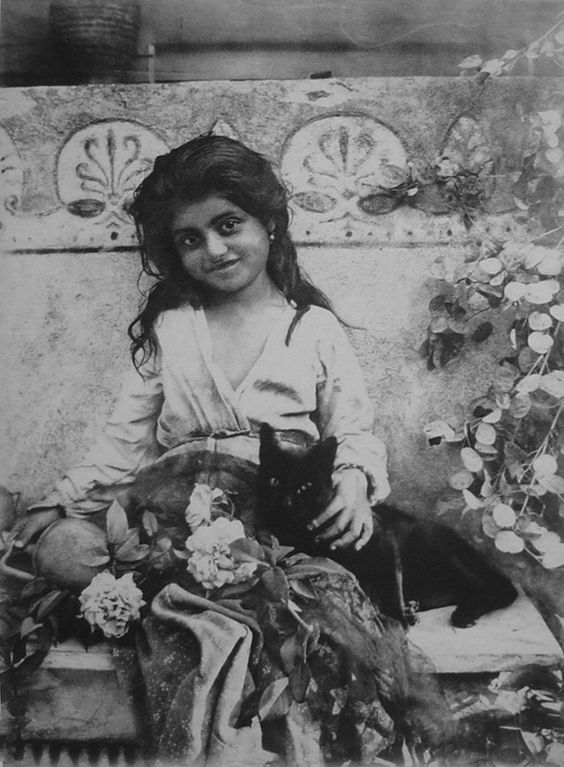
Siciliaans meisje met zwarte kat, 1895

Na de val van het West-Romeinse Rijk werd Italië doorkruist door verschillende migraties van volkeren uit alle windstreken, en werd door enkele van deze gedomineerd tot diep in de negentiende eeuw. Al deze overheersingen brachten verschillende tradities en gedachtegoed met zich mee, die terug te vinden zijn in de taal, literatuur, kunst, architectuur, folklore, festiviteiten en natuurlijk in het bijgeloof van het land. In het zuiden zijn het in het bijzonder de overheersingen van de Longobarden, Saracenen, Noormannen en later de Spanjaarden en Fransen, die de grootste invloed op de cultuur hebben uitgeoefend. In hedendaags Italië is het rooms-katholieke geloof een nogal groot en vanzelfsprekend onderdeel van de landelijke cultuur, vooral in het zuiden.

Het bijgeloof is hier echter ook aanwezig in het dagelijks leven, door de eeuwen heen als element dat sterk verweven is met de leer van het katholicisme, in het beleven van rituelen, openbaar en binnenshuis, bij gemeenschappen en individueel, en ook bij officiële ceremonies van de kerk: deze zaken zijn zo diep met elkaar verbonden dat het vaak onmogelijk te vertellen is waar geloof eindigt en bijgeloof begint. Laten we het zo stellen dat ze elkaar aanvullen en versterken, in harmonie naast elkaar bestaan, in een soort osmose die door de eeuwen heen complexe connotaties heeft gekregen, waarin het volk en de kerk vrede met elkaar hebben gevonden, ondanks alle controversen en onlogische kronkels waarmee in de meeste gevallen de kerk juist het bijgeloof de ene keer gebruikt om haar macht te versterken en de andere keer het bijgeloof afkeurt, om de volgelingen te manipuleren en bang te maken met een straf die hen in het hiernamaals zal treffen.

Deze materie is natuurlijk heel breed en als fenomeen manifesteert het zich in vele aspecten van het dagelijks leven, met verschillende intensiteiten van innerlijke beleving en in alle sociale contexten van de maatschappij, ongeacht geschiedenisperiodes, opleidingsniveau, sociale status en/of klasse. Veel antropologen, sociologen, historici, intellectuelen, journalisten en amateurs hebben het bijgeloof onderzocht, erover geschreven en het geanalyseerd. Zelf zal ik hier maar enkele aspecten en voorbeelden die mij boeien onder de loep nemen. Bijgeloof is steeds sneller aan het verdwijnen in de westerse maatschappij, hoewel tradities ook vaak een nieuw jasje krijgen, aangezien folklore ook toerisme kan aantrekken en op die manier werkgelegenheid creëert, en zodoende een nieuwe benadering van het verleden als basis voor de identiteit van nieuwe generaties oplevert. Helaas gaat dit wel ten koste van de authentieke folklore en haar bijzondere diepgang.

In Zuid-Italië heeft de burger ten opzichte van een relatief recent verleden een hoger niveau van opleiding en ontwikkeling gekregen, wat hem in staat stelt te geloven in zijn eigen capaciteiten. Ook de relatieve mate van industrialisatie van een gebied dat fundamenteel agrarisch was, heeft veel bepaald voor het voortbestaan van oude tradities. Het analfabetisme was in Italië tot enkele decennia geleden, vooral op het platteland, nog een dramatische realiteit. In het zuiden verschilden de cijfers met het rijke noorden behoorlijk, vooral buiten de grote steden: in 1951 kon ongeveer 30% van de populatie van de regio’s in het zuiden niet lezen en schrijven. Veel meer scholing dan hooguit twee of drie jaar basisschool kregen de meeste mensen niet en vrouwen vaak geen enkele. Tegenwoordig zijn er in het zuiden ook minder hoogopgeleide mensen dan in het Noorden, hoewel er volgens officiële statistieken tegenwoordig wel meer vrouwen dan mannen hun universitaire opleiding afronden (dit is een landelijk gemiddelde).

De beloftes uit de politiek van de jaren 60/70 van de vorige eeuw, met de illusies om de zwakke economische situatie van het zuiden te verbeteren, behoren grotendeels tot het verleden en hoeven niet langer de angsten en aspiraties van een onzekere toekomst goed te maken. De berustende wanhoop van de ‘cultuur van de ellende’ ondergaat een radicale vernieuwing: over het algemeen zijn boeren en burgers er nu van overtuigd dat het niet langer een gril van het lot is, maar de directe consequentie van menselijke keuzes en gedrag die het lot van het land bepalen. Een beter besef van het zich los kunnen maken van de geïnstitutionaliseerde macht (de staat, de kerk maar ook de georganiseerde misdaad) is zich sneller dan ooit aan het ontwikkelen en worstelt tegen de ongeschreven regels, gewoontes en angsten. Dit zal ongetwijfeld de identiteit en de toekomst veranderen, waarmee veel tradities verloren gaan en zullen blijven gaan.

Oorspronkelijk: Lezing symposium PFI 10 JUNI 2018 – PART I

> Deel 2

Geplaatst in Artikelen | Getagged , , | Reacties uitgeschakeld voor Bijgeloof en de wortels van volksmagie in Zuid-Italië, deel 1

Bijgeloof en de wortels van volksmagie, deel 2

Deel 2 – Verslagen van antropologen en journalisten

De joodse journalist Carlo Levi leefde in de tijden van Mussolini in ballingschap in Zuid-Italië bij de plaats Eboli, in de regio Lucania (tegenwoordig Basilicata genoemd). In zijn prachtige reportage/roman Christus kwam niet verder dan Eboli vertelt hij een verhaal waarin hij getuige is van het bestaan van een wereld  die bestond buiten de geschiedenis van de rest van Italië, met enorme verschillen vergeleken met het noorden van Italië waar hij vandaan kwam, en ver af van de macht van de Kerk van Rome: de roman werd ook prachtig vertolkt in de film van Francesco Rosi uit 1979.

De Griekse actrice Irene Papas in de rol van Giulia Venere

Portret van Giulia Venere door Carlo Levi, 1936

Na de anderhalf jaar tijd dat hij daar in ballingschap leefde, heeft Levi kunnen concluderen dat de geschiedenis, de kerk en de wet weinig hadden kunnen veranderen in de cultuur van de boeren en de dorpelingen uit die streek, omdat deze in feite geïsoleerd en relatief ongecontroleerd leefden. In hun dagelijks leven, met armoede, ziektes, honger en afhankelijkheid van de natuurcycli, in een land waar de regen zich weinig laat zien en de grond heel lastig is te cultiveren, waren het lot en het blootgesteld zijn aan de natuurkrachten een vanzelfsprekend feit.

Levi beschrijft hun bestaan als iets dat door een soort pijn die amoreel is wordt gevuld, een pijn die een aardse aanwezigheid is in alles wat rondom die mensen bestaat.

Hierdoor, de fundamenten van het christendom, oftewel de individuele ziel, de hoop, de verbinding tussen oorzaak en gevolg, maar ook de ratio en de geschiedenis, waren voor die mensen elementen die niet konden doordringen in hun bestaan. Eigenlijk waren de Romeinen, in het verre verleden, ook daar nooit echt gekomen, met hun grote wegen, oorlogen en handel, en zelfs de Oude Grieken niet: de tijd had in hun geest grotendeels stil gestaan, en er werd nauwelijks gecommuniceerd met de geïnstitutionaliseerde machten en/of andere volken en culturen.

Het is bekend dat niet alleen in die streken, maar over het algemeen in heel Zuid-Italië, de vele veroveraars die daar hebben gedomineerd en de gecentraliseerde macht van het land weinig hebben gegeven om de economische groei en het welzijn van mens en land. De macht van staat en kerk heeft zich beperkt tot belasten, exploiteren, en het opleggen van sociale normen en waarden die vreemd en vijandig leken. In de tijd van het fascisme wist een groot deel van de bevolking van de streek waar Levi verbleef niet eens wat Rome was: men had geen idee van het bestaan van een hoofdstad en hooguit een gevoel van een staat die hun wilde onderdrukken.

De journalist constateert een heidense, primitieve heiligheid die in alles stroomt, en het individu verbindt in een onafscheidelijke veelheid waar het idee van onafhankelijkheid niet kan bestaan. De nauwe co-existentie van de mensen met dieren betekende dat enkele individuen dierlijke trekken konden aannemen, in gedrag of uiterlijk, tijdelijk of zelfs permanent.

Levi woont tijdelijk bij de dorpsheks en alleenstaande moeder Giulia Venere. Zij verbiedt hem bijvoorbeeld de vuilnis in de avond buiten te zetten, omdat anders een van de beschermende avondengelen van het huis (een bij de deur, een bij de tafel en een bij het bed) beledigd zou zijn. Giulia wil niet poseren voor een geschilderd portret (Levi was ook een schilder) omdat zij bang was dat haar ziel gestolen zou worden. Uiteindelijk geeft zij toe, en hij mag toch een portret van haar maken.

De antropoloog Ernesto De Martino, auteur van vele belangrijke studies over folklore en magische rituelen, werd getuige van de laatste periode waarin volksgeloofrituelen, die nu verdwenen zijn, plaatsvonden op het platteland van Zuid-Italië. Enkele taferelen werden ook door zijn equipe gefilmd en geregistreerd. In zijn werk Sud e Magia (Het Zuiden en Magie) vraagt hij zich af waarom in een diepkatholiek land, maar ook een land van belangrijke filosofen uit de Verlichting en andere intellectuelen die het geloof ter discussie hadden gebracht sinds de achttiende eeuw, irrationele en heidense manifestaties zoals magie bleven bestaan. Hij probeert de oorzaken en gevolgen van dit zeer specifieke syncretisme te identificeren en een historische verklaring te geven.

Vrouw uit de documentaire van De Martino, de zogenaamde ‘fattucchiera di Colobraro’

Volgens De Martino kunnen wij stellen dat een archaïsche levensovertuiging de oorzaak is, ondanks de modernisering. De onzekerheid van de toekomst, de druk die geoefend wordt door de natuurkrachten (zoals langdurige droogte, epidemieën, aardbevingen) en de geïnstitutionaliseerde maar veraf staande macht, waarop het volk geen controle kan beoefenen en nauwelijks ermee kan communiceren, de afwezigheid van sociale diensten en infrastructuur, waren toen en zijn nog steeds een vruchtbare grond voor het praktiseren van volksmagie als enige redding tegen de dagelijkse tegenslagen van het leven.

De kerk, die direct of indirect zorgt voor de co-existentie van elementen van magie en religie, snapte de functie van deze verbinding: in de heidense ‘scongiuri’ (formules) werden de christelijke heiligen en gebeden, met de simpele gebaren van een kruis slaan, de heidense ‘historiolae’ (verhaaltjes, verzinsels) met christelijke ‘historiolae’ vervangen, en op deze manier konden de volkse geheugens helpen om de thema’s van het geloof beter te onthouden (door middel van bijvoorbeeld rijm en ritmische herhalingen, ook van gebaar).

De Martino beschrijft vele voorbeelden van rituelen en handelingen van het dagelijks leven, waar hij zelf aanwezig was geweest of zich over had laten vertellen. Genezingen, voorkomen van ziektes, manipuleren van relaties, voorkomen van slechte omstandigheden, het boze oog etc. Zelfs tijdens het volgen van de christelijke liturgische praktijken neemt de zuiderling geen afstand van de magische en sjamanistische handelingen. Deze verruiming van religieuze begrippen garandeert hem de aanwezigheid van God en vermindert het conflict van een zondige situatie.

Hetzelfde verzoek om genade wordt in het algemeen gericht aan de heiligen. Met de uitgekozen heilige (meestal is deze toch een streekverbonden figuur) ontstaat er een vertrouwensrelatie en solidariteit, alsof hij/zij een intieme vriend/in van de aanvrager zou zijn en ook vanzelfsprekend partij voor hem zou nemen, ongeacht de oprechtheid van de wens: men gaat van het idee uit dat wensen vervullen een taak van de heiligen is. Als de wens uitkomt, of de gratie wordt verleend, dan wordt de heilige terugbetaald door de aanvrager met een ex-voto (een object van zilver, of ander materiaal, meestal in de vorm van een hart met vlammen, vroeger ook in de vorm van het orgaan dat genezen werd), die naar de gewijde kerk van de heilige wordt gebracht, of met geschenken in geld voor de kerk waar de heilige wordt vereerd, of een opoffering.

Uit onderzoeken die door experts van folklore en populaire tradities zijn uitgevoerd, is een hele reeks documenten aan het licht gekomen over de riten van magie, het bijgeloof en volksgeloof, en over volksgeneeskunde. Er waren talloze magische praktijken die erop gericht waren de gebeurtenissen af ​​te wenden van elke negatieve invloed van het bovennatuurlijke. Deze betroffen alle aspecten en stadia van het leven  volgens zijn ritme: geboorte, verloving, huwelijk, dood, landbouw, gezondheid, en ook oude praktijken die nog steeds worden uitgeoefend in een of ander heiligdom, gericht op het verkrijgen van een volledig contact met de goddelijkheid waarvan verwacht wordt dat deze genezingen en genade zal verstrekken, vijanden zal verslaan of vervloeken en voorspoed bevorderden.

Overal in het zuiden werden spreuken, kruiden en andere soorten remedies gebruikt waar het medicijn of een simpel gebed in de kerk niet konden helpen. Kruiden hadden een belangrijke rol. Een veel gebruikt kruid was de wijnruit (Ruta graveolens), een plant met verdovende kracht die, om haar  magische waarde te krijgen, na middernacht moest worden verzameld. Het gebruik van wijnruit is gedocumenteerd sinds de oudheid en had volgens vele tradities de kracht om boze geesten en slechte invloeden te verjagen. In het verhaal van Mitridates was wijnruit het belangrijkste ingrediënt van zijn anti-gif-drank. In werkelijkheid zijn hoge doseringen van deze plant zeer schadelijk en kunnen ontstekingen van de huid, maag en darmen, stuiptrekkingen, duizeligheid en vergiftigingen veroorzaken, en bij zwangere vrouwen abortus. Wijnruit werd toch in de volksgeneeskunde veel toegepast, onder andere om malaria proberen te bestrijden.

De antropoloog Alfredo Cattabiani, auteur van o.a. een prachtige boek met de titel Florario over de geschiedenis en mythologie van planten, vertelt dat het volksgeloof beweerde dat de wijnruit de libido van vrouwen liet toenemen maar die van mannen juist afnemen. Wijnruit werd gedragen om schorpioenen, spinnen en slangen af te weren, maar werd ook gemengd met wijn, honing en zout en op de wonden gesmeerd in geval van beten van giftige insecten, reptielen of honden. In de Renaissance werd dit kruid ook ‘herba de fuga demonis’, oftewel ‘duivelverdrijvend kruid’ genoemd.

Twee andere universele beschermende planten van het zuiden, de knoflook en, na de Renaissance, de chilipepers, werden veel gebruikt om huizen, mensen en dieren te beschermen: hangend bij deuren, schoorstenen, ramen en verwerkt in amuletten, dranken of smeersels, soms ook samen met wijnruit. Een teen knoflook werd meegenomen op zak voor algemene bescherming, en ijzeren voorwerpen voor het landbouw werden ‘ritueel’ ingewreven met knoflook.

De laurier, in het Middellandse Zeegebied sinds de Oudheid een heilige plant, waaromheen veel bekende mythes draaien, werd ook veel in de volksmagie gebruikt. Laurier had volgens de oude leer zuiverende eigenschappen: het werd bijvoorbeeld toegepast om water te reinigen, en volgens veel geleerden, o.a. de Siciliaanse antropoloog Pitrè, was laurier een beschermende plant tegen bliksem en storm. Pitrè vertelt ook dat in enkele streken van Sicilië grote takken laurier gezegend werden en dan versierd met linten, sinaasappels en zijden doeken, en in heilige processies van de katholieke kerk gebruikt werden als ornament: de participanten probeerden een klein takje te veroveren en mee te nemen naar huis als zegening en bescherming.

Voorwerpen van ijzer zoals spijkers, hoefijzers, en schedels van dieren of andere dierlijke lichaamsdelen zoals botten, haar of veren, maar ook menselijk haar, nagels, bloed, sperma en speeksel werden gebruikt voor magische doeleinden. Speeksel in het bijzonder werd beschouwd als een belangrijk magisch middel: drie keer spugen op de grond was een snelle remedie om het boze oog, kwade woorden of vijandig gedrag tegen te houden.

In deze kostbare korte film ‘Superstizione‘ van de beroemde regisseur Michelangelo Antonioni, kunnen wij authentieke beelden zien van handelingen van volksgeloof, uit de jaren ‘40/50 van de voorgaande eeuw die opgenomen zijn in Zuid-Italië. Helaas is het audiomateriaal in zeer slechte staat.

> Deel 1

Oospronkelijk: Lezing bijgeloof, deel II – Verslagen van antropologen en journalisten

Geplaatst in Artikelen | Getagged , , , , | Reacties uitgeschakeld voor Bijgeloof en de wortels van volksmagie, deel 2

In memoriam Fred Lamond

Blood and body, flesh and bone
In loving silent you walk alone
Fire burning, flames go high
Peaceful goddess with her you fly
Ash to Ash and Dust to dust
Summerland is what I cast
Where you are dancing
And circling together
With all the other beloved friends
But here on earth it is
the end


Lady Purple

Geplaatst in English articles | Getagged , , , , | Reacties uitgeschakeld voor In memoriam Fred Lamond

Recensie: Heidense heiligdommen

Heidense heiligdommen. Zichtbare sporen van een verloren verleden
Judith Schuyf. Foto’s Sjaan van der Jagt
Omniboek, 2019, 336 p. ISBN 978-94-019-1433-8. € 24,99

In 1995 verscheen Heidens Nederland, zichtbare overblijfselen van een niet-christelijk verleden met een overzicht van wat er nog restte aan getuigen van een heidens verleden in de openbare ruimte. Ook plaatste archeologe en historica Schuyf deze objecten in hun geschiedkundige en religieuze kader. In die tijd was religie geen populair thema in de archeologie, maar dat is veranderd. En er is nieuwe kennis opgedaan, omdat het Verdrag van Malta voorschrijft dat onderzoek naar de archeologische waarden gedaan wordt als de bodem wordt verstoord (voor bouwwerkzaamheden).

Archeologen zijn nu meer gespitst op mogelijke resten van rituelen die in eerdere onderzoeken over het hoofd werden gezien, en kunnen langzamerhand meer zeggen over rituele praktijken. En de onderzoeksverslagen zijn vaak via internet toegankelijk, wat in 1995 nog niet zo gebruikelijk was.

Dit nieuwe boek bevat veel onderwerpen (teksten, afbeeldingen, vermeldingen van plaatsen en objecten) uit het vorige boek, maar die zijn opnieuw in een historische en religieuze context geplaatst. Het is daarmee een nieuw boek geworden, dat ook de lezers van ‘Heidens Nederland’ veel te bieden heeft.

De inleiding gaat in op begrippen als heidendom en christendom en andere centrale termen, en op de gebruikte bronnen. Het eerste deel van het boek probeert antwoord te geven op wat we weten over religieuze beleving in de Lage Landen voor de christianisering en wat er met de prechristelijke elementen gebeurde tijdens en in de eeuwen na de kerstening. De invalshoek is hierbij voornamelijk chronologisch. Het tweede deel van het boek gaat in op de vraag in hoeverre we iets kunnen zeggen over het proces van bewuste en onbewuste herhaling en hertaling van het prechristelijke, en welke zichtbare fenomenen daar vandaag de dag nog aan herinneren. De nadruk ligt op het landschap, de immateriële cultuur en de overgeleverde volkscultuur.
Een apart hoofdstuk is gewijd aan ‘invented traditions’: tradities die worden ‘uitgevonden’ om een verschijnsel ouder te laten lijken dan het is.
Het boek sluit weer af met een uitgebreide literatuurlijst.

Geplaatst in Boeken | Getagged , , , | Reacties uitgeschakeld voor Recensie: Heidense heiligdommen

Goden en godinnen in de lage landen, 2: Verdiepen

Logo bij artikelen over de Oudheid in Wiccan Rede Online Magazine

Je kunt ‘de God’ en ‘de Godin’ in wicca uitleggen als universele godheden die allerlei aspecten in zich hebben. Als een soort ‘grootste gemene deler’ van wat individuele goden en godinnen als kenmerken hebben. Maar ook als ‘de god en godin van jouw regio’. In dit tweede deel van een vierdelige reeks wil ik een tijdlijn maken over het gebied dat nu Nederland is. Hierin plaats ik wat ik kon vinden over de bewoners en wat we (denken te) weten van hun religieuze praktijken. Daarna zoom ik in op een paar locaties. Maar als je liever wat beleeft dan alles te lezen, ga dan direct naar de bronnenlijst!

Uiteraard is het lastig om over prehistorische volken uitspraken te doen. Ze hebben geen geschriften achtergelaten, en van de overblijfselen die er zijn, moeten we zelf interpreteren wat de betekenis is geweest. Als mensen werden begraven en grafgiften meekregen, geloofde die cultuur dan in een leven na de dood? In Sleen (Drenthe) zijn resten gevonden van een dubbele rij houten staanders rond een grafheuvel. Vanuit de top van de grafheuvel had je zo zicht op het opkomen en ondergaan van de zon op midzomer. Was dit een bewust ‘alignment’ en zo ja, betekende dat ook dat het volk dat die palenkrans plaatste Midzomer vierde? Ook in het Noordse Veld bij Zeijen (Drenthe) en bij grafheuvels bij Haps en bij Bergeijk (beide Noord-Brabant) zijn paalkransen gevonden. In Brabant zijn in de midden-bronstijd crematieresten gedeponeerd onder een van de palen1.

Als je het idee had dat ‘onze voorouders’ een vaste groep mensen waren, die al sinds de oertijd in het gebied wonen dat we nu Nederland noemen, vergeet dat dan maar. Er zijn altijd migraties geweest, en er is ook al heel lang handel met volkeren en culturen ver weg. Nieuwe bewoners kunnen weer gebruik hebben gemaakt van wat hun voorgangers achterlieten, zelfs als ze de betekenis niet kenden. Het landschap veranderde door de tijd heen, soms door menselijk ingrijpen, en mensen gingen er in de loop der tijd anders mee om. Het kwam voor dat hele bevolkingsgroepen verdwenen – we kunnen nu niet meer achterhalen waarom of waarheen – en op andere momenten mengden nieuwe bewoners zich met de oude bewoners.

Bronnen

Er zijn omgeschreven bronnen – artefacten, sporen die opgegraven worden als er een weg wordt aangelegd, graven en door mensen gemaakte heuvels en groeven – en vanaf enig moment ook geschreven bronnen. De geschriften waren lang niet afkomstig altijd van de mensen over wie het ging. De Romeinen en later de christelijke monniken hadden eigen belangen bij het beschrijven van de bevolking van ‘de lage landen’. Die waren er niet op uit om een nauwkeurige beschrijving achter te laten van de gebruiken van de Germanen en de Middeleeuwers, opdat wij ons er nu een goed beeld van kunnen vormen.

Onderzoek leidt ertoe dat onze kennis steeds weer wordt bijgesteld. Maak je een historische atlas waarin je alles zo goed mogelijk verwerkt, dan kun je die twintig jaar later opnieuw uitgeven, omdat er ontdekkingen zijn gedaan die hele theorieën omgooien, of allerlei tot dan toe onbekende details invullen. Beleid is om de bodem ongeschonden te laten waar dat kan, omdat het opgraven allerlei sporen kan vernietigen die worden gemist met de technologie en de visie van nu. Maar als de bodem toch verstoord gaat worden voor woningbouw of wegenbouw, dan is er de verplichting om eerst archeologisch onderzoek te doen. Zo zijn er vrij recent interessante vondsten gedaan in Noord-Holland, in de Velserbroek (zuidkant van de gemeente Velsen) en de Broekpolder (grensgebied Beverwijk en Heemskerk), in de Haagse wijk Ypenburg, en in Gelderland bij de bouw van de wijk Westeraam in Elst. En soms komt er spontaan iets aan het licht doordat de zee een stuk land afslaat. Denk aan ‘woodhenges’ op het strand, en de spectaculaire vondsten in 1647 van votiefstenen voor Nehalennia bij Domburg op Walcheren (én in 1970, bij Colijnsplaat, doordat een visser iets in zijn netten kreeg).

Verantwoording

Ik ben geen geschiedkundige, maar slechts een geïnteresseerde leek, met vooral belangstelling voor wat lijkt op religieuze gebruiken. Ik maak gebruik van de boeken die in mijn bezit zijn, of die ik elders heb gevonden, ook als ze al wat ouder zijn. En van internetbronnen. Voor alle details verwijs ik graag naar die boeken en websites. Het gaat mij erom een indruk te krijgen van wie de bewoners waren van het gebied dat we nu Nederland of de Lage Landen noemen, en wat hun religieuze praktijken waren. Wel vind ik het zinvol om onderscheid te maken naar groepen en culturen en hun tijdperk; daarom ook wat algemene informatie.
Omdat ik de geboorte van Christus niet zo relevant vind, maar het wel gebruikelijk is om de jaartelling 2000 jaar geleden te beginnen, gebruik ik ‘vC’ voor ‘vóór de gangbare jaartelling’ (before Common/Current Era) en ‘nC’ voor ‘in de gangbare jaartelling’ (Common Era / Current Era). En waar ik ‘Nederland’ noem, bedoel ik het gebied dat nu de natiestaat Nederland is, puur als aanduiding van het gebied waarop ik mijn onderzoek richt. Plaatsnamen zijn de namen die de plaatsen – waar (in de omgeving) resten gevonden zijn – nu hebben.
De data zijn niet in alle bronnen gelijk, mogelijk ook vanwege regionale verschillen: de bronstijd begon bijvoorbeeld veel eerder in gebieden waar de basismaterialen gevonden werden. De introductie van veeteelt en akkerbouw begon in verschillende gebieden op verschillende tijdperken. Uiteraard hadden de grondsoort en de waterstand daar ook mee te maken.

Tijdlijn met details

Steentijd2 tot ca. 2.100 vC

Circa 38.000 tot 9.000 jaar vC – Mesolithicum (Midden-Steentijd) na laatste ijstijd: nomaden jager-visser-verzamelaars. Eerste sporen van bewoning:
circa 8.000 vC – kano, gevonden bij Pesse in Drenthe;
circa 6.000 vC – jachtkamp in Friesland toont dat er diverse stammen leefden in de moerasdelta die Nederland toen was. Vlaardingen
Circa 6.700-3.800 vC – Neolithicum (nieuwe steentijd): boeren, veeteelt/akkerbouw, huizenbouwers, aardewerk.

Circa 5.500 vC – Hardinxveld-Giessendam: ‘Trijntje’, een oudere vrouw van hoog aanzien begraven met stukjes rode oker. Waarschijnlijk had ze blauwe ogen en een donkere huid.

Circa 5.300 tot 3.200 vC Nieuwe Steentijd (Neolithicum)
Rond 5.300 vC – Eerste landbouwers (vondsten en sporen van boerderijen). Het Neolithicum in Zuid-Limburg begint met boerenbedrijf op een vaste plek.
Rond 4.900 vC – Bandkeramiekcultuur verdwijnt.
Circa 4.900-3.400 vC – Jagers verblijven grote delen van het jaar op een vaste plek in het deltagebied; zomerkampen; vroege vormen van akkerbouw en veeteelt.

Circa 4.700 vC – Een aardewerken pot en twee edelhertgeweien aan de aarde toevertrouwd in Bronneger. Bij Zutphen een edelhertgewei gedeponeerd in een beekdal. In Zuid-Holland aardewerk, bot, gewei en hout gedeponeerd (?) in kuilen in het veen.
Circa 4.500 vC, nabij Nederland, zonneobservatoria of zonneheiligdommen (Goseck). Algemeen voorkomen van de Swifterbandcultuur in het gebied van de huidige Flevopolders, Drenthe (Bronneger), Overijssel (Mariënberg), Zuid-Limburg, het dal van de Overijsselse Vecht en de Betuwe.
Circa 4.450 vC – het Mannetje van Willemstad (gevonden bij Volkeraksluizen). Functie onbekend.
Rond 4.100 vC ontstond de Trechterbekercultuur. Die liet veel zichtbare sporen na, zoals de hunebedden. Doden worden begraven, soms met grafgiften. In Mariënberg, Overijssel, wordt oker uitgestrooid over zes grafkuilen. Het gebruik van rode oker zou kunnen wijzen op associatie met bloed en levensgeesten, en dus met ideeën over het leven na de dood, of een cyclus van leven en dood. Een oudere man krijgt als grafgift een snoer van barnstenen kralen (afkomstig uit Denemarken of het Oostzeegebied).
Circa 4.000 vC verschijnen de eerste akkers: gewassen worden ingezaaid.
Circa 3.700-3.400 vC – Bewoning op een strandwal bij Rijswijk (onder wie ‘Ypje’).
Vanaf ca. 3.300 vC worden in Noord-Nederland de culturen van Swifterband en Vlaardingen vervangen door de Trechterbekercultuur. Megalieten: hunebedden (in Drenthe, Friesland, Groningen en Overijssel; ca. 3.450-3.050 vC). Bijlen als wateroffer.

Ca. 3.000-2.450 vC – Standvoetbekercultuur of enkelgrafcultuur, krijgshaftige nomaden afkomstig uit Zuid-Rusland.
Vanaf 2.900 vC – Beker- of enkelgrafcultuur. Textielproductie. Gerstebier.
Er zijn op de Veluwe meer grafheuvels dan voorheen werd gedacht, waarschijnlijk van mensen afkomstig uit het huidige Rusland en Oekraïne: sinds 2015 weten wetenschappers dat er vanaf 3.000 vC een enorme migratie van de Russische steppen naar West-Europa plaatsvond. Onder elke grafheuvel werd een lichaam samen met giften in een kuil gelegd, afgedekt met lagen gras en heidegrond. Er zijn enkele botresten gevonden waaruit DNA kon worden gehaald.3.

De Epe-Niersen grafheuvellijn: een uitgestrekt ritueel landschap

De grafheuvelrij bij Epe-Niersen is één van de best bewaarde monumentale grafheuvelrijen uit de Nederlandse Prehistorie. Ze behoort tot de prehistorische topmonumenten in Europa. Toch weet bijna niemand – inclusief de archeologische gemeenschap – dat zulke rijen bestaan, laat staan uit welke tijd ze dateren en wat ze betekenen. Tegelijkertijd is er bijzonder weinig onderzoek gedaan naar deze grafheuvelrijen. Het merendeel van de bestaande informatie is gebaseerd op opgravingen uit het begin van de twintigste eeuw. Networked Landscapes heeft als doel nieuwe kennis over de grafheuvelrijen te verzamelen en dit imposante rituele landschap onder een bredere aandacht te brengen.
bron: https://www.rmo.nl/onderzoek/opgravingsprojecten/veluwe/

Circa 2.600-2.450 vC – Grafheuvels, vaak omzoomd door een krans van palen en een standgreppel.
Circa 2.450-2.100 vC – Algemeen voorkomen van de klokbekercultuur. Eerste metaalbewerkers. Grafheuvels.
Circa 2.400-1.900 vC – Klokbekercultuur.

Bronstijd ca. 2.100-600 vC

Vanaf ca. 1.800 lokale productie van brons. Boomkistgraven. Rijke grafgiften van de ‘hoofdman’ en de ‘prinses’ van Drouwen (Drenthe).

1.475 vC – Tempeltje? Bij Barger-Oosterveld (nabij Emmen). Herbouwd bij Archeon en in Drents Museum in Assen, maar was mogelijk eerder een plek voor een grafritueel dan een cultusplaats.
Circa 1.400 vC (Midden-Bronstijd). Internationaal handelsverkeer.
Vanaf 1.000 vC tot 800/700 vC – boeren, eerste metalen werktuigen/wapens/sieraden, grafheuvels.
Midden-Bronstijd: Offergiften in Hoogeloon, Noord-Brabant, en bij ‘veenbruggen’ (houten voetpaden) in Drenthe.
Circa 1.200-600 vC (Late Bronstijd). Urnenveldencultuur: doden worden gecremeerd i.p.v. begraven.

IJzertijd ca. 800 – 58 vC

Rond 800 vC wordt ijzer in de Nederlandse bodem gevonden: begin van de ijzertijd, die eindigt met de komst van de Romeinen.
IJzertijdperk (Halstatt-cultuur), kleine ijzerindustrieën. Celtic fields (akkertjes).

Vanaf ca. 800-700 vC – ijzeren gebruiksvoorwerpen, boeren-clans, urnenvelden; mensenoffers in veen (tussen 54vC en 128 nC: ‘meisje van Yde’).

Circa 200-100 vC – In België zijn Keltische burchten en nederzettingen.

Germaanse stammen vestigen zich blijvend in onze streken: Kaninefaten (langs de kust), Bataven (rivierengebied), Friezen (westen en noorden) en Tubanten (oosten).

Romeinse tijd 50 vC-500 nC, Germanen / Friezen

Rond 58 vC: Julius Caesar verovert Gallië (“alle volken die ten zuiden van de Rijn wonen”). De Bataven, een Germaans volk, vestigen zich op verzoek van de Romeinen in het rivierengebied (ca. 50-10 vC). Zij vormen zo een soort tussengebied tussen de Romeinen en de andere Germaanse volken. Rond het jaar 69/70 nC komen ze met hun bondgenoten in opstand, maar de Romeinen herbouwen verwoeste gebouwen.

Circa 15 vC tot 15 nC: Romeinen worden gelegerd nabij Nijmegen. Romeinen vestigen zich in Vechten. In Velsen wordt een militaire haven gebouwd. In 28 nC wordt deze verwoest door Friezen die de afpersingspraktijken zat zijn. Vanaf 70 nC worden de Bataafse hulptroepen overgeplaatst en nemen vreemde hulptroepen hun plaats in langs de Rijn.

Eerste eeuw – ‘open-lucht-cultusplaatsen’ (Maas-Demer-Schelde-gebied), associatie met begravingen, voorouderverering.

257 vC – 406 nC – deposities IJ; Donar-amuletten; vierde eeuw: ‘Hilde’.
459 nC – einde van de Romeinse periode (val van Keulen als provinciehoofdstad).

Volksverhuizingen, 350-500 nC

Over de Grote Volksverhuizing in de nadagen van het West-Romeinse rijk verwijs ik naar Wikipedia, de aparte pagina over Volksverhuizing in de Lage Landen in de Frankische tijd en de pagina van Romeinen.info over de periode 370 t/m 500 nC.
Er gebeurde van alles; op enig moment was bijvoorbeeld een hele streek compleet onbevolkt, zonder dat we precies weten waarom de bewoners verhuisden (een grote vondst van wapens en verwonde lichamen in het rivierengebied wijst op oorlog) en er kwamen weer nieuwe bewoners. Lees ook het artikel Have a Frisians Cocktail op de website Frisia Coast Trail.

Vroege Middeleeuwen, 500-1000 nC

Vanaf ca. 630 nC – missionarissen komen de heidenen bekeren.
800 nC – Karel de Grote; kerstening; verbodsbepalingen zoals de Indiculus superstitionem.

793-1066 nC – Vikingtijd.

950-1050 nC – In de landen om Nederland heen (Duitsland, Angelsaksisch Engeland) worden in de 10e eeuw nog heidense godennamen gebruikt in een genezingsspreuk waar later de christelijke drie-eenheid aan gekoppeld wordt. (Bron o.a.: The Witches’ Herbal, Michael Howard). Ook wordt in het Angelsakisch Moeder Aarde nog aangeroepen in het gedicht Erce Erce Erce, waarin om de zegen wordt gevraagd voor de akkers.

9e eeuw nC: Indiculus superstitionem.

NB Hoe klonk de Oudnederlandse taal in Rotta, het elfde-eeuwse Rotterdam? Bekijk de video!

Germanen? Kelten? Friezen?

Wie waren de bewoners van het huidige grondgebied Nederland? Als je het hebt over ‘de Germanen’, zijn dat niet noodzakelijk de groepen die we zo noemen als het over ‘de Germaanse religie(s)’ gaat. We gaan er meestal van uit dat Germanen bekende goden en godinnen vereerden, Wodan/Odin, Donar/Thor en Freya, maar de stammen die hier woonden en die we Germaans noemen, hadden lokale goden en godinnen. Wim Bonis:

Volgens Colin Wells waren er twee soorten Germanen: ten eerste de stammen (waar Caesar en Tacitus over spraken) die langs de Rijn woonden en in feite van Keltische afkomst of sterk gekeltiseerd waren; en ten tweede de noordelijke stammen, die een meer primitieve, nomadische staat van sociale en economische ontwikkeling hadden en die een Germaans dialect spraken.

Verderop bespreek ik wat uitgebreider de vondsten in Elst-Westeraam. Zie eerst de kanttekening van Wim Bonis in dezelfde publicatie4:

Maar er is een andere reden om het belang van Hercules Magusanus voor de religiebeleving van de inheemse volkeren in onze streken toch enigszins te relativeren. Het is namelijk de vraag of we uit de grootte van een tempelcomplex ook zonder meer het belang van bepaalde cultus kunnen afleiden. Zoals bekend, waren de Keltische en Germaanse stammen gewoon hun goden en godinnen in de open lucht te vereren en ook nauwelijks beelden van deze goden en godinnen te maken, waardoor er voor de archeoloog van deze ‘openluchttempels’ weinig anders is terug te vinden dan de geofferde voorwerpen. Cultusgebouwen waren niet noodzakelijk voor de praktijk van een cultus.

Lokale goden en godinnen?

In de eerste eeuwen n.Chr. aanbaden West-Germaanse stammen, zoals de Cimbri en Frisii, velerlei regionale, vrouwelijke goden, getuigen altaren met inscripties uit gebieden onder Romeinse invloed. Meer dan honderd verschillende namen zijn gevonden, en veel komen vaker voor. Die namen kunnen onder andere verwijzen naar plaatsen, zoals Mahlinehae → Mechelen, maar ook naar rivieren en bronnen. Ook andere auteurs suggereren dat de Germanen van oudsher rivieren, bronnen en soms andere natuurfenomenen zoals bomen vereerden, al dan niet expliciet gepersonifieerd in de vorm van nymfen. Dit meldt de Byzantijnse dichter en historicus Agathias (530 – 582/594) bijvoorbeeld van de Alemannen. Het gaat mogelijk om vruchtbaarheidsgodinnen die verbonden waren aan lokale dorpsgemeenschappen of stammen.

Een goed gedocumenteerde godin uit de tweede en derde eeuw is Hludana, waarvan de naam is aangetroffen op inscripties in het Nederrijngebied en Friesland. Zij komt overeen met de Noorse Hlóðyn, de moeder van Thor. Zij wordt ook wel geïdentificeerd met Jörd, ‘Aarde’, en Thor staat bekend als zoon van de aarde. Hludana is daarom waarschijnlijk een regionale, chtonische godin. Een andere regionale god is Saxnot, ‘gezel van de Saksen’, die in de christelijke Oudsaksische doopgelofte vermeld wordt naast ‘Thunaer’ (Donar) en ‘Uuôden’ (Wodan). Zij worden in de tekst afgezworen. 5

Romeinse tempels in Nederland en België

Volgens Wikipedia zijn in Nederland zijn enkele Romeinse tempels gevonden, namelijk in Aardenburg, Elst, Elst-Westeraam, Nijmegen, Empel, Kessel en Maastricht. In het Archeon staat een reconstructie van een tempel gewijd aan Nehalennia en er is een Romeinse tempel nagebouwd in Colijnsplaat (Zeeland). In België is een Romeinse tempel opgegraven in Tongeren.

“Kenmerkend voor de Romeinse tijd in ons land is dat de zogenaamd Romeinse tempels hier zelden of nooit aan typisch Romeinse goden gewijd waren.” Er zijn heel weinig aanwijzingen dat de typisch Germaanse goden als Wodan en Donar door de Bataven, Cananefaten en Friezen aanbeden werden. Wel bekend is de Bataafse oppergod Hercules Magusanus. In Germania Inferior werd bij Elst een eerste tempel voor hem gebouwd rond 50 nC, en een halve eeuw later een tweede, grotere tempel, met een plattegrond van 31 bij 23 meter en een hoogte van 15 meter.

Volgens de website van het RMO konden de ‘gelovigen’ in de Lage Landen een heel persoonlijke keuze maken uit goden en godinnen, afhankelijk van beroep of wat men belangrijk vond in het leven. Ook werd er gebruik gemaakt van amuletten, die op het lichaam werden gedragen en bescherming boden tegen kwaadaardige machten. Die kwamen voor in verschillende vormen, zoals kokertjes met magische tekst of beschermende kruiden, of metalen plaatjes met bezwerende woorden of symbolen.

“Die werden vaak gecombineerd met de weergave van een obsceen handgebaar. Ook populair waren amuletten in de vorm van een wassende maan (lunula).”

Enkele locaties nader uitgelicht

De Gallo-Romeinse tempel van Elst-Westeraam (Betuwe) – circa 10-190 nC

Onder de grote kerk in het centrum van Elst bevinden zich resten van een Romeinse tempel. Het was verrassend dat 560 meter verder een Gallo-Romeinse omgangstempel is geweest. Op deze locatie werden sporen gevonden van houten voorgangers van de stenen tempel, en er kon een reconstructie gemaakt worden van de tempel. Over de inrichting en de godheden die werden vereerd, weten we weinig. Wel is er iets te zeggen over de bezoekers van het heiligdom en hun offerpraktijken en rituele maaltijden. Voor de lezer die bekend is met het christendom, plaatsen de schrijvers van In de schaduw van het noorderlicht wel een waarschuwing:

Wanneer we ons echter bij de interpretatie van archeologische sporen en vondsten uit het religieuze leven van twee millennia geleden àl te veel door de eigen christelijke ervaringswereld laten leiden, lopen we het gevaar op tal van punten de plank volledig mis te slaan.
In tegenstelling tot het christendom – dat slechts één god kent, sterk gericht is op de geloofsovertuiging en verlossing van het individu, vanuit zijn moralisme niet van een zekere zendingsdrang gespeend is en als wereldgodsdienst over grote delen van de wereld uniform is – kent de antieke religie de verering van vele goden, is zij meer georiënteerd op de tijdige en juiste uitvoering van rituelen dan op een ‘juiste’ geloofsvoorstelling, is zij liberaal en vertoont zij binnen het Romeinse rijk een grote pluriformiteit.

En dat had zijn gevolgen voor de acceptatie van religies van door de Romeinen onderworpen gemeenschappen. Voor de Romeinen was het gebruikelijk om meerdere goden naast elkaar te vereren. Ook van buiten de Romeinse cultuur, denk aan Mithras en Isis. Andersom namen overwonnen volkeren ook Romeinse goden, zoals Jupiter en Fortuna, over in hun pantheons. Soms werd de verering van lokale goden aangepast en soms werden lokale goden gelijkgesteld aan Romeinse. Waarschijnlijk namen soldaten uit het Duitse Rijnland hun Moedergodinnen (Matrones) mee. Bataafse troepen vereerden bijvoorbeeld Hercules Magusanus, bekend van een heiligdom bij Empel. Mogelijk een inheemse halfgod die werd gelijkgesteld aan de Romeinse Hercules, en die een rol speelde bij mannelijke initiatierituelen.
Van sommige goden en godinnen is weinig bekend, omdat er bijvoorbeeld slechts één votiefsteen met hun naam is gevonden. In In de schaduw van het noorderlicht worden genoemd: Hurstrga, matronae Aufaniae, Vagdavercustis. Elders vinden we ook Arcanua, Iseneucaega, Sandraudiga en Viradecdis.
Wat betreft die offerdieren en rituele maaltijden: er zijn resten gevonden van paard en hond, die alleen geofferd zijn, en niet gegeten. Van runderen, varkens, schapen en geiten en eenden werd tijdens rituele maaltijden wel gegeten, waarna de rest werd geofferd aan de godheid, Hercules Magusanus. Bij deze tempel waren de meeste botten afkomstig van runderen en daarna van paarden, in tegenstelling tot de tempel in de nederzetting (Elst) waar schapen en geiten de boventoon voerden.

Vechten, Utrecht (Romeinse tijd) – circa 4-275 nC

De Limes was de noordgrens van het Romeinse rijk, die in Nederland de loop volgde van de Rijn, zo van Arnhem tot Katwijk aan zee. De rivier meanderde en slibde langzamerhand dicht. Het was geen harde grens – er was verkeer over en weer – maar gaf aan tot waar het Romeinse gezag gold. Nederland (het deel ten zuiden van de Limes) hoorde tot de provincie Germania Inferior. Castellum Fectio is waarschijnlijk gebouwd in het eerste decennium van de eerste eeuw, in het jaar 4 of 5, als een van de oudste en meest belangrijke forten langs de (toenmalige loop van de) Rijn. Het was ook een groot castellum, strategisch van locatie, en na de Bataafse opstand werd het herbouwd. Tussen 270 en 275 nC werd het tenslotte verlaten. (Niet iedereen is het eens over de geschiedenis van fort Fectio, of Vechten wel Fectio was en wanneer het gesticht werd. Zie deze visie).

We mogen aannemen dat in het kampdorp een of meer tempels hebben gestaan waar priesters de hulp van de goden inriepen voor alle gevaren die de soldaten en de vicusbewoners bedreigden. In de wij-inscripties die tot nu toe in Vechten voor de dag zijn gekomen, worden tal van goden bedankt voor de niet nader genoemde gunsten die ze hebben verleend, uiteenlopend van welbekende Romeinse goden en godinnen als Jupiter, Neptunus en Fortuna, tot meer of minder obscure inheemse godheden als de eerder genoemde Viradecdis uit de Condroz en de vooral in het Rijnland vereerde moedergodinnen.6
(Of is Viradecdis afkostig van de Tungri-stam, uit het land rondom Tongeren, of Doornik/Tournai?)

Andere goden en godinnen die in Nederland werden vereerd (blijkend uit vondsten, niet alleen uit Vechten, die voor een groot deel nu in het Rijksmuseum van Oudheden in Leiden staan): een amulet van Mercurius, een ‘kop’ van Jupiter, Mars, mannelijke goden als Magusanus, Grannus of Cissonius; vrouwelijke godheden als Minerva, Luna, Vesta, Juno, Venus en Fortuna, ‘exotische godheden’ als Isis, Cybele en Elagabal, ‘lokale’ godinnen Baduhenna, Viradecdis, Sandraudiga, Haeva, Hludana en Nehalennia; moedergodinnen (Matres) met bijnamen als Aufanisch, Hamaverisch en Hiannanefatisch.

Het Oer-IJ (Kennemerland)

De Romeinen bestonden uit een amalgaam van soldaten, afkomstig uit verschillende delen van het wereldrijk, een rijk dat zich uitstrekte tot in Azië, het Midden-Oosten en Noord-Afrika. Rijke, oeroude culturen en kennis waren opgenomen in de Romeinse leefwijze.7

Daartegenover was de inheemse bevolking vooral gericht op de eigen familie, groep of stam, en op de eigen boerderij, het erf, de akker en de buren en nederzettingen op korte afstand. De lokale bewoners veranderden niet snel iets aan hun leefwijze; blijkbaar hadden ze niet zo’n behoefte aan vernieuwing.

Rituele deposities zijn vondsten die archeologen niet rationeel kunnen verklaren. Het gaat niet om afval of serviesgoed dat per ongeluk in een put is gevallen, maar om bewuste deposities. Het aantal en de diversiteit daarvan is alleen al binnen het Oer-IJgebied heel groot. Op honderden plekken in en buiten nederzettingen zijn voorwerpen aan de aarde of vooral het water toevertrouwd. Het gaat om speciale combinaties van voorwerpen maar we weten niet wat die betekend hebben. Het kan gaan om hout, metaal, aardewerk, botten van dieren of mensen. Uit een lezing in de nieuwe wijk Broekpolder herinner ik me dat er in putten en aan de (voormalige) randen van het water vondsten zijn gedaan die ook op een (recent) putdeksel in de omgeving worden weergegeven: spijkers, bundeltjes van takken van tot wel twintig verschillende boomsoorten, waaronder soorten die op tientallen kilometers afstand groeiden, en een enkel bot van een paard (met sporen van gebruik gedurende wel honderd jaar voordat het bot in het water werd gedeponeerd) en een schedel van een hond. Er zijn resten gevonden van rijen palen die in verband kunnen worden gebracht met de positie van Orion gedurende de tijd waarin ze werden opgericht. Ook zijn er resten gevonden van paden van wit zand, gehaald van het strand met de beperkte middelen waarover men beschikte. Het lichte zand was waarschijnlijk aangebracht op de hoger gelegen paden. Om die beter zichtbaar te maken in het maanlicht?

Donar-amuletten? Circa zesde eeuw nC

In Het land van Hilde over het Noord-Hollands kustgebied wordt gespeculeerd over ‘Oude goden, heidense rituelen’.8 “Het leven van de boeren van het Oer-IJgebied was doorvlochten met rituele handelingen. Ze kwamen voort uit een diepgewortelde verbondenheid met hun natuurlijke omgeving. Kort was het lijntje naar de bovenwereld: die van de goden en die van hun voorouders. In de belevingswereld van de Friezen in het Noord-Hollands kustgebied, Germanen, waren de goden overal, en geloof en rituelen één.” De Friezen vereerden bossen en bomen, dat werd opgetekend door zowel de Romeinen als christelijke missionarissen. “Water speelt een belangrijke rol in het mystieke leven van de Friese boeren. De Friezen vereerden heilige bronnen en legden offergaven in poelen, kreken en waterputten. Vermoedelijk legden ze via het water contact met de goden9. Gevonden zijn bronzen mantelspelden, ijzeren spijkers, benen naalden, hagelwitte kiezelstenen en Donar-amuletten.” Deze kegelvormige hangers, gevonden in de Broekpolder, dateren uit de zesde eeuw (of 600-650). Gert van Klinken betwijfelt in Van hunebed tot Bonifatius (p. 204-205) de associatie met Donar. Volgens hem is het waarschijnlijker dat Wodan, Donar/Thor en Freya recenter gearriveerd waren, kort voordat de missionarissen over deze goden schreven. Voor een verering in Noord-Nederland tussen 400 en 800 is geen bewijs. Toch gaat ook Wij Vikingen ervan uit dat de Friezen vanaf de vijfde eeuw vooral gericht waren op de kustgebieden langs de Noordzee, en dat de Noordzeebewoners in die tijd in goden als Odin en Thor geloofden. Vanaf 810 vielen de Vikingen aan in ‘Frisia’, maar sommige Friezen waren christen en anderen hielden vast aan het heidendom, en dat gold ook voor de Scandinaviërs. NB Het woord ‘Viking’ is niet synoniem voor Scandinaviër maar betekent eerder iets als ‘piraat’. En ‘West-Frisia’ was het kustgebied van Nederland, van het Scheldeland (Walcheren en Schouwen) tot aan het huidige Friesland ofwel (Centraal-)Frisia.

Germaanse goden?

De Germanen die de inheemse goden vereerden, zijn de volken die in de eerste eeuwen van de huidige jaartelling in de Lage Landen woonden. GardenStone noemt: de Friezen (noordelijk van Utrecht), de Bataven (Utrecht, Gelderland), de Tubanten (Twente), de Cananafaten (West-Nederland), de Tungri (Noord-België, Zuid-Oost Nederland), de Frisiavonen (ten zuiden van de Bataven?), de Marsakers (Zeeland), de Sturiërs (ten noorden van de Marsakers), de Cugerners (ten oosten van de Bataven), de Toxandriërs (Noord-Brabant en Noord-België) en de Nerviërs (van Noord-Frankrijk tot Zeeuws-Vlaanderen). En hij noemt een hele reeks ‘Goden van de Lage Landen, vereerd door Friezen, Bataven en andere Germaanse volken‘ in een speciaal boekje als afgeleide van Gods of the Germanic Peoples. In dit kleine boekje 42 goden en godinnen, onder wie Baduhenna, Fosite (niet te verwarren met Forseti), Fosta, Isenbucaega, Exomna, en de moedergodinnen Frisava en Hananefta.

Zijn het de Vikingen die de Germaanse goden – zoals we die nu kennen – hebben meegebracht? En werden die hier dan aangesproken met de Noordse versies van hun namen, of de namen uit zuidelijkere, continentale, streken (het Duitse taalgebied)? Wodan of Odin? Donar of Thor?

In de (door mij vertaalde) woorden van Hans Faber op de website Frisia Coast Trail (25 oktober 2019):

Veel van de praktijken hierboven dateren uit de Romeinse tijd, de late ijzertijd. Echter sommige riten en rituelen bleven waarschijnlijk bestaan tot ver in de vroege middeleeuwen. Tegen die tijd waren de Friezen gemiddelde, klassiek-Germaanse stammen geworden, Niet langer de Keltische vrouwelijke/verwijfde goden, maar de welbekende testosteronrijke goden Donar (Thor), Wodan (Odin) en de typische Friese god Forseti (ook genoemd Foseti). Die laatste werd waarschijnlijk vereerd op het rode-rotseiland Heligoland in de Noordzee, waar tot op vandaag Fries wordt gesproken. Germaanse godinnen bestonden ook, van wie Freyja de belangrijkste was in deze streek. Een van de voor-middeleeuwse bijgelovige praktijken die tot in het Germaanse geloofssysteem van de vroege middeleeuwen had overleefd, was het graven van sleuven en sloten.

In een artikel over de Noordse traditie in Wiccan Rede, Summer 1998, leggen Frigga, Alwin, Aswulf en Dees Sodaar uit dat er voor onze Germaanse voorouders geen scheiding was tussen het alledaagse en het spirituele leven. De tijd is een doorgaande lijn, en het lot wordt gesymboliseerd door een web. Bronnen van de Germaanse mythologie zijn de Edda’s. De wereldboom Yggdrasil omvat alle Negen Werelden. Over de Goden:
“De Noordse traditie kent een grote diversiteit aan goden en godinnen. De twee belangrijkste godengeslachten zijn de Asen en de Wanen. De Asen vormen de grootste familie met Wodan als leider.” Andere leden van dit geslacht zijn o.a.: Frigga, Donar, Sif, Forseti, Loki en Iduna. “Waar de Asen in historische bronnen meestal worden aangemerkt als goden van oorlog en leiderschap, wordt het geslacht van de Wanen gezien als vruchtbaarheidsgoden.” Deze familie bestaat o.a. uit Njord, Nerthus, Frey, Freya. En naast deze twee godengeslachten zijn er nog de Nornen en Hella, en inheemse goden.

Vroege Middeleeuwen

Al rond 700 staken Engelse missionarissen Willibrord en Bonifatius de Noordzee over om de heidenen in Nederland te bekeren. Het duurde echter nog een paar eeuwen voordat het christendom echt voet aan de grond kreeg. De inwoners hielden ook daarna nog vast aan rituelen en tradities die ze kenden, al kregen die vaak een christelijk sausje. Je wilt als boer nu eenmaal graag dat je gewassen oogst opleveren en je vee gezond en vruchtbaar blijft, of dat nu gebeurt onder de hoede van een heidense god of godin, of van een christelijke heilige of de christelijke God.

In een middeleeuwse kloostercodex staat een lijst, de Indiculus superstitionem, die de inhoudsopgave is van een verder verloren gegaan boek en tevens een opsomming vormt van dertig gebruiken van de heidenen. Vanaf de negende eeuw worden heidense gebruiken bestraft, blijkt uit andere boeken.

De kerstening van Oost-Nederland nam een aanvang in de achtste eeuw na Christus. De besproken archeologische vondsten geven inzicht in de eeuwenlange voortzetting van rituele, heidense en vanaf een bepaald tijdstip ook expliciet door de kerk verboden praktijken, en illustreren dat het ‘innerlijke’ kersteningsproces van de locale bevolking een periode van vele honderden jaren in beslag nam.

Bron: Relief in tijd en ruimte, p. 551.

Vervolg

De komende maanden ga ik me richten op de voormoeders, mijn voormoeders, en de lokale godinnen. Zonder vooropgezette ideeën over welke godinnen dat dan zijn (al denk ik wel dat de locatie vooral bepaald wordt door het gebied waar ik geboren ben en/of het gebied waar ik nu woon). En ik heb een aantal concrete voornemens gemaakt om me voor te bereiden, als manieren om contact te zoeken, en als offer van tijd en energie.

Deze wol heeft iets te maken met mijn voorbereiding.

Bronnenlijst

Musea / Plaatsen om te bezoeken en te beleven

Algemeen

Drenthe

Flevoland

Friesland

Gelderland

  • In de schaduw van het Noorderlicht, de Gallo-Romeinse tempel van Elst-Westeraam. Onder red. van Harry van Enckevort en Jan Thijssen. Uniepers, 2005

Noord-Holland

Overijssel

  • Archeologie Overijssel
  • Reliëf in tijd en ruimte. Interdisciplinair onderzoek naar bewoning en landschap van Oost-Nederland tussen vroege prehistorie en middeleeuwen. Roy van Beek. Hoofdstuk 15: Rituele landschappen, depotvondsten en cultusplaatsen (Proefschrift Wageningen, 2009, PDF)

Utrecht

  • Romeinen, Friezen en Franken in het hart van Nederland, van Traiectum tot Dorestad 50 v.C. – 900 n.C. Matrijs, 1994

Germanen en Germaanse goden en godinnen

Noten

1 Van hunebed tot Bonifatius, p. 101-102: Astronomie in de bronstijd. Zie ook Eichamuseum

2 Veel gegevens gevonden in Van hunebed tot Bonifatius, maar ook op o.a. Tijdslijn.eu

5 Germaanse mythologie (met literatuurverwijzingen) Wikipedia

6 Romeinen langs de snelweg. Bouwstenen voor Vechtens verleden, p. 71

7 Atlas van het Oer-IJ-gebied, p. 60-61

8 Het land van Hilde. Archeologie in het Noord-Hollands kustgebied, hoofdstuk 5, p. 63-73

9 Judith Schuyf wijst er in de epiloog van ‘Heidense heiligdommen’ op dat in veen vondsten beter bewaard blijven, zodat het lijkt of er vooral in veen en water geofferd is, maar dat dat een vertekend beeld is.

Geplaatst in Artikelen | Getagged , , , , , , , , | 1 reactie

Remembering Frederic Lamond

Remembering Frederic Lamond:  born July 5, 1931; died May 24, 2020

Nothing marks the passage of time like the loss of an elder. It was not THAT long ago that British witches gathered together at the Five Acres club.  Among them was a gentle mentor named Gerald Gardner, and Fred Lamond was part of the coven.  Perhaps the last Priest alive who worked directly with Gerald, Fred Lamond passed from this lifetime on 24 May 2020.

Born in 1931 in Prague, Frederic Lamond was educated at Cambridge University and the University of Chicago.  He was an economist, a market researcher, a computer consultant, lecturer, author, husband, father, friend to many — and a witch. Born an only child, he was raised by his maternal grandmother, and survived the holocaust by escaping from Czechoslovakia and moving to Switzerland.  According to the Jerusalem Post, his grandmother married a famous pianist, also named Frederic Lamond, who adopted young Fred.  

Fred also lived in England, as well as Austria, and the USA (California, Philadelphia, and even New Jersey!)

Fred and the Craft 

How did Fred discover the Craft?  He tells the story in his insightful book Fifty Years of Wicca:

“The English anthropologist Gordon Rattray Taylor’s book Sex in History alerted me to Margaret Murray’s theory that the mediaeval witches were not a mere figment of Inquisitors’ sadistic imaginations, but the survival of a country Earth Mother religion.”  

“So I started looking for books on witchcraft, and it did not take me long to find Gerald Gardner’s Witchcraft Today. For all his presentation of witchcraft as an innocuous survival from the past, it contained enough hidden cues to ring all my spiritual bells.”

After reading Witchcraft Today, Fred wrote to Gerald and soon afterwards received a reply from GBG inviting Fred to his home in June of 1956.

“…Gerald was already under pressure from the coven not to invite people on his own initiative, and had to discuss matters with the coven before issuing an invitation.  The summer intervened and it was in September or early October that I was invited to meet the coven just before their next meeting.  I then asked if I could bring with me Jacqueline, a friend from the Progressive League with whom I had often discussed our common interest in witchcraft.  This was granted and so we both met the whole coven before their October, November and December 1956 meetings. These meetings took place at Gerald’s Holland Park flat.  We would interact with the coven socially during the early part of the evening, and would leave when they wanted to start their circle.  It was during the December meeting that Jack Bracelin told Jacqueline and me that we had been accepted by the coven and would be initiated at the February Eve 1957 sabbath if we accepted, which we did. We were then given copies of High Magic’s Aid to read, especially the description of a witch initiation, to check that ritual nudity and scourging didn’t freak us out, which it didn’t.[1]

On or near the night of the February Eve in 1957, at the Witches’ Cottage in Bricket Wood, Fred explained that both he and Jacqueline were initiated into the coven, with Fred being initiated by Dayonis, since Doreen was not present that evening.  Fred fondly remembered that Dayonis in her younger years had “elvish features and looked as if she had come straight out of an Arthur Rackham drawing.”

This took place just six weeks before the coven split into two factions, with the older members leaving with Doreen and the younger members staying with Gerald.  Fred was one of the members who stayed, and he commented that had it not been for Gerald Gardner, he would not have been involved with the Craft at all…

He also explained “…my initiation by [Dayonis] had created a strong spiritual bond and I decided to go where she went.” [2]

The Witches’ Cottage, covenstead to Bricket Wood.

There were eleven members of the coven before the split.  Doreen’s coven lasted less than a year, but Gerald’s Bricket Wood coven continued to bring in new members.

“This break up aside, it was expected that members regularly come to all meetings, except in cases of illness or business travel.[3]

A year later, in early February of 1958, Fred Lamond was raised to Second Degree, on the same night that Lois Pearson (Bourne) was initiated.  When Dayonis left England, Lois took on the role of High Priestess of the coven.

An Adventure at the Coven!!!

After receiving some rather disparaging press coverage which “outed” several coven members, the witches decided to go on the offense and voluntarily provide an interview with a rival paper, The People, to explain what witches really believe.  If The People ran their story first, the other story might seem “old news” and be canceled.

Fred was one of the coven members who volunteered to step forward and expose his identity to the press in support of this effort.  However on January 11, 1959 – instead of running the interview as the coven intended, The People ran yet another disparaging piece about the “heathen temple” with a somewhat negative slant, — and again the names and addresses of coven members were published.

There was a pleasant upside to the negative press the coven received that day.

One of the newspaper’s readers saw the article and became upset that they would say such negative things about witches.  He wrote to the paper to complain, and rather than respond to the letter, the newspaper passed it on to Gerald’s coven.  That reader was Zachary Cox.

Zachary Cox

Jack Bracelin later leaked a rumor to the press that the coven had disbanded so that reporters might finally leave them alone.  Fred speculated that this is why others became the focal point for publicity, so that the coven could get some well-deserved privacy.

“This explains why after Gerald’s death it was Eleanor Bone and Patricia Crowther who carried the torch of publicity for Gardnerian witchcraft, and not the older Bricket Wood coven.” [4]

Eleanor Bone had told Gerald that she had already been initiated by “hereditary witches” in Cumbria, yet Gerald wanted her to also be initiated into Bricket Wood and he proposed this to the group.  More mature than the other coveners, and perhaps reminding them of Doreen, Eleanor was flatly rejected.  Fred tells the story…

Eleanor “Rae” Bone

“Gerald Gardner was sending applications for the Craft to my coven’s HPS and HP with instructions to initiate them a.s.a.p. Most of them we did after a decent interval, but one woman whom I will not name grated on us so much with her personality that we flatly refused to have her in our coven.  On Gerald’s insistence, one of us finally gave her 1* in a private ceremony. Gerald then took over her training and within a month had given her 2* and 3* and installed her as the HPS of a new line.” [5]

“If the degrees were supposed to represent stages in spiritual development, I felt this accelerated procedure made a mockery of them.” [6]

When Eleanor Bone came to visit us, however, we felt we could not circle with her. This was no reflection on her sincerity, but simply that she was substantially older, and her reserve as the responsible matron of a nursing home clashed with the exuberant gaiety of existing coven members.[7]

“…the coven rule was that they must unanimously agree to a new member. In one case, we refused to accept a woman because her energetic vibrations simply did not fit with ours. Later…she became the great-grandmother of three-quarters of today’s English Gardnerians.” [8]

Fred’s First Love:  Discovering the Goddess

Fred recalls the tale of his first love, which he felt was his first encounter with the Goddess Aphrodite.  Regarding a social event in his younger years, Fred tells us:

“I found myself stuck with a girl of Rubenesque proportions whose conversation was as thick as her thighs, and whom it required the dexterity of a tank commander to manoeuvre around the dance floor.  At midnight, I was prepared to call it quits when a group of fellow students suddenly appeared from a private ball with some local girls in tow. One of them, Mary, was unaccompanied so I danced with her for an hour before taking her home. She was as light, graceful and witty as my previous companion had been thick.  When I awoke the next day, I was madly in love.  One week and three dates later, she returned my love passionately.” [9]

Why is this story important? 

Fred felt that his encounter with Mary, had opened his eyes to the concept of the Goddess.  That is what propelled him to read the aforementioned book, Sex in History, which led to Margaret Murray, which led to Gerald Gardner.  (Mary, where ever you are, we all owe you a great big Thank You!)  In his interview with Far Out magazine, Fred explained his first encounter with the Goddess:

“I felt that if this had happened to me it must have happened to other people, so let’s find them so that I can worship her in common with others.”

Fred meets Alex Sanders

Fred remembers his first meeting (1968) with Alex Sanders with mixed emotions.  It seems Alex lectured for over an hour on his Craft resume, at times stretching the truth.

“He described at various times three different versions of how he had come into the Craft, including the story of his initiation by his grandmother at the age of six on the kitchen floor.” 

Fred and Gillian

“He described an open air ritual he and his coven had performed  . . . which had been watched by ‘30 000 people’.  Maxine and the other initiates wriggled uncomfortably: ‘Perhaps not quite as many, Alex!’ they said.”  (Fred cited the actual number, as he later learned was probably about 30 people passing by walking their dogs.)

 “He did not know of the Bricket Wood coven and thought Rae Bone’s were the only Gardnerian covens in the London area: since we had disclaimed being her members, we couldn’t be genuine Gardnerians.” 

“I managed to get a question in, commenting on the similarity of his rituals with those of the Gardnerian Book of Shadows. He acknowledged this but maintained Gerald had got them from him, and that he had been practising the Craft long before Gerald.” 

“In the last half-hour of his second monologue Alex talked about his experiences of ritual magic. His voice became sadder and less self-assured as he said: ‘I once spent a week doing the Abra-Melin ritual’ (to achieve the ‘knowledge and conversation of the holy guardian angel’ in Aleister Crowley’s sonorous words) ‘but I was probably insufficiently purified beforehand, because I nearly went mad!’ You can cut out the ‘nearly’ I thought to myself.” 

“Whatever liberties Gerald had taken with the factual truth Alex trumped him in spades…” [10]

As the evening between the Lamonds and the Sanders came to a close, Fred’s wife (Gillian) made an excuse to cut the meeting short, and in the car told Fred “I never want to meet that man again!  …such people are dangerous!”  (A view shared by Gerald, Doreen, Eleanor, Patricia and others…)

Fred and Magic

Fred felt that some oathbound things might best be shared with other pagans outside the Tradition, comparing it secrecy to that of a secret society rather than a religion.  But magic?

Magic is

– like electricity or gas – inherently dangerous and has to be

handled with care.

“Magic is a different matter. It is – like electricity or gas – inherently dangerous and has to be handled with care. Ego inflation, going nuts and – in the case of spellcasting – misusing it for selfish or harmful ends to others: the dangers are well known! It is because Wicca is a magical and spellcasting craft that it is secret and oathbound. Leave out the magic and spellcasting, and the whole secrecy issue – except about other members’ civilian identity – becomes rather silly and pretentious.” 

“Gerald Gardner used to say we should concentrate on developing our spellcasting skills with the help of the MG and HG. If we worked on helping others, our spiritual development would happen by itself, and this is what I have found in my life.”

Fred’s View of the Early Craft

Sabbats 

Many of today’s pagan practices date back to the Craft, either because that is how Gerald passed them on, or because it just organically grew that way

 “We had only four seasonal festivals in his time: Candlemas, Beltane, Lammas and Halloween. These were parties and we were allowed to invite like-minded, but uninitiated friends. Midsummer and Jul (mid-winter) were celebrated as magical rituals by the coven where we turned the wheel of the year, so that the sun would continue on its heavenly course. These and all full moon rituals were closed: during the latter we worked magic to heal friends or to help them.” [11] 

The most important festival in the witch year is the springtime fertility festival, when young couples would make love in the fields to stimulate crop growth.

During the same session I asked Gerald why we celebrated the crossquarter days instead of the solstices and equinoxes. ‘‘You can celebrate these if you want to’’, said Gerald, ‘‘but it would be at odds with the climate in which we live. You see: the most important festival in the witch year is the springtime fertility festival, when young couples would make love in the fields to stimulate crop growth. This could only happen when the nights had become warm enough to sleep out of doors.[12]

‘During the spring fertility festivals a lot of young women, especially the May Queen, would become pregnant and their children would be born nine months later. That was therefore the right time to celebrate the birth of the new solar year: shortly after the winter solstice in the Mediterranean, but not until the beginning of February in Southern England, Holland and Germany’. With these words Gerald confirmed that the seasonal festivals are intended to make us more aware of the cycle of seasons in nature, and that their dates should therefore be determined by the climate in which we live – a lesson that witches in North America, South Africa and Australia should take to heart![13]

Like many covens today, when Fred was a member they circled on Saturday nights, so that people could stay late, or spend the night.  Describing the Craft, Fred stated:

“The initiation rituals were always the same, for each degree. The same was the case for the opening and closing of the circle. Everything else was improvised and adapted to the purposes of the spell.” [14]

Fred Lamond, Far Out Magazine

How did Fred see the Craft?

Fred Lamond

Fred described the Craft as:

“Wicca is a craft in the mediaeval sense: a skill, that of casting mental spells to ask the Goddess and Horned God to help us and others.”[15]

“I have … lived through almost the whole of Wiccan history and am probably – since the death of Doreen Valiente – the oldest continuing practising Wiccan alive today.”[16]

They called us “Gardnerians” pejoratively to distinguish us from “true” hereditary witches.

Fred felt that there was a point where Gerald Gardner’s coven and the initiates downline from him were not recognised as true witches by the family traditions who thought that a true witch had to be born into a witch family.  One in particular called Gerald’s people ‘Gardnerians’ pejoratively to distinguish them from ‘true’ hereditary witches. Fred felt that there were many bogus family traditions that people invented for themselves to get themselves accepted.  But Fred did not care and he felt that the witchcraft taught by Gerald worked for him and the spells Gerald’s coven cast were remarkably effective.

How did Fred see the God and Goddess?

“The highly conservative power of Love, which seeks to maintain all living species and ecological equilibria just as they are at any given point in time, and is immanent in the genetically inherited instincts of all living species, including humanity. This is the power we invoke as the Goddess of Life and Love and her consort the Horned God of fertility, and which is also present in the many gods and goddesses of polytheistic ethnic religions.”[17]

How did Fred describe Gerald?

“… a kind unassuming gentleman with a fine crop of white hair and a white barbiche. He was an excellent raconteur with a good eye for human eccentricity and the occasional absurdities of daily life, and had a fine sense of humour. His friendliness and childlike enjoyment of life inspired love and affection in all who knew him… But for a man who was trying to revive the mysterious and awe-inspiring witchcraft tradition, I found him disappointingly lacking in charisma.”[18]

“He was an extremely lovable man.  He was gentle, very humourous… completely unpretentious and you couldn’t help but love him.  At the same time, he was a trickster.  He had a very creative attitude towards factual truths.” [19]

Fred was at times somewhat critical of Gerald.  He commented on what he considered Gerald’s attempt to make the Book of Shadows look older than it was, using the description “phoney archaisms”.

The oft-cited ‘discard any spells that did not work for you and replace them with your own’ comes to us not from Gerald directly, but rather through Fred’s own lens of Gerald, recounting what he felt Gerald had taught.

Forty-eight years younger than Gerald, Fred referred to Gerald as “an old man in a hurry” meaning that Gerald’s actions were driven by his own awareness of being in his last few years.  Fred described Gerald as an “old fraud” and “theologically illiterate.” [20]  He described Gerald as not being “ritually creative.”  In one of his articles in Green Egg (reprinted as Green Egg Omelet) he likened Gerald to Yoda in the Empire Strikes Back, being easily underestimated.[21]

Comparing Gerald to Idries Shah, Fred commented:

“If I had met Idries before Gerald I would probably have sat at his feet for ten years or until he kicked me out…” [22]

 “Gerald did not have charisma. He was a very lovable man, but he did not have charisma! And he did not have this aura of spiritual authority”.”[23]

Idries Shah

Fred speculated on Gerald’s reasons for his revival of witchcraft:

“Gerald would tell us anecdotes about what happened in “Pre-Burning Times” and how Craft practice has been altered when it had to go underground.”

“He knew that he did not have long to live and wanted to be reincarnated into a witches’ coven, but for that to be possible there had to be witches’ covens around after his death. So as time went on, he watered down more and more of the very sensible requirements for initiation in order to maximize the number of witches that were initiated.”  [24]

 “Gerald never gave us any direct instruction in witch religious concepts and spellcasting techniques.  We learned spellcasting on the job in circle, and picked up myths and concepts from the rituals themselves, notably the wonderfully moving Charge of the Goddess.  During the informal conversations that followed rituals within the circle, Gerald would tell us anecdotes about what happened in “Pre-Burning Times” and how Craft practice has been altered when it had to go underground.

That expression was, of course, a Geraldism. Since witches were never burned in England but hung during the brief 120 years when they were persecuted there…”

“But the anecdotes about a fictitious past were a mirror, a technique for implanting in our subconscious minds the ideas about what we are to do in the future as the social and intellectual climate became more tolerant.” [25]

Fred may have grown up doubting all religious leaders.  In his book Fifty Years of Wicca Fred wrote that his grandmother had taught him that ‘‘All religious dogmas are lies!’’  Perhaps this applied to Gerald too, as Fred and his peers saw GBG as their sole portal to the ancient Witch Cult dating back to an unbroken line of stone-age cavemen priests (with athames).

Yet, when the chips were down, Fred stuck by Gerald. 

Fred could have left the coven and went with Doreen.  Charles Cardell also tried to recruit Fred and other members of Gerald’s coven.  Fred reported he and others would not abandon Gerald “for whom we all had a great deal of affection for all his faults.”

There was likely no doubt in Fred’s mind that the only reason other witches today even know Fred’s name is because of his time together with Gerald.

For the first three decades of his Craft life, Fred circled only with Gerald’s coven.  However, in 1986, after his first wife’s death, he began to experiment with other paths.  He was welcomed by friends to join The Companions of the Rainbow Bridge (founded by Jean and Zach).  He was also a member of the Children of Artemis, and the Pagan Federation.  He did interfaith work and attended (with other pagans) the Parliaments of World Religions in Chicago in 1993, Cape Town in 1999 and Barcelona in 2004.

Fred and Hildegard

After his first wife Gillian died in 1986, Fred was invited by friends to join The Companions of the Rainbow Bridge (founded by Jean and Zach) and the London Iseum of The Fellowship of Isis.  He was also a member of the Church of All Worlds, the Children of Artemis, and the Pagan Federation. 

He did interfaith work and attended (with other pagans too!) the Parliaments of World Religions in Chicago in 1993, Cape Town in 1999 and Barcelona in 2004. (Fred & I – and John Belham-Payne – were at PWR/ 2004 when we represented PF and PFI. We were the only pagans from Europe and we joined the ‘Pagans from America’ – Morgana).

Robert…

Some may know Fred as Robert.  Fred explains his use of the name…

When I was raised to 2* Margaret Murray’s theories on witchcraft were still very much in vogue, including that the Robin Hood legend referred to a coven of witches. As the name ‘Robin’ already belonged to another member of the coven I chose “Robert”, another name under which the Man in Black was called. The names “Robertson” and “Robinson” apparently originated from people conceived during a Beltane orgy with the assistance of the Man in Black.”                                                                                                                  

Especially interesting is Fred’s candid (as usual) interview entitled “Portrait of a Witch”.  Released in 1991, at about 53 minutes into this interview, Fred mentioned that if mankind continues its assault on the ecosystem, that the Goddess might withdraw her protection of us, and unleash some type of virus.  Interesting comment.

Fred was also a member of the Progressive League, founded by H.G. Wells in 1932 and others.  It strove to unite progressive organizations to oppose fascism, and promoted pacifism, European federalism, world government, socialism, non-authoritarian education, nudism and free love.[26]

Besides many articles in Pagan publications, Fred authored:

  • Religion without Beliefs, published by Janus Publishing, London, in 1997.
  • Fifty Years of Wicca, published by Green Magic, Sutton Mallet, England, in 2004.
  • Theologies of Immanence 
  • Witness to Wicca (unpublished manuscript) – (Boscastle Museum of Witchcraft archives)

[1] Witchfather, Philip Heselton

[2] Witchfather

[3]   Fred Lamond, Steinkreis Interview, Theo Erlemann (1999)

[4] Fifty Years of Wicca

[5] Lamond, Gather – February, 1999

[6] Fifty Years of Wicca

[7] Ibid

[8] Lamond, Steinkreis Interview

[9] Fifty Years of Wicca

[10] Fifty Years of Wicca

[11] Lamond, Steinkreis Interview

[12] Fifty Years of Wicca

[13] Fifty Years of Wicca

[14] Fifty Years of Wicca

[15] Fifty Years of Wicca

[16] Ibid

[17] Fifty Years of Wicca

[18] Witchfather

[19] Lamond, Video Interview with Gavin Bone and Janet Farrar, 2010

[20] Fifty Years of Wicca

[21] Lamond, Pioneers of the Pagan Revival: Gerald Brosseau Gardner, Green Egg Vol VII 69 (Ostara 1975)

[22] Fifty Years of Wicca

[23] Witchfather

[24] Fifty Years of Wicca

[25] Lamond, Pioneers of the Pagan Revival: Gerald Brosseau Gardner, Green Egg Vol VII 69 (Ostara 1975)

[26] Witchfather

Geplaatst in English articles | Getagged , , , | Reacties uitgeschakeld voor Remembering Frederic Lamond

Review: The Way of the Odin Brotherhood

The Way of the Odin Brotherhood
Jack Wolf
Mandrake of Oxford, 2013. 208 p. ISBN 978-1-906958-53-4

‘Would you know more?’

It began with a simple question, sent from an unknown e-mail address, and it kindled the fires of a quest that would take him on a journey of discovery spanning several years; a journey that would lead him closer to the enigmatic secret society known as the Odin Brotherhood.

A cover text like that could suggest that the story is an adventure novel, a kind of ‘whodunnit’, a tale of mystery – in any case: fiction. And reading the book, I am still not fully convinced otherwise. But we know the publisher, we have reviewed books of them more often (and often more quick!). They publish serious books on ‘occultural’ subjects. So this must be non-fiction. And if that is true, this volume reveals a hidden story, until now only known through ‘The Odin Brotherhood’ by Mark Mirabello, first published in 1992, and now there’s a 6th print with 50 new pages. Mirabello is a professor of history at Shawnee State University in Ohio, and author of several other books. He too was contacted by an anonymous adept of Odin.

Called an “occult religion” for adepts, a “creed of iron” for warriors, and a “secret society” for higher men and women who value “knowledge, freedom and power,” the Odin Brotherhood honors the gods and goddesses of the Norse pantheon.
This non-fiction book details the legends, the rituals, and the Mysteries of an ancient and enigmatic movement.

So probably the book by Jack Wolf is non-fiction too. Still it is exciting to read, and I won’t give away the plot. But it made me wonder: if an ancient brotherhood existed for centuries in silence, hidden, underground, why stand up now? Some clues to answer that question are given, and the story of Gerald Gardner publishing about Wicca is not unlike this story. And people question the origins of Wicca too.

There’s no mention of an Odin Brotherhood in the books on secret societies that I consulted. There IS mention of ‘mannenbonden’, brotherhoods, ‘cultic secret societies of the Germans’, in Farwerck’s ‘Noordeuropese mysteriën’. But this Odin Brotherhood seems to have another origin. A mysterious origin, more a legend than a plausible historical fact.

The philosophy of the Odin Brotherhood seems to be okay: they have included women since their origin, they are pagan in a familiar sense of the word. And “The brotherhood has distanced itself from the racism that has infected Norse beliefs in the twentieth century and eschews the idea that there are either chosen peoples or master races.” They are very keen on knowledge and the spreading of knowledge. And yet, there is a hint of violence that I do not like. On the website – peculiar for a secret society to have one, but maybe that’s because other groups could claim they are the genuine Brotherhood – I read “The Brotherhood glorifies strength. We assert that it is ‘only by becoming stronger that a man can realize his divinity’.” What does that mean? Is it just character building?

For people interested in the Northern Tradition, it is interesting literature. And it still is a fascinating adventure story.

Geplaatst in Boeken, English articles | Getagged , | Reacties uitgeschakeld voor Review: The Way of the Odin Brotherhood

Volle maan van de speer

Logo rubriek Maanwandeling en pagina Moons, esbats en sabbats Wiccan Rede

Vandaag is het 29 juni. Vandaag heb ik me kunnen aanmelden voor de eerste keer weer sporten. Maandenlang hebben we niet kunnen sporten op de sportscholen, nu mag het weer. We leven momenteel in corona-tijd, een vreemde tijd. Wereldwijd woedt de longziekte vooral bij zieke, oude en arme mensen. Mensen die dicht op elkaar wonen, een zwakke gezondheid hebben of in slecht geventileerde gebouwen wonen of werken. En ook de overdracht van dieren op mensen (en waarschijnlijk ook andersom?) stemt niet blij. 10.000.000 mensen zijn wereldwijd besmet lees ik vanochtend in de krant, da’s een hoop. Hier in Nederland is het momenteel rustig. De mensen hier worden de maatregelen zat en er zijn demonstraties tegen de 1,5-metersamenleving. Maar we moeten gewoon nog steeds op onze hoede zijn. Zelf vermijd ik drukke plaatsen en trek me zoveel mogelijk terug in de natuur. Plaatsen waar regels gelden, ontloop ik zoveel mogelijk, ben een beetje allergisch voor regeltjes 🙂 Ik voel me niet graag beperkt in mijn doen en laten. Ik denk dat veel Nederlanders dat hebben, we zijn een vrij volkje 🙂 Maar we zijn ook intelligent… toch? Zo, dat is genoeg over corona… de kroon op de veranderingen in deze mooie eindtijd van het vissen-tijdperk. We worden zo gedwongen om een goede start te maken in het Aquarius-tijdperk! Er wordt een hoop verduisterd deze dagen.

Belangrijk is om deze vreemde tijd goed door te komen. Zorg goed voor jezelf en de mensen om je heen. Ik hoop dat je zo min mogelijk geplaagd wordt door stress, want dat is een ziekmaker! Belangrijk is om (zelf)vertrouwen te hebben! En daar biedt ‘de maan van de speer’ je alle kansen toe! Het thema van deze maan is ‘bouw aan je zelfvertrouwen!’. En in het Indiaans sjamanisme staat ze voor ‘zij die heelt’. Dit zijn de thema’s waar het nu om draait.

Deze tijd van het jaar staat voor de balans tussen groei en oogst. Moet je iets nog laten groeien of moet je al oogsten? Op wereldschaal speelt dit ook… hoelang laten we onze behoeften doorgroeien? Wordt het niet eens tijd om de groei te stoppen en te gaan oogsten? Vooral hier in het welvarende Westen? Ook andere volkeren willen groeien en hebben behoeften. Onze ‘voetafdruk’ mag kleiner worden omdat die van anderen groter wordt. En wat is oogsten dan? Misschien wel inzien dat die tomeloze behoeften van ons, ons niet gelukkiger en gezonder maken. Maar dat vrijheid, sociale contacten, nabijheid, huidhonger véél belangrijker zijn dan ‘hebbedingen’, ‘drugs’, ‘fastfood’ en andere ‘verdovende zaken’ die ons enkel ontevredener, ongelukkig en ongezonder maken. We hebben van deze ‘gekroonde tijd’ wel geleerd wat belangrijk is, laten we dat gaan oogsten!

Maar nu terug naar vorig jaar… ons van nog geen virus bewust. Dat er een crisis aan zat te komen voelde ik, en velen met mij, wel aan… maar van welke kant?

15 augustus 2019 – Volle maan van de Speer

Het is weer zover!! Mijn favoriete jaargetijde staat weer voor de deur 🙂 De herfstmanen zijn er weer, te starten met de volle maan van de Speer! De herfstmanen staan symbool voor loslaten. De natuur doet het ons zo mooi voor. Het is de tijd van loslaten en delen. Tijdens de Speer mogen we ons focussen op wat we kunnen laten gaan. Kunnen we ons focussen op wat echt belangrijk is. Daarna komen de Zalm (wijsheid), het loslaten en delen. En als klapper op de herfst, mogen we er over spreken tijdens de Heuvel van de Barden. Dan mogen we dankzeggen voor alle wijsheid die we weer vergaard hebben afgelopen jaar.

Maar zover is het nog niet. Tijdens deze maan focussen we ons op wat echt belangrijk is, op wat we los kunnen laten. En ieder jaar herhalen we dit en zo komen we steeds dichter bij wat, voor ons, belangrijk is… onze kern(waarden). En dat geldt natuurlijk ook voor mij 🙂 Ik loop al heel wat jaren mee in deze natuurlijke cirkel en ieder jaar laat ik meer gaan en ieder jaar kom ik dichter bij mijn kernwaarden. Sommige jaren lijk ik stil te staan en andere jaren maak ik een flinke sprong, het is allemaal goed… als je het je maar bewust bent.

Het is 15 augustus en 23.15. Het is best laat om nog de deur uit te gaan. Maar ik wilde graag naar de film ‘Mongol’ kijken en had mezelf beloofd om daarna te gaan wandelen. En wat ik mezelf beloof is belangrijk en wil ik altijd zoveel mogelijk nakomen. Net als het vanochtend om 6.30 opstaan om vroeg naar de sportschool te gaan… mijn bed voelt vanavond ook weer lekker. En gesport hebben voordat de dag begint, ook.

Dus laat de deur uit. De hele week heeft het geregend, en flink ook! Wat waren we daaraan toe en de natuur helemaal! Maar voor nu is het droog. Het is windstil en wat zwoel, heerlijk om te wandelen. Rond deze tijd loopt er ook niemand meer op straat. De meeste lichten in de huizen zijn gedoofd, morgen gewoon weer een werkdag voor de meeste mensen. Als ik de hoek omsla bij mijn huis zie ik een kat in het licht van de lantaarnpaal, zo’n mooie zwarte schim. En als deze wegschiet struint er een flinke egel voorbij 🙂 Leuk, al twee ontmoetingen zo vlak bij huis. Ik ga ervan uit dat ik nog heel veel slakken zal ontmoeten… liefst niet onder mijn schoenen 🙁 Maar dat valt 100% mee ondanks de vochtige grond. Als er veel slakken op pad zijn loop ik niet ontspannen en is mijn blik constant op de grond gericht, niet fijn. Maar nu is het pad helemaal ontvolkt 🙂

Op het water dobberen de ganzen. Ze mopperen wat als ze mij in het vizier krijgen maar slaan gelukkig niet aan het ‘gakken’ met z’n allen.

Mijn staf ligt horizontaal in mijn rechterhand en tegenwoordig gebruik ik ‘m als statief om foto’s te nemen van de maan. En natuurlijk is het gewoon mijn maatje dat altijd meegaat op de vollemaanwandelingen. Ik heb hem jaren echt nodig gehad. Toen liep ik moeilijk en wat extra steun was nodig. Wat heerlijk dat ik geleerd heb om zaken los te laten 🙂 In dit geval suiker! Dat was zo’n fantastische zet! Daarmee heb ik veel veranderingen ten goede ingeluid. Als ik nu naar mijn conditie en lichaam kijk, dan is dat een wereld van verschil! Van 102 kg naar nu 80 kg en zonder moeite, enkel met loslaten van wat overbodig is… killing your darlings 🙂 Ik heb suiker laten gaan, koffie, vlees, fabrieksbrood en nu ook ‘teveel’ eten. Ik kan met zoveel minder toe dan wat ik gewoon was te eten! De rust die het mijn lichaam geeft is fijn. En wat ik nu eet wordt daardoor ook beter opgenomen, het hoeft er niet snel doorheen omdat de volgende lading eraan komt 🙂 Wat ik al jaren toevoeg zijn vezels, veel vezels! Bij alles wat ik eet beoordeel ik of er wel genoeg vezels in zitten, want daar wordt mijn darmflora blij van en ik dus ook (serotonine, ‘happy hormoon’, wordt voor 80% aangemaakt in de dikke darm door de darmflora, die leeft van vezels!). Ik ben eigenlijk steeds blijer en fitter geworden door geliefde zaken los te laten. En daar mag ik nu weer aan gaan staan.

Zo, met z’n tweeën, loop ik richting brug naar het buitengebied. Vlak voor de brug ligt er een poes te rollen over de grond, dat moet ‘Kroelie’ zijn! Het ‘vallende’ katje dat altijd omvalt als ze mij ziet komen 🙂 De bedoeling is dat ik dan haar buikje aai. En natuurlijk doe ik dat 🙂 Ik besluit een foto van haar te maken. En dat vind ze niet zo leuk, ze wandelt van me weg. Gewoonlijk kan ik de eerste 50 meter niet doorlopen omdat ze mij steeds tackelt door tussen mijn benen door te lopen en voor me te vallen. Nu gaat ze op een afstand zitten en ik kan doorlopen… goeie om te onthouden 😛

Over lopen gesproken, ik heb nu van die ‘Healty sea socks’ aan. Mooie sokken gemaakt van bio-katoen en opgedoken oude visnetten, mooi verhaal… maar ze zijn me net te groot en te glad. Ik schuif heen en weer in mijn schoenen 🙂 Maar ik heb besloten me daar niet aan te ergeren. Eens kijken wie ik daar bij mee kan maken… ik heb er nog zes paar van liggen. Ook maar weer loslaten.

Ik besluit eerst even bij Ariël langs te gaan… Boompje klinkt me nog wel steeds vertrouwder dan Ariël. Het riet aan de zijkanten van de weg staat hoog. Het geeft mij een gevoel alsof ik door holle wegen loop, van die diep liggende wegen in voornamelijk Engeland. Een vakantiegevoel 🙂

Even later komen de wilgen van het wilgenlaantje in zicht. De maan staat nog steeds helder te stralen. Het is een heerlijke heldere nacht… voorlopig. Als ik bij Ariël kom, begroet ik hem en ik vraag me af of ik nog bij B8 aan zou gaan. Ariël heeft nu twee plastic bescherm-‘krullen’ om zijn stammetje. Een maand geleden zag ik dat een schaap een flinke hap uit zijn barst had genomen en een groot stuk had losgescheurd 🙁 Voormalig Boompje had ook zo’n gigantische wond waardoor hij altijd achter is gebleven in zijn groei en uiteindelijk bezweken is aan inrotting van de oude wond en een fikse storm. Samen met mijn man hebben we een tweede beschermkrul geplaatst. Nu moet er een schaap op stelten aan te pas komen!

Ik zie dat de wond al ingedroogd is en ik hoop dat die op den duur dicht zal groeien. Hij heeft nu een pruikje van 7 takken 🙂 Mooi! Zeven takjes voor het 7e boompje in de rij. Als ik hem, boven de plastic krullen, omvat met mijn handen… krijg ik “Moed” van hem. O, wat een mooi woord!! Niet moedig maar MOED. En nu dan even erop googelen: “Moed is de bereidheid de confrontatie met lichamelijke pijn, tegenslag en levensbedreiging, onzekerheid, angst en intimidatie aan te gaan en te doorstaan. Het is een van de vier kardinale deugden, een psychologisch kenmerk en een karaktertrek. Soms wordt er onderscheid gemaakt tussen lichamelijke moed en morele moed.” Allememaggisch dat is een mond vol en wat een lading! En wat een treffende spreuk vind ik zo op het internet. De moed om het steeds opnieuw te proberen en dat vol te houden. Dat is zo mooi van het werken met de vollemaan-cirkel 🙂 Ieder jaar kan je je thema van die maan weer aanpakken. Kansen gaan niet voorbij, ze komen voorbij… aan ons om die kansen te benutten. En dat kan met ieder jaar een klein stapje en misschien wel een grote stap. Maar dat is niet belangrijk, belangrijk is je bewust te zijn van die keus, steeds weer! En wat mooi dat ik deze spreuk vind op de webpagina van https://kundaliniyogawageningen.nl/yoga-voor-moed/ Juist de Yoga-vorm waar ik me eens in wilde verdiepen… kundalini 🙂 Een goede vriend werkt ermee en gister zag ik het voorbij komen tijdens de film ‘Woodstock’; dingen komen nooit alleen als het belangrijk voor je is. En nog frappanter was de chat die ik met een nieuwe FB-vriend had. We hadden het over afvallen en tussen de berichten door postte hij ‘courage’, ik vroeg hem wat dat betekende… MOED. Het kippenvel stond direct op mijn benen… de avond ervoor kreeg ik MOED van Ariël en nu komt het me zomaar weer voor de voeten. Het kan niet anders dan dat dat echt voor mij bedoeld is. En als ik zo even teruglees naar de omschrijving, spreken veel zaken me ook wel aan. Na 58 jaar leven heb ik veel van dit soort zaken mogen tegenkomen en ermee mogen worstelen… en achter me kunnen laten, als overwonnen mogen beschouwen 🙂

Leuk is dat ‘wellicht gerelateerd aan moed’… moeder voorbij komt 🙂 Er is inderdaad een dot moed voor nodig om moeder te worden! Want ik heb me nooit kwetsbaarder gevoeld dan toen ik net moeder was en met mijn zoontje in de kinderwagen ging wandelen! Natuurlijk in het bos 😛 Ik weet nog dat ik toen dacht: “Als ‘ze’ hem pakken kunnen ze mij de horlepiep laten dansen”. En vreemd dat ‘moed’ dan juist omschreven wordt als ‘mannelijkheid’ 😛

Maar er is inderdaad moed voor nodig om dingen onder ogen te zien en aan te pakken… los te laten!

En zo laat ik Ariël achter me en vergeet B8 volkomen. Als ik zulke prachtige woorden van Ariël krijg…

Ik heb nu de moed om het bos in te gaan. Vorige keer, toen ik me negatief voelde, ben ik niet gegaan. Toen ben ik om het bos heen gelopen. Nu had ik de moed wel 🙂 Wel laat ik het pad dat knispert onder mijn schoenen voor wat het is. Ik ga het met gras begroeide pad in. Hier kan ik in stilte lopen. En stil dat het is… voor wat je stil kan noemen met de A28 in de buurt en de rondweg naar Stadshagen. Maar om 00.00 is het redelijk stil. Aan het einde van deze weg ligt een moerasgebiedje. Hier heb ik ooit een uil zien jagen… die bijna op mij landde 🙂 Ik stond zo stil te kijken. Nu zie ik niets gebeuren… er gebeurt natuurlijk meer dan genoeg, maar dat buiten mijn waarneming. Ook hier is een bruggetje, zo’n bruggetje met maar één reling. Waar je zo lekker kan zitten om over het water te staren. Maar voor nu klim ik op de reling, hoog en droog. Ik denk dat ik zeker een kwartier genoten heb van de stilte. Gewoon even helemaal niets.

Als ik verder loop over de dijk, gaan mijn gedachten terug naar Castlefest. Ook daar heb ik losgelaten. Na 13 jaar groen te zijn geweest, waren we er nu als piraten. We speelden spelletjes met de bezoekers en mijn man en ik stonden weer met de ruilkar. Maar wat heb ik het moeilijk gehad! Wat miste ik mijn groene alter ego! Het gebied waar wij gevraagd waren te werken noopte ons tot geen schmink, dus een andere rol. Maar wat heb ik het gemist en wat hebben anderen ons gemist! Nu heb ik vier dagen op een grasveld (ingericht als koopgoot… ja, ja… klinkt negatief, maar ik was ook niet blij) gestaan en niets meegekregen van het festival. Nee, soms leer je dat je niet alles kan los laten 🙂 dan leer je weer waar juist je kracht ligt. Hopelijk kunnen we er volgend jaar hartelijk om lachen. Gelukkig mogen we aanstaand weekend (Middeleeuws en Fantasy Festival Winschoten) wel weer groen. Twee nieuwe groentjes mee en veel plezier maken! Het weer is alvast perfect… natuurlijk gewoon besteld 🙂 Ik moet er nog wat spulletjes voor klaarmaken, grijpertjes pimpen en schmink regelen.

Maar ook deze gedachten mag ik laten voor wat ze zijn. Het is fijn om enkel in het ‘hier en nu’ te wandelen. Het donkere bos aan de ene zijde en de dijk met onderaan het water en het laag gelegen bos aan de andere zijde. Het is mooi hier! En dan loop ik bijna een egel omver 🙂 Mijn tweede egel van deze wandeling! De egel staat volgens mij voor ‘voorzichtigheid’ 🙂 en misschien wel prikkelbaarheid. En een, door twee egeltjes, gewaarschuwd mens telt voor twee.

Wat een ontzettend leuke website en wat een boel informatie over de egel 🙂

En nog een website… wat is er een hoop te duiden met de egel 🙂 Vast niet voor niets dat ik er nu twee tegen kom. Eigenlijk nooit eerder een tegen gekomen tijdens mijn vollemaanwandelingen.

Egel op je (levens)pad?

Doorkruist de egel jouw (levens)pad? Misschien heeft deze je iets te vertellen:
De egel symboliseert zelfbescherming. Als een egel zich bedreigd voelt, rolt hij in een bolletje en zet hij zijn stekels uit als verdedigingsmechanisme. Misschien voel je je in het leven bedreigd, aangevallen, onveilig en heb je angst? Misschien is het eens goed om te kijken waar die angst vandaan komt en probeer je open te stellen. Zoek in vertrouwen een oplossing voor deze angsten. Communiceer, stel je open en maak je eigen keuze, zonder je te verschuilen achter je stekels. Vertrouw op wat je doet en laat los, waar je geen controle over hebt.

Hij is zo vol vertrouwen en schuilt zich zo achter zijn verdedigingsmechanisme, dat hij maar roekeloos een weg oversteekt met alle gevolgen van dien. Vraag daarom jezelf af of je iets doet uit diep innerlijk vertrouwen of dat het voortkomt uit roekeloos gedrag. Word je opgejaagd door stress of word je onder druk gezet om een keuze te maken. Ga dan niet roekeloos te werk maar kijk eerst diep in je ziel, welk antwoord de beste oplossing is. Laat je niet opjagen, ga niet roekeloos te werk, want dat kan fataal aflopen.

De egel vertelt je: ‘blijf niet te veel in het verleden hangen, ga verder en zie de toekomst met vertrouwen tegemoet’.

En hier is MOED voor nodig!!

Vanochtend toen ik naar een uitzending van het Humanistisch Verbond keek, was er een tafelgesprek met filosofen over vrijheid. Mij is een definitie heel erg bijgebleven.

“Vrijheid is het kunnen kiezen voor je eigen beperking”. En dat is wat ik doe. Ik beperk mezelf steeds meer 🙂 en vreemd genoeg voel ik me daar vrijer door. Door me steeds bewuster te worden van mijn keuzes, kies ik steeds beter wat er bij mij past. Want wat worden we omringd door keuzes!!! Door me te beperken heb ik steeds minder last van ‘keuzestress’ 🙂 En niet enkel in materiële zaken maar ook in mentale zaken. Waar kan ik wel invloed op uitoefenen en waar niet. En als ik dat wel kan, doe ik dat dan of laat ik dat? En als ik zaken wel aanpak, hoe doe ik dat vanuit een positief standpunt… hoe kan ik werken aan wat ik wel wil en niet aan wat ik niet wil? Het constant bewust zaken positief benaderen is pittig. Want wat denken we graag in negatieve termen :-p Ik wil dit niet, zo is het niet fijn, dat kan ik nooit, dat durf ik niet… enz., enz. Het universum kent geen ‘niet’ en ‘geen’ ! Het universum werkt enkel positief … wens en zeg wat je wel wilt en dan werkt het veel beter.

En nu wil ik een mooie heidewandeling maken! Mijn man komt net thuis van een tuinklus… en ik ben klaar met mijn vollemaanverslag. En buiten schijnt de zon 🙂 Hoe goed wil je het hebben!

Liefs, Loes

‘Moed’ is er de afgelopen tijd genoeg geweest… onder hen die dichtbij zieke mensen hebben gewerkt, niet wetende wat dat voor hen ging betekenen. Moed om door te gaan en niet te verzaken, moed om jezelf ‘op te sluiten’ met zieke ouderen, niet wetende wat het jou gaat brengen… dat is beslist moed. Gelukkig zijn dit soort keuzes mijn deur voorbij gegaan.

De afgelopen maanden hebben we het goed gehad! Buiten ons werk, dat voor ons gewoon doorgang vond, was er niet veel anders dat onze aandacht vroeg. Natuurlijk de zorg voor mijn beide ouders (85 en 87) die steeds wat meer wordt, maar dat terzijde. We hebben zoveel genoten van de natuur! We besloten om ieder weekend een mooi stukje Nederland op te zoeken, een stukje dat we nog niet kenden. Soms dichtbij en soms veraf. Zodoende zochten we ook vrienden op die veraf wonen en ons een bed aanboden om in hun omgeving te genieten van al het moois dat ons eigen land ons biedt. Geen festivals meer om ons op voor te bereiden, geen overleg op Facebook over hoe, wat, wie, waar, wanneer… wat een rust! De tuin heeft er nog nooit zo mooi bij gestaan 🙂 Alles wat een plantje kan huisvesten heeft een bewoner gekregen van ons. Wat een bloemenzee en wat een tijd om te bewateren! Iedere dag ruim een uur aan plantjes water geven, vooral met de hitte van afgelopen tijd. Maar wat is dat ‘zen’. Heen en weer lopen met een gietertje en de plantjes vertroetelen. Oude bloemen verwijderen en slakken vangen 😛 Ja, ik ben mijn eigen stukje grond weer veel meer gaan waarderen en er van gaan genieten. Voorgaande jaren kwamen we amper in de tuin… te druk met andere zaken.

Stiekem geniet ik van deze tijd, van de rust en de persoonlijke ontmoetingen 🙂

En wat is die definitie van vorig jaar toepasselijk in deze tijd! “De vrijheid om te kiezen voor je eigen beperking”. We zijn beperkt… en vreemd genoeg maakt dat ook vrij. Het gevoel niets meer te missen, want er is niets om te missen… dat geeft zo’n vrij gevoel! Er wordt niet meer ‘aan ons getrokken’, we hoeven niet meer te kiezen wat we nu weer mee willen gaan maken 🙂 De eigen achtertuin is voldoende en het is goed.

Gelukkig mogen we onze ouderen en zwakken weer bezoeken en knuffelen, want dat is wat we willen oogsten… nabijheid en liefde <3

Hopelijk volgend jaar een vrijer geluid!

Geplaatst in Artikelen, Volle Maan Wandelingen | Getagged , | Reacties uitgeschakeld voor Volle maan van de speer

20 years of ideals…

Twenty years ago Merlin looked back at the first twenty years of Wiccan Rede. He ends with the question “So what about the next twenty years? How will our ideals take shape?”
Maybe it is good that the clouds did not lift to reveal that future, as before another ten years had passed, his life had taken unexpected turns, the paper magazine ceased to exist, and Merlin withdrew as editor. Alas, when he once again concentrated on his own inner light, and started to give shape to his own ideals, he found out he had cancer. Early 2012 he died, still full of plans.

Jana.

Een collage van een aantal publicaties die SIlver Circle sinds 1979 uitgaf.

Sinds 1979 kwamen er heel wat publicaties uit. Hier een selectie.

I knew, when Morgana and I discussed the idea of starting a magazine, that magazines are hard work, have a tendency to disappear, and are usually filled by the editor… At least, that is what my high school experience of running a school rag had taught me. I am therefore pleasantly surprised that life has proven me wrong on two out of three counts!

First though, let me congratulate you, the reader, because in your hands you are holding the 80th issue of Wiccan Rede! We have published close to 3500 pages filled with articles, news, reviews, thoughts, ideas, reports and insights! No doubt it will become a valuable collectors item!

No, Wiccan Rede has not disappeared – better still, we have only skipped one issue ever – which is why this one is number 80. Not that we are always on time though… The issue we skipped was in the Summer of ’85. Our daughter was born on Midsummer’s Eve, we had just moved into a new old house, the floors were up, the typewriter was still packed away, the tiling in the bathroom was only just dry, the garden looked like a refuse dump, and I was teaching our first black cat that it is simply not done to finish the baby’s milk – not even when you are a familiar… How do you mean, glamorous witch?

Also, I am very grateful to all those writers who have proven me wrong on the third count. Famous writers like Marian Green and Dolores Ashcroft, and also the many dozens of not famous, not yet famous or have since become famous Dutch and English writers. Some of them have become part of the staff of Wiccan Rede: Jana, who does the news column, Boris, who writes regular articles, and quite a few others who contribute off and on, on a regular basis. Thanks to you all!

As for the first count – yes, I’m afraid that magazines are hard work, and will remain so. Many a time I have been on the verge of throwing in the towel. Producing a magazine can take anywhere from two to four weeks, depending on how much material still needs to be written, how many books need reviewing, and how many ideas you have. Weeks when everything else takes a back seat – odd jobs around the house, mail, administration, correspondence and so on. Trying to do that, and at the same time trying to organise a fire festival for your Coven, running your daughter off to swimming lessons, folk dancing or horse riding, and keeping odd customers happy is a certified stroll to stress and disaster…

So why do you do it? Why sacrifice so much of your spare time? Why invest so much energy? It’s not as if you’re getting paid or something! Well, in my case it boils down to enthusiasm, ideals, and energy. Not in the last place Morgana’s energy to keep me going…

When I first discovered the Craft, via books and magazines, it struck a chord deep within myself. Some ethereal string was plucked, and I’m happy to say, the music hasn’t stopped yet.
I started off, as have many of you I presume, with an idealised image of what a Coven was like, what witches were like, and how meaningful life would be once you had become a witch. As with most ideals, once they come into contact with the real world, they lose some of their shine, some of their attractiveness. Yes, I have met people who pretended to be witches. And I’ve met people who were witches once, but had lost contact with the mystery. But after a few years, we were fortunate enough to meet some real witches, who had contacted the Goddess and the God, and were able to radiate that contact to others around them. They “knew” we were coming, and they were happy to take us in and to train us. But, and maybe this is far more important than anything else, they were able to pass on their contact with the Gods, and their inspiration! The ethereal string within my soul was singing, and thanks to them, it has kept on singing all these years.

When Morgana and I had descended once again into our own realm, the Netherlands, we realised that our happiness lay in being able to pass on this inspiration. Ideals like this shouldn’t lose their lustre because of setbacks in the physical world. And that is how this magazine started. A focal point, a point of contact, the proverbial candle in the dark… To share the music with those, whose inner string responded to the Goddess and the God.

I don’t think our basic ideal has changed in the past twenty years. Our main happiness still lies in finding this spark in others, in being allowed to inspire others, and in celebrating our rites in the close-knit warmth of the Circle. But the ways we have expressed our ideals has changed over the years.

We started with this magazine. After a couple of years, this was followed by the inauguration of monthly meetings. This was way before pub-moots… Simple evenings where all sorts of subjects could be discussed, where we did practical work, candle magic, pathworking, exercises, and socialising. A few years later, a proper Outer Court ritual group was started, where we celebrated the eight major festivals. In between all this, there were private meetings with newcomers, teaching sessions and training sessions. Until we reached the point that we said “Yuck! Another festival!” when the next meeting came around. We realised that we spent about 40 weekends in the year running various groups and meeting people, and although that went fine for a number of years, this situation couldn’t last forever…

Thankfully, during all those years, the Craft has grown tremendously. There are quite a few very good people around who are more than willing to meet new people, who are very capable and can train others. Slowly, informal contact between the various groups became more regular, and we were able to help each other with advice and tips, exchange news and keep in touch. This enabled us personally to take a step back, to step down our activities, and once again concentrate on our own inner light.

Not too long after that, the idea of the Witches Café was born. It took quite a while before we had found a suitable location, and in the end it was Magnus who pointed the way, even when he couldn’t attend physically anymore. The Witches Café in Utrecht was off to a slow start, 5 people, 10 people, 5 people, 12 people… But after a while, it seemed as if the “concept” of the Witches Café had taken root on the astral, and now these meetings are successful beyond belief, with 40 to 50 people attending each month, four more cafés around the country, and even one in Antwerp!

The Witches Café to me is yet another manifestation of our ideals – to inspire others, and to meet with others whose soul sings. These café’s are open to anyone, initiates and non-initiates alike, interested partners, family and friends, and for the past few years they are also open to all PFI members.

Some people may not like this openness, restrict it to initiates only, or even claim such an event for themselves. However, there is one thing our own High Priestess taught us, and that is “There is nowt as queer as folk”. Some people are attracted to the Craft for completely the wrong reasons. Or from another perspective: these are the only reasons they can find to explain what is happening inside them. But that is not to say that such people may not find the right reasons, once they have a bit more experience, and understand their own inner calling. She has shown us in practice how this works, and we have seen it too.

So what about the next twenty years? How will our ideals take shape?

As a “proper” witch, I should now take out my glass eye, uhmm, crystall ball, and cackle something like “I see, I see…” hoping that the clouds will lift. Sorry, not in public! I’m sure the Lady Nehallennia and the Lady Holda will have plenty of ideas, and will be there to inspire the right people at the right time. All this openness is all well and good – and by openness I’m also referring to the public face of the Craft, as it is portrayed in books, series, articles and so on. But too much inspiration is like a fire-cracker: energy spent in a gorgeous display but with nowhere to go. I hope that those who are listening, psychically, will pick up the call and offer a channel for all this energy. Bring it down to earth. Not as the empty husk of a burnt out fire-cracker, but as the beautiful glow of the firefly, alive in the dark! Preserve the mysteries for the soul that sings. That is my wish for the next twenty years!

Blessed Be!

Merlin

Originally published in: 20 Years of Wiccan Rede: Spring 1980-Spring 2000, p. 18-20.

Geplaatst in English articles | Getagged , , , | Reacties uitgeschakeld voor 20 years of ideals…