Review: Covensense

Patricia Crowther: Covensense
Hale, 2009, 224 p., hardcover, ISBN 978-0-7090-8720-5, £16.99.

Cover of the book Covensense

At eighty-one years of age, Pat Crowther is not as active as she used to be. But she still gives lectures, and people write to her. She was asked questions by several people, and followed the suggestion of compiling a ‘question and answer book’ with many of the questions asked her, and her answers. In this way Patricia Crowther enlightens her readers about many facets of wicca. The questions and answers are grouped around the subjects such as ‘The Magic Circle’, ‘Gerald Brousseau Gardner’ and ‘Symbols and Spells’. The Appendix gives general guidelines, and a Bibliography and Index are added. Some questions are basic, such as: ‘What is a witch’s ladder?’ But since many of the people asking questions are quite knowledgeable about wicca, the answers are informative for experienced witches too.

Geplaatst in Boeken, English articles | Getagged | Reacties uitgeschakeld voor Review: Covensense

Recensie: Boombabbels

Miekie Timmers: Boombabbels – over oude, nieuwe en magische boomweetjes, en alles wat je altijd al van bomen wilde weten
Schors, 2008, 138 p. ISBN 978-90-6378-752-3
http://www.schors.nl/product.php?ArtikelID=398

Voorkant van het boek Boombabbels

Wat weten we eigenlijk van bomen, we letten er vaak nauwelijks op als we eronder lopen. In dit boek zijn het de wezentjes die in de bomen leven die vertellen over hun boomsoorten. Op die manier leren we de linde, berk, eik, beuk, den, kastanje, walnoot, es en appelboom beter kennen. De vorm zal misschien niet iedereen evenzeer aanspreken, maar dit is een charmant boek, met illustraties van de schrijfster, dat zowel geschikt om te lezen door volwassenen als door kinderen. Er staan ook een aantal recepten in, zoals een tinctuur tegen reumatische aandoeningen, die niet geschikt zijn voor de jeugdigere lezers, maar voor hen staat er weer veel in over Noordse en Griekse mythen. En misschien kan bij een volgende druk de typfout op p. 14 hersteld worden. Die methode om een plant of boom te vermeerderen, heet marcotteren, niet macrotteren.

Geplaatst in Boeken | Getagged | Reacties uitgeschakeld voor Recensie: Boombabbels

Review: Gwenhwyfar

Mercedes Lackey: Gwenhwyfar, the White Spirit
Daw Books, 2010, 407 p. ISBN 9780756406295
http://www.mercedeslackey.com/books/gwenhwyfar.html

Cover of the book Gwenhwyfar

This is another retelling of the Arthur saga, and Ms Lackey has found a new angle: the way Guinevere experiences the history. One of the Gwenhyfars that is, because the idea upon which this novel is based, is Triad 56 of the Trioedd Ynys Prydein, that lists the ‘Three Great Queens’ of Arthur’s court. All of them by the name of Gwenhwyfar. And there’s supposed to be a fourth one, a ‘little Guinevere’ and she also is a character in this story.
The setting is not so different from ‘Mists of Avalon’ by Marion Zimmer Bradley, friend and mentor of Mercedes Lackey. Arthur’s Britain is a realm on the verge of Paganism and Christianity. The Saxons form a constant threat. Arthur has united the Celtic tribes with the help of his companions, and of the Merlin. Main character Gwen is the third daughter of a Celtic king, drawn to her fathers beautiful warhorses and dreaming of becoming a warrior. In that she succeeds, but then the story takes another turn. I did not find the last part the best Mercedes Lackey ever has written, but the reason may be that I do not like the tragic ending of the Arthur story. And that is not something Ms Lackey could change. But like Marion Bradley, she has given a plausible story, and she had me enthralled while reading it.

Geplaatst in Boeken, English articles | Getagged , | 1 reactie

Review: Over van alles, maar vooral over de liefde

Tiny Fisscher : Over van alles, maar vooral over de liefde.
Moon, 2008. 238 p. ISBN 978-90-488-0112-1.
Zie ook http://www.tinyfisscher.nl/12-2/over-van-alles-maar-vooral-over-de-liefde/ 

Voorkant van het boek Over van alles, maar vooral over de liefde

Het pentagram op de kaft sprak me aan, en maakte me nieuwsgierig naar het boek. Het gaat over jongeren (ook de lezersdoelgroep) en leest lekker weg, terwijl het toch een aantal stevige onderwerpen aanroert. De opa van Brid is overleden, en Brid ziet – net als toen ze klein was – weer aura’s, ze hoort haar opa praten en ze weet dingen van mensen zonder dat die aan haar verteld zijn. En ondertussen praat ze met haar vriendin en met haar nichtje, en is ze verliefd op een jongen van school. De dialogen, en de manier waarop ook brieven en e-mails in het boek verwerkt zijn, maken het verhaal herkenbaar en inleefbaar, ook voor degenen die het allemaal niet meegemaakt hebben. Ook wicca wordt op een natuurlijke manier verweven in het verhaal. Grappig is dat ik een spreuk terugvond die ik ooit zelf vertaald heb. Het artikel, uit een Wiccan Rede uit 1986, is niet op internet te vinden, en het lijkt me zeer onwaarschijnlijk dat iemand anders de tekst van Starhawk met dezelfde woorden vertaald heeft. Je kunt zien dat de schrijfster research heeft gedaan voor dit onderdeel van het boek.
Als je zelf geen belangstelling hebt voor jeugdboeken, geef het dan cadeau aan een meisje in je omgeving. Grote kans dat ze er blij mee is!

Geplaatst in Boeken | Getagged , | Reacties uitgeschakeld voor Review: Over van alles, maar vooral over de liefde

Colofon

Wiccan Rede is een Nederlands/Engels kwartaalblad over wicca en hekserij. Wiccan Rede Online is de voortzetting van het papieren tijdschrift Wiccan Rede dat verscheen van voorjaar 1980 tot en met Lammas 2010.

[See here for an English article on the Background of Wiccan Rede]

Het nummer Yule/Winter 2010 is een proefnummer. De redactie test de mogelijkheden uit die het online medium biedt. De bedoeling is om vanaf Imbolc / Voorjaar 2011 elk kwartaal een nieuw aanbod aan artikelen, recensies en meer te bieden. Sommige rubrieken worden tussentijds aangevuld met nieuwe berichten. De redacteuren beslissen zelf of er op hun artikelen gereageerd kan worden. Reacties moeten wel eerst worden goedgekeurd door de redacteur.

Discussies zijn ook welkom op het Silver Circle Forum, waar je uitgebreid kunt discussiëren, vragen stellen en op de hoogte blijven van nieuws en evenementen. Surf naar www.forum.silvercircle.org .

Wiccan Rede Online wordt kosteloos ter beschikking gesteld aan de lezer, maar is niet gratis. Er worden kosten gemaakt, en we stellen donaties zeer op prijs. Je bijdrage is welkom op bankrek. 45.64.08.401 t.n.v. Silver Circle, Zeist, o.v.v. ‘donatie Wiccan Rede’. Je kunt ook de PayPal-knop ‘Doneren’ gebruiken.

Geplaatst in Artikelen | Getagged , , , , , , | Reacties uitgeschakeld voor Colofon

Review: Where Witchcraft Lives

Doreen Valiente – Where Witchcraft Lives
Whyte Tracks Print & Design – 2010 edition
ISBN 978-8792632-09-8
http://www.whytetracks.eu.com/wherewitchcraftlives.html

Cover of the book Where Witchcraft lives

When I bought the original publication of this book – it must have been the early 1980’s – I never imagined it would become a classic. In fact it was the first book I had read by Doreen, and it inspired me when I first became involved in Wicca.

It has been out of print a number of years now so it was wonderful to hear that it was being reprinted. A slim volume of only 152 pages, it looks very innocent but as you read the various chapters, you begin to realise how remarkable this book really is. Using Sussex (her adopted county) as her focus Doreen writes of witchcraft as being “..strands of belief, aboriginal, Celtic, Roman and Saxon (which) will have eventually made up the fabric of witchcraft. Christian persecution and banning, as I shall show further on, drove it underground and made it into a secret society”. And indeed Doreen discusses many diverse subjects using her own personal research.

Research which is still valid in understanding what modern witchcraft is today. From extracts of Sussex Witch Trials to Folk Rites we see how deeply embedded pagan worship was and still is in rural England “from what I have been told, and such scraps of information as have come my way ….. that Sussex is not the only county where witchcraft is still practiced … but also in Essex, the Cotswolds and Lancashire & Yorkshire.” We now know who these ‘informants’ could have been – for example, Gerald Gardner. The information about ‘The Old Religion’ and ‘The Old Ones’, about initiations, the Sabbats and Esbats, about the working tools (including the Athamé, with accent) and the Elements, are straight from Gardnerian Wicca. Or perhaps it is the other way around! In a down-to-earth, no nonsense, manner Doreen lets us see into her ‘kitchen’. I can even hear her talking with her unmistakable Sussex accent.

A true village witch her vision and foresight helps to put a number of things into perspective. Her words still ring true today. For anyone who wants to learn more about Wicca from the source then this book is a ‘must have’. This version contains an introduction by John Belham–Payne (who is chiefly responsible for this new edition!) and a foreword by Professor Ronald Hutton. Complete with many unpublished photographs this edition will be highly sought after.

Geplaatst in Boeken, English articles, Recensies | Getagged | Reacties uitgeschakeld voor Review: Where Witchcraft Lives

Winter Solstice : The Dolmen

by Marloes Visser and Mark Vine

Cover of the album Winter Solstice by The Dolmen

See: www.thedolmen.com

Since I have seen The Dolmen perform at a Faerie Fest in Brighton I am totally hooked on their wild, devil-may-care, ‘piratey’ style of music, that one just cannot keep still to. It is so fresh and infectious that I can foresee them gaining a veritable army of fans here in the Netherlands to go with their almost fanatical following in their native England.

So when Morgana asked me to write a review on one of their CDs, I did not have to think twice before agreeing. I had some difficulty deciding which one to pick though, since they are all equally good, but I finally decided upon the Winter Solstice CD since this CD relates to the time of year we are in right now. The time between Samhain and the Winter Solstice. With a storm raging around the house, leaves swirling through the air and black clouds racing through the sky, this CD brings about the warmth of the season, but also, in other ways, the bitterness of the harsh winter to come.

The music is many things all at once, mystical, thoughtful, raw and energised, the quintessential band for all seasons. The Dolmen have produced a remarkable album, quite unlike any other, a Yuletide album for the ages. The songs, all original and penned from within the band or surrounds are so very instantly memorable, as to easily stand the test of time. Some of the tracks portray a different side to the band, proving that they can be just as sensitive with their music as they can be fierce, feral and untamed.

The CD commences with the ‘Witches Reel’, a song based on a spell sung as a reel by Geilles Duncan at her trial during the Scottish Crusade against Witchcraft in 1591. She was accused of playing the reel in a dance of Witches on Hallowe’en in the kirk at North Berwick. By raising rain, wind and the tempest with the help of Satan, they wished to sink the vessel that would be occupied by the King and his young protestant bride on their return trip from Copenhagen. After torture and confession she was strangled and burned at the stake.

I was told that during the recording of the song, more than once the weather had gone awry, producing hail and fierce rainstorms.

‘Staglord and Queen’ takes you to a winter landscape in the snow where the Staglord, The Horned God, meets his Queen.

‘Golden Sickle Sunrise’ is the celebration of the return of the Sun at the cold Solstice morning when the ancient Druids of Albion would gather to walk to a sacred oak tree and harvest the mistletoe that grew from it with a golden ceremonial sickle, taking great care that none of the mistletoe touched the ground in the process. If it did, it would lose its power, mistletoe being a parasitic plant that does not grow from the ground up and was therefore imbued with magical properties. This horticultural phenomenon gave rise to the legend of Frigga, the Queen of the Northern Gods, who had a perfect son, Baldur. She bound the four elements to protect him and made it so that he could not be harmed by anything that grew out of the earth. However, she did not bargain on the cunning of the God of mischief, Loki, who was jealous of Baldur’s beauty and goodness. Loki tricked another blind God into firing an arrow made of mistletoe, which pierced Baldur and killed him. Frigga was overcome with grief and called upon the four elements of Fire, Earth, Air and Water to make good on their pledge and so Baldur was restored to life.

Another beauty on the CD is the song ‘Midnight Garden’,the lyrics are written by a American friend of Taloch’s, Katherine Brown. She sent it to Taloch as a poem and he put it to music. It is a beautiful song about the ‘Midnight Garden’; in other words…a graveyard…. and the Wild Hunt. It is about the veils thinning at Samhain and the ancestors close by, the words accompanied by Taloch’s haunting voice bring about an atmosphere of secrets, love and lost souls.

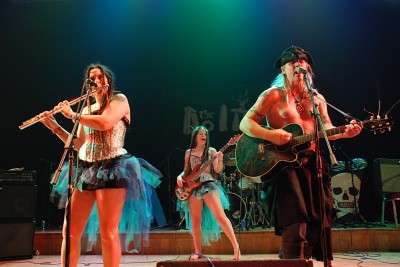
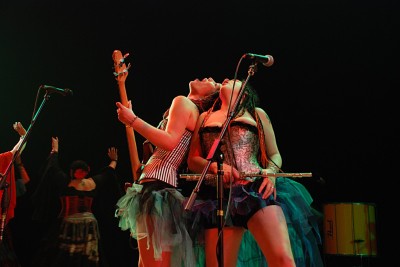
‘The Oak and Holly Kings’ and ‘Holly and Mistletoe’ are beautiful Yule inspired songs, sung by Taloch, his flautist daughter Keri and bassist Kayleigh.  They bring in the festive mood of Yule and the return of the Oak King.

With ‘Winter Solstice Night’ you can imagine yourself standing between the stones at Stonehenge, waiting for the first rays of sunlight to caress the sacred monoliths and bring forth the first tantalising hopes of spring.

‘Witch Mountain’ takes you to a celebration of Witches, warming themselves around a campfire high upon a lonely mountain.  And in fact, the lyric was especially written for Katherine Brown (who has a cabin on such a mountain in South Carolina) by Dolmen lyricist and friend, Mark Vine. Taloch’s music almost adds a kind of old style Southern Baptist feel to the piece.

‘Summerland’ is an exquisite song  beautifully sung by Keri, and especially written by Taloch for a loved young lady lost to the Summerlands, who sadly committed suicide at the time that the album was being made. Taloch and Keri sang it live at her graveside at the funeral for the first time in a very emotionally charged atmosphere, as one can imagine. I heard it live at Witchfest International last week, and it brought shivers to my spine.

‘Frosty Solstice Morn’ ,’Witch I am’ and ‘Bringing The Outside In’ take you into a different mood… you can hardly sit still with these songs, which really  shake up the festive mood. In fact, ‘Bringing The Outside In’ was written by Mark Vine and Taloch as a tribute to the late lamented 1970s Glam Rock star Marc Bolan. and the music is very reminiscent of his unique sound.

From the opening track ‘Witches Reel’, a rousing song about a genuine witch trial from the 17th century, to the last track, ‘Bringing The Outside In’, the Winter Solstice album is full of innovative surprises at every turn.

On the whole, a brilliant album. Not your usual Yuletide album, but one with the distinctive sound and song writing style of The Dolmen.

The Dolmen will be performing live at the Conference of the PFI International on 14th May 2011, don’t miss it!!

Resistance is useless …. Surrender now and buy an album. You will all be Dolmenised in the year to come !

Geplaatst in English articles, Muziek, Recensies | Getagged , | Reacties uitgeschakeld voor Winter Solstice : The Dolmen

Volle maan van Het Getijde – Yule 2010

Het getijde – Yule 2009

Het is nu 15 oktober 2010. Dit is de eerste keer dat ik bewust voor de online versie van de WR ga schrijven. Er is veel gaande achter en voor de schermen, beweging alom. We groeien naar een nieuwe tijd… een tijd met veel mogelijkheden. Maar toch zal ik het tastbare boekje heel erg missen. Lekker wegkruipen in mijn comfortabele stoel met een WR zal er niet meer bij zijn of het moet een oude uitgave zijn 😉

De volle maan van Het Getijde valt dit jaar precies op 21 december. En bijzonder is dat er dan ook een maansverduistering zal zijn. Mooi om te weten… het schijnt dat een maansverduistering, zonsverduistering en blauwe maan, transformerend dan wel helend kunnen werken….als je er iets mee doet natuurlijk. Zelf loop ik al drie jaar mee met de Modron Maanvrouwen Cirkel en bij Modron werken wij met de Keltische maankalender. Iedere volle maan heeft zijn eigen thema en naam, afgeleid van het lied van Amergin, de aartsdruïde. Zijn lied heeft 13 zinnen…en de tweede zin, is “Ik ben een golf in de oceaan”. En deze zin hoort bij deze volle maan, de tweede volle maan van het Keltische jaar.
Het zijn de golven van de oceaan. Golven die je meenemen, waar je niet tegenop kan zwemmen. Het komt aan op overgave, overgave aan het onbekende. Je veilige plek loslaten en je mee laten stromen naar… ja, dat weet je niet. Dat is overgave 😉 je sturing uit handen geven door te kiezen voor stroming. Durf jij verder te gaan dan het voor jou bekende en te vertrouwen dat in deze onpeilbare diepten een nieuw leven wacht? Durf jij alles los te laten zodat het nieuwe gevonden kan worden?

Volle maan van Het Getijde, geef je over aan het onbekende. Thema, ‘Laat oude patronen los’.

3 december 2009. Wandeling gedaan op 2 december.

Met nieuwe maan had ik gewandeld met mijn man. We hebben een stilte wandeling gedaan. Ook ben ik toen naar mijn nieuwe boom geweest en van hem kreeg ik de boodschap ”Samen” mee. Mijn intentie voor deze volle maan. Samen is heel nieuw voor me… alleen kende ik. Lekker vertrouwd en passend in mijn zijn. Nooit geen verwijt. Samen is anders, samen is loslaten van oude patronen. Soms geen controle, hoe iets gebeurt. Vertrouwen dat het goed is als anderen het doen. Het is heerlijk dat we nu samen de dingen doen die gebeuren moeten.
Bij de boom voegde Luca zich bij ons. Deze mysterieuze staartloze zwarte kat, die altijd wel ergens opduikt in of bij het bos, mijn gezel op vele vollemaanwandelingen. Hij was aan komen hollen toen ik bij mijn boom was. Mijn man zat gehurkt toen ik me omdraaide en Luca draaide om hem heen. Ik had natuurlijk al vaker van Luca verteld… maar nu maakten ze kennis. Luca is toen lang meegelopen, door het bos, over de dijk en daar ging hij zitten… onder de straatlantaarn. Het was een mooie wandeling en deze komende volle maan zouden we op het strand van Harlingen wandelen. We hadden een overnachting in de vuurtoren van Harlingen gewonnen met de bankgiroloterij.

Op 2 december had ik een lange dag gehad en om 21.00 kwam ik thuis. De maan stond al in vol ornaat te pronken aan een heldere hemel. Tja, wetende dat morgen het weer bewolkt en zelfs regenachtig zou zijn… heb ik direct mijn staf gepakt en ben ik gaan wandelen. Ik was vast ongedurig geworden als ik op de bank zou gaan zitten. Ik zou niet te lang wegblijven 😉

Het is koud, lekker droog en fris koud… niet de waterkou van de afgelopen tijd. Ik ben helemaal blij dat ik besloten heb te gaan. Ik heb niet eens mijn kisten aan gedaan, het is droog en het blijft droog.
Het ruikt nergens naar buiten… tja, gewoon heel fris. Geen herfstlucht geen bezwangerde bloemengeur… niets. Over het water hangen mistflarden, het water is melkachtig in dit licht. En het is zó helder! Het vriest… in het buitengebied is het gras berijpt.
Als ik zo loop te genieten van de rust (alhoewel ik niet de enige ben… ik zie behoorlijk wat fietsers in het buitengebied, wel drie!) schiet er een grote vallende ster voorbij. Echt een knoepert en best lang. Tjonge, ik mag een wens doen… en die doe ik natuurlijk! (net lees ik in het schrijven van Caroline, de vrouw achter Modron, dat de sterren die opkomen aan de horizon ons vertellen wat onze schatten kunnen zijn… en daar ben ik me terdege van bewust, met mijn wens).
Luca! Ik roep hem… zou hij er weer zijn vanavond? Mijn wandeling gaat natuurlijk naar mijn boom. Boom 8… voor wie het nog niet weet… veel nieuwe lezers 😉 Boom 8 staat in een lange rij knotwilgen en is de buur van Boompje. Boompje was mijn ielige knotwilgje waar ik anderhalf jaar naar toe ben gewandeld met iedere volle maan. Boompje was heel wijs. Boompje is helaas een paar maanden terug omgewaaid en Luca heeft de boom ernaast aangewezen als mijn Vollemaanboom.
Bij Boom gekomen groet ik toch nog steeds het stompje van Boompje… ”verstilling” krijg ik van het stompje, en verder blijft het stil. Boom 8 verteld mij van “Samen-zijn”. Mijn intentie was samen, samen-zijn is daar weer een verdieping van. Zijn kan alleen NU… genieten kan ook alleen NU… Loslaten kan ook alleen NU… er zijn voor elkaar, kan ook alleen NU.
Al mijmerend loop ik verder het bos in, tjonge wat is het licht! De maan staat echt boven het bos. Als ik op de brug van de Klif kom, die helemaal wit is van de rijp. Besluit ik even op de reling te gaan zitten… bbrr, kouwe kont! Maar het is hout dus al snel wordt het aangenamer. Ik voel me heel dankbaar voor wat er de afgelopen twee maanden is gebeurd. Ik vertel het de maan, dat ik zo blij en dankbaar ben voor wat er in onze levens is mogen gebeuren… door er te zijn voor elkaar. Ik heb verteld bij de volle maan van de Barden en mijn man is gesprongen van de Klif (Volle maan van de Klif) en nu zoeken we samen verdieping van wat er meer is… er is zo veel mogelijk, in vertrouwen! Een warm gevoel komt er over me, zo op die koude reling in de vrieskou. Als ik aan het vertellen ben, komt er een fietser langs op de dijk 😉 Ach, die denkt vast dat ik aan het telefoneren ben ;-).

Na een tijdje vervolg ik mijn weg over de dijk… wordt het toch een lange wandeling. Onder aan de dijk, over het water, hangen prachtige ‘Witte wieven’. Aan het eind van de dijk zie ik een zwart/wit paaltje achter de hekken. Het is een paal, echt geen Luca… Luca!? Dan komt de paal in beweging en komt op me toe rennen. Precies waar we hem twee weken geleden achter hebben gelaten. Het is toch wel heel mooi. Luca houd me tegen door steeds voor mijn voeten te lopen of voor mijn staf stil te staan. Ik besluit dan maar op straat te gaan zitten… het is droog en koud. Hij kruipt op schoot en dabbert op mijn enkels… ik blij dat ik dikke afzaksokken aan heb. Zo zitten we geruime tijd te knuffelen. Als ik opsta om verder te gaan, loopt hij mee. Dat verwondert me, ik dacht dat hij achter zou blijven. En inderdaad na 100 meter houdt hij het voor gezien, onder de lantaarnpaal bij de driesprong… waar ik hem ooit voor het eerst heb ontmoet, gaat hij zitten… het is goed. Ik zwaai nog een laatste keer en vervolg mijn weg. Over de brug naar huis, vertellen van Luca, de vallende ster en de mooie mistflarden. Bij huis ga ik nog wel even op de plaats van ‘De boom die was’ staan om weer even te aarden… terug te keren in de bewoonde wereld.
Zo blij dat ik gewoon gegaan ben!

Op 3 december, zijn we inderdaad in Harlingen… maar mooi geen strand en zeker geen maan. Het had zo mooi geweest. Boven in de vuurtoren, ramen rondom… prachtig zicht op de Waddenzee en een mooie volle maan. In plaats van een wandeling hebben we gewoon intens van elkaar genoten.
Om 20.00 zaten we aan de champagne (die we vijf jaar geleden op ons 12,5 jarige huwelijksdag hadden gekregen) met Sushi… boven in de toren, met uitzicht op elkaar en een hele mooie toekomst, gewoon door er in te vertrouwen.
Een heleboel achter ons gelaten… ik mis het geen moment!

Liefs, Loes

Als ik het zo terug lees… dan treft het thema me “Laat oude patronen los”. Wat hebben we dat goed gedaan vorig jaar. En wat heeft het ons gebracht…? Vorig jaar heb ik mijn man ten huwelijk gevraagd… mijn nieuwe man. Dit jaar zullen wij met Blauwe maan (21 november) voor een tweede maal verbonden worden in de echt. Tijdens een handvasting waar wij Amergin zullen danken voor zijn lied en de lessen die we eruit getrokken hebben. Bij ons hunebed in Havelte zullen wij, tussen de twee eiken, onze liefde voor elkaar overnieuw uitspreken. En dit is alleen mogelijk omdat we vorig jaar ons overgeven hebben aan het onbekende… en het nieuwe ons heeft kunnen vinden.

Geplaatst in Volle Maan Wandelingen | Getagged , | 1 reactie

Review: Enochian World of Aleister Crowley

Enochian World of Aleister Crowley – by Aleister Crowley, Lon Milo DuQuette, Christopher S, Hyatt Ph., illustrated by David P. Wilson
(Original Falcon Press), ISBN 978-1-935150-27-5
http://www.originalfalcon.com/b-enochian_world.php

Cover of Enochian world of Aleister Crowley

Do you want to know about Enochian magic? The core of this book is Aleister Crowley’s Liber Chanokh, a book that contains all you need to know to work with the system. That would be nothing new, it has been out for ages. The secret of the book is in the overview and comments, DuQuette and Hyatt explain the whole system in such a simple way that anyone can follow and understand. There are two chapters dealing with the theory and practice of sex magic in an Enochian context, which some could find interesting. There is even an Enochian dictionary to help out with the Calls, and a lot of instructive illustrations. All these combined make this book probably the best one on Enochian Magic to date – it’s short, simple and contains every detail you need to know. I highly recommend it to anyone who’s interested in Enochian magic, it’s ideal for those who are new to this way of working, but those familiar with the system can also gain new insights.

Saddie LaMort

Geplaatst in Boeken, English articles, Recensies | Getagged | Reacties uitgeschakeld voor Review: Enochian World of Aleister Crowley

‘Before, Chaos, and After’ – an Interview with Phil Hine

By Christopher Blackwell (first appeared in ACTION, Imbolc 2010)
Note from Morgana: In the Lammas issue of Wiccan Rede we reviewed  Phil’s books ‘Condensed Magic’, ‘Prime Chaos’ and ‘The Pseudonomicon’. (All from the Original Falcon Press). Coincidentally Christopher Blackwell interviewed Phil … read on.

Christopher: How would you describe yourself?

Phil: I think of myself as a fairly ordinary person, just bobbling along pursuing stuff that interests me.

Christopher: In many of the so called Earth Religions there seems to be this rather romantic and friendly view of nature. Yet the first thing you seemed to see in growing up in Blackpool was that the sea was powerful, not controllable, it was dangerous and could kill you.

I see the same thing here in my desert where life and death or (are?) side by side and part of each other rather than separate and different. In fact all life feeds off the death of something else. If we are going to be what we call Nature Religions, don’t we need to really get to know nature and not work from our romantic fantasy view of it, sort of a Disneytized view of what nature is?

Phil: Absolutely, although I think this is a mammoth task. One of the themes I’m circling around on my blog is looking at the extent to which contemporary forms of occultism are rooted in Cartesian dualism the idea that mind and world are entirely separate.
This is why the work on perception and the environment by theorists such as Tim Ingold and phenomenologists such as Merleu-Ponty interest me so much. I’m very interested in attempting to write about magical practice in a way that doesn’t reinforce that inner-outer ‘divide’ you so often find in ‘western’ representations of magic.

Christopher: You have mentioned that would struck you about nature was its wildness and not being in control of it. Yet many magical systems are about gaining and keeping control, or at least the illusion of it.

Are there times when we need to have things out of control, to learn that even in magic a lot of things are not ours to control in the first place and that magic can take us to dangerous and unexpected places? Do we need to understand a wildness in magic, even as we need to understand the wildness of nature?

Phil: Well, control is a very complex issue isn’t it? I know for example that one of the reasons I was attracted to magic in the first place was the promise of acquiring some degree of ‘control’ agency if you like over my life, which I felt I lacked. I think that one of the reasons I was so attracted to the idea of ‘results magic’ is the idea that you can effect change in the world without it changing you back, without ‘consequences’ and so reinforcing my sense of being ‘powerful’ in the world.

Not long ago I was put in a situation where I was told I was going to be ‘downsized’ and there was absolutely nothing I could do to influence the decision. I spent at least a week walking around feeling sick to my stomach; the feeling that there was absolutely nothing I could do about this was awful. It passed though, but during that period I made some poor decisions which were largely motivated by that fear.

I’d agree though that recognising that magic can take us to some unexpected places, is worth thinking through for me, that’s always been the crux of the matter being open to surprise from an unexpected direction. Dangerous though? I’m not sure about that.

Christopher: I know that it was the magic part that attracted to me even into Wicca. Danger is one of the excuses used not to teach teenagers magic, because of their constant roller coaster emotional ride makes for poor choices and decisions. Then there is unexpected consequences. We get results but in some other way than we expected.
In Wicca we have a few people afraid of using magic at all for fear it might even accidently cause unexpected harm to someone.

How much of this fear is overblown from your experience? Have you run into any areas where you felt yourself to be in danger in your magical practice?

Phil: I think in part, it relates to control and the inherent unpredictability of magic. As you say, results come “in some other way than we expected”. Despite much gassing about magic being a science it still doesn’t have that 1-to-1 repeatability – do ritual x and you will have result y – has it?

I actually think it’s okay to be have concerns about it. Many years ago, whilst I was training to be a therapist, I had an experience which comes to mind on this subject. I was working in a psychiatric dept and my boss and I were doing this ‘guided visualisation’ walking a group of clients into a forest. Fairly innocuous stuff you might think. Suddenly there’s a bang and this old geezer is out of his chair, out of the room and down the corridor.

So I checked up on him and he said that last time he’d been in a forest (in similar circumstances to the journey scenario) was in 1940, listening to the rest of his platoon being machine-gunned by Germans. Neither me or my boss were expecting anyone to react in the way this guy did to what we thought was a ‘safe’ exercise.

This whole danger/safety thing needs further discussion and  unpacking, I think. What I had in mind in answering your last question was the whole notion of “If you invoke demons your house will  burn down, and you will go mad and think you’re the reincarnation of Aleister Crowley’s pet hamster” which I think is, well, something of an overstatement.

Christopher: Have you run into any areas where you felt yourself to be in danger in your magical practice?

Phil: I certainly used to worry a lot. I once got really worried because I’d been imagining myself doing the LBR whilst lying in bed and fell asleep before I got to the end. And yes, I’ve done quite a bit of that drama-queen posturing of “this ritual is a symbolic death. I might really die. Please, dear soror, pass on my collection of monographed socks to the British Museum.” Ahem.

But yes, I have felt myself to be in danger. Being walked blindfold onto the point of a very sharp athame in a room full of people comes to mind for a start. Certainly I had a moment of “Oh shit, what if…”

Christopher: I know in my own magical experience, there comes a question of how much of what I am doing is necessary, and how much is merely decoration? Usually when we think of magic, we think of ceremony, tools, movement and chants and what have you? It is certainly good theater, but is all of it necessary? What about magic in day to day life, where it might not be possible to do full ceremony?

Phil: All you really need is to remember that you have a body. Yes, it’s nice to do ‘big ritual’ occasionally in the way you describe, but I really think we need to break down this distinction between ritual space and day-to-day-life space.

Much of the tantra practice I do is oriented towards ‘day-to-day life’ and ‘big ritual’ doesn’t necessarily translate into heightened intensities. I’ve had some really intense experiences as by-products of really simple rituals, with not much in the way of props and limited space for flouncing around.

Christopher: We humans have this habit of anthropomorphizing, be it nature, animals or the gods. This makes us think all these things act and react much like we do. But they are not humans, not the animals, not nature, and certainly not the gods. How can we find out what they really are unless we stop trying to fit them into a human box? So I go back to the beginning, the gods are powerful forces. I have no idea of whether they have personalities, or names, or if they need them. I know sometimes they appear to do things in my favor and occasionally help. I don’t know why. What are your thoughts on the god/desses?

Phil: I am a devotee of Lalita (‘loveliness’). She is everywhere and in everything; transcendent and imminent simultaneously, I feel her ‘presence’ in all moments of joy, surprise, wonder.

“Let my idle chatter be the muttering of prayer, my every manual movement the execution of ritual gesture, my walking a ceremonial circumambulation, my eating and other acts the rite of sacrifice, my lying down prostration in worship, my every pleasure enjoyed with dedication of myself, let whatever activity is mine be some form of worship of you.”
Saundaryalahari

Christopher: What was different about Chaos Magic from other systems of magic that drew you to it for awhile?

Phil: I first encountered what came later to be described as ‘Chaos Magic’ through two texts – Peter J. Carroll’s ‘Liber Null’ and Ray Sherwin’s ‘The Book of Results’ – in the late 1970s, and engaged with the latter text first.

This was because I’d come to Austin Osman Spare a few years earlier and found it quite easy to get into the practice of casting sigils. In fact it was Spare’s work which got me interested in magic in the first place. Between 1979-80 I was doing a correspondence course in Qabalah, and was getting ticked off by my mentor because I told him I was doing sigils.

I didn’t really start doing anything with Liber Null until 1981, by which time I was in a Wiccan coven and the High Priestess encouraged me to “find out more about this chaos stuff”. I think what initially attracted me to Liber Null was the idea that all magical ’techniques’ were essentially similar, regardless of the context they appeared in – and also the idea that you could take material from outside of what’s considered to be the ‘occult corpus’ – such as fiction. I’d already made some moves in this direction – having done some rituals inspired by Lovecraft’s fiction between 1979-80.

I think Chaos Magic was, for me, an arena for experimentation, although it didn’t really become dominant in my strands of practices until the late 1980’s.

Just to give some more background – I first became interested in Tantra in 1982, following a series of recurring dreams in which the goddess Kali loomed large, but again, this didn’t become a dominant theme for me until the late 1980s.

I read Robert Anton Wilson’s & Robert Shea’s Illuminatus! trilogy in 1985, and began to work with the discordian goddess Eris around that time – but I was approaching Eris very much through a Wiccan framework, being still in contact with the coven I’d joined in 1981.
In fact I didn’t really begin to focus heavily on what was then becoming known as Chaos Magic until around 1986, after I’d left the coven and started to strike out on my own.

I’d moved to Leeds by then, which was a kind of melting pot for experimental magic, and got involved with the Chaos scene there – as well as hooking up with people who were experimenting with Lovecraftian magic, Tantra, and politically-oriented Pagan activism. The ‘urban shamanism trilogy’ of chapbooks (you can find them on www.philhine.org.uk as pdfs) were written in this period, and, together with a few friends, I started publishing a monthly pagan ‘zine – Pagan News (again, there’s some pdf-ed issues on the website).

This was a very vibrant time for me – I was doing a hell of a lot of magical experimentation in different directions – and involved with several groups simultaneously.

In 1991 I moved to London, and because a high proportion of the people I knew were involved in the chaos magic scene down there, Chaos Magic came to dominate my approach to magic. I’d already written two short chapbooks on Chaos Magic – ‘Condensed Chaos’ and ‘Chaos Servitors’ – both based on stuff I’d been doing in Leeds, but these didn’t get released until I hit London – to be followed (in 1993) by the first edition of Prime Chaos – which I’d been working on since 1988. I did quite a few workshops, lectures, etc., both in the UK and in Europe/America – latterly through being a member of the IOT.

It was through the American head of the IOT – the late Bob Williams, that I managed to get a deal with what was then New Falcon Publications, who went on to publish ‘Condensed Chaos’. a heavily revised ‘Prime Chaos’, and my little chapbook on Lovecraftian magic – ‘The Pseudonomicon’, which remains my favourite of the three.

All the way through this heavily chaos magic-oriented period, I was still pursuing my interests in tantra, and by 1995 was running, with my partner, a tantrically-oriented group – and were in contact with other tantrically-inclined folk in the UK (AMOOKOS). We were also regular participants in a kind of free-form, dance-oriented pagan group called ’the Mad Shamans’.

Christopher: At what point did you come to the conclusion it was time to move on to something else?

Phil: It wasn’t that simple. One of the reasons I’ve answered the previous question with so much ‘biographical’ info is to highlight that I’ve always – until fairly recently – had several irons in the fire at once, and these irons were often related to the different networks of friends I was moving in.

I’ve friends for example, from my period of being Wiccan-dominant who still invite me to gatherings and I’m sometimes amazed how easily I can slide back into that framework for ritual work – it’s like ‘coming home’ in a way.

But, to answer your question, I think I’d hit a point where I’d become dissatisfied with some of the patterns I’d let myself become habituated to. Firstly, I came to realise that a lot of my own practice had become workshop-orientated – by which I mean that I was doing stuff with a view to turning it into a workshop session, rather than for its own sake. So that had to stop.

Secondly, I left the IOT in 1996 (or thereabouts) and in so doing, lost contact with that particular network of chaos people. Thirdly, my tantric practice, which had become increasingly dominant for me, was what I wanted to concentrate on (don’t forget I’d been pursuing this on and off since 1982). This latter point might help understand one of my problems with Chaos Magic as an approach.

One of CM’s primary assertions is that magic can be formulated in terms of ’techniques’ and that the theoretical underpinnings or cultural-historical context in which those ’techniques’ appear isn’t really important. A good example would be the idea of ‘mantras’.

The term mantra is now used fairly widely in books on modern magic to denote any iterative repetition of a word or phrase – so something you’ll sometimes see advocates of CM asserting is that singing rune charms and repeating Hindu mantras are essentially the same procedure – the forcus being on the repetition of a word or phrase – in order to enter an altered state of consciousness. So mantras are something that gets chanted – and the chanting (i.e. the iteration) is what’s important – not the content or the context.

This, to me, is a kind of reductionism. It predicates a universal explanation – that the ’technique’ of iterative speech is enacted in order to establish an altered state of consciousness in the practitioner – and subordinates all instances which apparently look as though that’s what’s going on – to it. So for an advocate of CM, there would be little practical difference between, say, chanting a rune poem, repeating the Gayatri mantra, or singing a sea shanty.

This kind of reductionism isn’t unique to CM though – it’s a recurrent theme throughout a great deal of contemporary magical writing regardless of genre (or ’tradition’) and, I would argue, has its roots in early 20th century efforts to create universalist explanations of religion and magic as seperate categories of discourse. A further problem, IMO, is that this kind of reductive explanation is conservative – it reinforces “what we already know”
to be the case and elides the possibility of difference.

So, to go back to ‘mantras’ – if you ‘know’ that mantras are essentially about chanting, I’d say that it is less likely for you to try and find out if there is anything else which is interesting about them – like the context in which tney appear – what they mean, and what theories inform them. I think this is a classic example of the kind of reductive approach to magical ideas that I have come to be critical of – it’s a kind of cultural tourism where subjects such as Tantra are exoticised but rewritten so that that they are made familiar, and anything different is brushed away as being incompatible with an assumed ‘western’ mindset or dismissed entirely as inconsequential.

In contrast, I’d say that actually knowing something about the languages, cultures and histories in which the practices I’m engaged in emerged from not only is interesting generally, for me, it actually enriches my practice. The two feed into each other and support each other. In fact, I’d say that in order to take an approach to Tantra that draws from historical texts (as opposed to formations such as ‘Western Tantra’) then its pretty much unavoidable – because they’re not going to make much sense unless one does attempt to engage with the context around the practices.

I tend to talk about the approach I’m taking to Tantra as being ‘hybridised’ – because I’m not trying to just take practices from say, India’s ‘medieval’ period and replicate them in a contemporary context – I’m trying to fuse them with some ‘western’ theoretical positions that I feel resonate with them
very well – hence on my new group blog project (http://enfolding.org)
I’m writing about facets of tantra using the ideas of modern philosophers such as Deleuze or Merleau-Ponty, or the emerging field of embodied cognition, which challenges the mind-body divide that so much of western culture is dominated by.

Some other of my current interests – such as how Victorian occult movements – particularly the Theosophical Society – have shaped contemporary occultism, have come about partly because I became interested in how Tantric ideas first streamed into Western occultism, and partly because I was (very briefly) involved in the Theosophical Society during my initial phase of getting interested in the occult.

My most recent writings – apart from the tantra-oriented material, are more historically-oriented – looking at particular ‘moments’ in occult history and attempting to analyse them in terms of their wider cultural contexts. So I’ve just had published (in Abraxas magazine) an examination of the life and works of Lobsang Rampa; and have just finished a monograph on the Leadbeater sex-scandals in the Theosophical Society and how they relate to debates about sexuality and the occult in the early 20th century.

Christopher: Is there anything else that you think might be important for our readers to know?

Phil: I suppose my publishers Original Falcon Press would like me to mention that my books on Chaos Magic – Condensed Chaos, The Pseudonomicon, and Prime Chaos are being made available again.

Geplaatst in English articles | Getagged , | Reacties uitgeschakeld voor ‘Before, Chaos, and After’ – an Interview with Phil Hine