Review: Damh the Bard

From the official website:

Damh is a modern-day Bard whose spirituality, and love of folk tradition, is expressed through his music, storytelling and poetry. Drawing on the Bardic traditions his performances are both entertaining and educational, weaving a tapestry of myth, peace, and anthems that speak directly to the heart, but never without a good splash of humour. Damh is a musical storyteller who works within the world of myth that cannot be proved; where the Faerie really do dance on Midsummer’s Eve, where the trees talk, and the Hollow Hills take you into the realms of Annwn. Where the Goddess rides her horse, guiding you to magic, and the Horned God of old calls us from the shadows of the Greenwood.

In August this year I finally caught up with Damh and saw him perform in Prague.  This was not his first concert in Prague. Last year (2009) a concert tour had been organised by PFI Czech Republic and PFI Austria. It was obvious at the Prague concert that Damh is well loved. Singing and dancing along we had good old-fashioned folk evening.  He sang several songs from the two CD’s I now have. 🙂

BTW he – and Cerri – gives some pretty damh good workshops too. They got about 15 Czech pagans (and me)  to write as many poems in one session.. not bad going at all!

Thanks Damh (& Cerri)  for brightening some bleak moments!

Tales from the Crow Man: Damh the Bard

Whispered secrets, voices long gone,
You will hear within my songs,
2 Ravens, and a murdered knight,
Lord Donald’s servant, taking flight,
Morris bells on Beltane morn,
Pipes and Drums as the Sun is born,
So raise your voices, dance, and sing,
And let the Crow Man’s tales begin…

… and indeed the beautiful and mournful ‘Twa Corbies’. This is a traditional song and is sung from as far apart as Scotland to the Czech Republic. Also known as the ’three Ravens’ it describes the forgotten knight who lies dead and is only mourned by his hound, hawk and lady.

Lord Donald’s or Lord Darnell’s servant is found in the song ‘Matty Groves’. Damh has kept to the arrangement “based on the classic Fairport Convention version from Liege and Lief” – which is one of my all time favourite albums.

From real rockers such as ‘The Two Magicians’ and the tale of the lusty smith, to the haunting ‘Wild Mountain Thyme’ ….. will ye go lassie go…

As Nature Intended: Damh the Bard (November 2010)

This album is Damh’s latest release.  It is recorded live at ‘Witchfest International’ (Fairfield Halls, Croydon, UK) November 2007. As the title suggests this is Damh at his most ‘pure’. I really like it though! Classics such as ‘Song of Awen’ and the beautiful ‘Lady of the Silver Wheel’.

‘Pagan Ways’ and ‘Anarchy in the UK’ are contemporary songs and in the best folk/protest tradition. ‘Obsession’ is one of my favourite tracks…

Let me come to you and be the Sun in your sky,
Under my heat on golden corn you will lie,
The Moon may shine but you are the Goddess I see,
And lying there naked you wake up the God within me.

The last track is ‘The Horned God’ – an unofficial biography by Damh the Bard. A story in the best bardic tradition! A story of the Oak King and the Holly King.

See :  http://www.paganmusic.co.uk for more information and ordering. Plus other albums and the ‘Damh the Bard Songbook’.

Do take a look if you don’t know his work – he is one the best pagan artists around!

Geplaatst in English articles, Muziek, Recensies | Getagged , , | Reacties uitgeschakeld voor Review: Damh the Bard

Herne and Odin – A Berkshire Disguise

by Jim Bennett

The Great God Odin wears many masks. From the dawn of Northern European prehistory He and His shamans wore the antlered headdress and led the hunters to herds of reindeer to feed their families. In times of Chiefdoms and centralised political authority, Odin becomes the Great Chief of the Gods and Leader of the Wild Warriors who transform into the wolf and the bear. In this guise, Odin is known by the titles, Glad of War; Spear Thruster and Father of Battles. During the time of the Christian conversion he sacrificed himself upon the Tree of Knowledge to bring the runes and salvation to a people spiritually uprooted and confused by a Middle Eastern God. He was also known as Woden among the Saxons – the personification of the wise and just ruler.  Always at Christmas he gave gifts, and in disguise, brought good fortune to those who provided hospitality to lost travellers. Through the tears and pain of human history, Odin has always been amongst us, hiding behind many faces. To illustrate one important face of this shape-shifting God we will know turn to a story that might have been:

Cerdic, son of Sturl, and great swordsman among the warriors of the Chief, was an oath-breaker and a murderer. Although bound by oath to respect the marriage of Elga, fairest of all the maidens in Saxon Berkshire to Oswald Taeppa’s son, in a fit of murderous passion he ambushed Oswald and killed him as he returned home from celebrations only a few days before the wedding.

Knowing himself outcast and condemned, Cerdic fled for his life into the great forest that was later to become Windsor, on the evening before the Midwinter solstice. Crashing drunkenly and blindly into the forest, he heard what sounded like hissing whispers among the branches of the great oak and ash forest. The wind whispering through the trees mocked him – sounding like laughter to his anguished imagination. Cursing himself and the Chief of the Gods he stumbled down a steep ravine and fell against a great oak. Amidst the whispering of the leaves, a low rumble was heard, and a vibration that twisted his guts in a great vice, sending every hair erect all over his body. His eyes darted frantically right and left as the rumble grew in intensity until the sound of a thunder clap seemingly split his skull in twain. The lightning that illuminated the sky with jagged fingers of silver caused his eyes to blaze with incandescent terror.

A sound that threatened to rip his very soul from his sorry carcass reverberated through the wind-swept, thrashing branches – the sound of a hunting horn, the thunderous crashing of hooves and the trumpeting cries of dead warriors could mean only one thing – his doom and eternal damnation. For Woden, foremost among the Gods, resplendent in his headdress of bloody antlers, was hunting for him and the wolves that ran beside this commotion of avenging souls were prepared to tear him limb from limb. Crouching like a babe in the womb, Cerdic squeezed his eyes shut and trembling did not see the blazing single red eye that pierced the night – he only felt the gigantic hand that swept him up like a bird in flight. High into the night sky he flew falling into the jaws of the two ravenous wolves that fought to tear him limb from limb. That night such a storm swept the land that people called it for generations, Woden’s Storm.

The people of Cerdic’s village never saw him again, but spoke in whispers of the Wild Hunt and the Bringer of Justice to whom no man or woman could ever escape.

The Brothers Grimm were the first scholars to identify Odin with the wild hunt. Variations of this title exist all over Northern Europe. In the Netherlands the wild hunt is known as the Woedende Jager. In Denmark it is known as the Odinsjagt. In Germany it is known as the Wodensheer and the Wutanesher. One story comes from Hannover in Germany, collected by folklorists whose storytellers did not doubt for one moment the truth of this encounter:

The dogs of the air often bark on a dark night on the heath, in the woods, or at a crossroads. Country dwellers know their leader Wod and pity the traveller who has not yet reached home, for Wod is often malicious, seldom kind. The rough huntsman spares only those who remain in the middle of the path. Therefore he often calls out to travellers, “In the middle of the path!”

One night a drunken peasant was returning home from town. His path led him through the woods. There he heard the wild hunt with the huntsman shouting at his noisy dogs high in the air.

A voice called out, “In the middle of the path! In the middle of the path!” But the peasant paid no attention to it.

Suddenly a tall man on a white horse bolted from the clouds and approached him. “How strong are you?” he said. “Let’s have a contest. Here is a chain. Take hold of it. Who can pull the hardest?”

Undaunted, the peasant took hold of the heavy chain, and the huntsman remounted. Meanwhile the peasant wrapped his end of the chain around a nearby oak tree, and the huntsman pulled in vain.

“You wrapped your end around the oak tree,” said Wod, dismounting.

“No,” responded the peasant, quickly undoing the chain. “See, here it is in my hands.”

“I’ll have you in the clouds!” cried the huntsman and remounted. The peasant quickly wrapped the chain around the oak tree once again, and once again Wod pulled in vain. Up above the dogs barked, the wagons rolled, and the horses neighed. The oak tree creaked at its roots and seemed to twist itself sideways. The peasant was terrified, but the oak tree stood.

“You have pulled well!” said the huntsman. “Many men have become mine. You are the first who has withstood me. I will reward you.”

The hunt proceeded noisily, “Halloo! Halloo!” The peasant crept along his way. Then suddenly, from unseen heights, a groaning stag fell before him. Wod appeared and jumped from his white horse. He hurriedly cut up the game.

“The blood is yours,” he said to the peasant, “and a hind quarter as well.”

“My lord,” said the peasant, “your servant has neither a bucket nor a pot.”

“Pull off your boot!” cried Wod.

He did it.

“Now take the blood and the meat to your wife and child.”

At first his fear lightened the burden, but gradually it became heavier and heavier until he was barely able to carry it. With a crooked back and dripping with sweat he finally reached his hut, and behold, his boot was filled with gold, and the hind quarter was a leather bag filled with silver coins.

In Britain, the Wild Hunt is associated with Herne the Hunter.

Odin wears many disguises and bears many names. One of the God’s titles is known as Herian, or War Leader of his elite band of warriors, the Herjar. In this guise, Herian or Herne the Hunter roamed Windsor Great Park and was known by the Christians to lead damned souls in a monstrous, ear-splitting Wild Hunt across the sky. Immortalised by William Shakespeare, the legend was already very well established in Elizabethan times. Where a great mound nearby in Taplow attests, the culture of Berkshire’s Woden worshipping ancestors remained very much alive.

It is now the early Middle Ages and England is ruled by the King Richard II. Long forgotten are the shrines and temples of the Old Saxon Gods. However, the folk memory of the power of the Horned God and Woden live on. One day the King was hunting in Windsor Great Park with his favourite royal huntsman, Richard Horne. Richard could smell the ground to find game and had a sixth sense which led the King to many a victorious hunt. One day however, after dismounting to kill a wounded stag the dying beast thrust itself at the King. The huntsman threw his body between the King and the beast, receiving the grievous wounds to protect his sovereign. While the King and his companions grieve a mysterious stranger named Phillip Urswick, a wise and cunning man, tells the King to cut off the horns of the stag and tie them onto the head of the dying huntsman. This is accomplished and Horne makes a miraculous recovery. However, in order to live the huntsman had to lose his almost supernatural gift in knowing where to lead the hunt. After a while, desolate, forlorn and fallen from favour the poor huntsman makes his way to a Great Oak and hangs himself from a branch. From that time, his ghostly apparition appears as the leader of the Wild Hunt, a time when the souls of the damned rampage across the sky with thunderous hooves and baying hell hounds. No one who encounters such a host can survive the experience.

The Merry Wives of Windsor by William Shakespeare, performed on the evening of April 23rd 1597.

There is an old tale goes, that Herne the hunter,
Sometime a keeper here in Windsor forest,
Doth all the winter-time, at still midnight,
Walk round about an oak, with great ragg’d horns –
And there he blasts the tree, and takes the cattle,
And makes the milch-kine yield blood, and shakes a chain
In a most hideous and dreadful manner…
You have heard of such a spirit, and well you know
The superstitious idle-headed had received, and did deliver to our age,
This tale of Herne the hunter for a truth.


During the time of the Victorians, the memory of Herne the Hunter was featured in an opera written by Edward Oxenford called Herne. A Legend of Royal Windsor (1887).

Tis nigh two hundred years ago
That Herne was Hunter to the Crown
And none so deft with spear and bow,
As he who still enjoys renown.
He’d bring to earth the fleetest hind,
Defy the fiercest boar at bay,
Train up the hawk, the bugle sound
Unearth the fox, the badger slay.
But soon a gentler task arose,
He sought to wind a maiden’s heart;
Of love he felt the keenest throes,
And bared his breast to Cupid’s dart.
The maid he loved was vowed to God,
A nun within a convenet nigh;
Yet from the holy paths she trod,
He wean’d her feet, alas! To die!
For soon, in a fit of jealous rage,
He slew the maid he loved so well;
And in remourse, the sinner’s wage,
A self-made gift to death he fell.
Chorus: Yes, on that withered oak he died,
A murderer and a suicide.And since the day he joined the dead,
He roams at night the forest land,
With antlers on his ghostly head,
Surrounded by a phantom band…

An epilogue to our story. In 1962 CE, a group of teddyboys, doubtless fuelled by copious drink and suspicious substances were partying near the modern site of Herne’s Oak. It was a pleasant summer evening and the stars were shining their dazzling display in the sky. Staggering across the uneven ground, one of the lads kicked a large, archaic hunting horn out of the bushes. Odd he thought in his brain-soaked confusion, that someone would leave such an artefact on the grounds for anybody to find. Unaware of the dire warning oft repeated by storytellers from ages long past, the lad put the horn to his lips and blew one loud blast. Suddenly, amidst a great clap of thunder and with an ominous rattle of chains, an enormous black figure appeared before them with flaming red eyes, an enormous rack of antlers surmounting his head. Fearing that the devil had appeared, they fled from the sight in great anguish and terror.

So kind audience, there we have four stories, separated by centuries but united around a single Entity – loved, venerated, respected and most of all – feared. The story doesn’t end here for at Midwinter even still the cry of Odin or Wotan rings loud and long as pagans gather around the Royal Oak and in countless places across this fair island to worship the Gods, Goddesses and Nature Spirits of old. The story of Odin is not finished in the 21st century, his time dear friends is only beginning.

This article was published in Wiccan Rede, Beltane 2004.

Geplaatst in English articles | Getagged , , , | 1 reactie

Gedachten bij Silvesteravond

(C) Wiccan Rede * Winter 1987

We staan op de drempel van een nieuw zonnejaar, en waarschijnlijk heb je al een nieuwe kalender om aan de muur te hangen. Dit is misschien een goed moment om niet alleen je af te vragen wat het nieuwe jaar brengen zal, maar ook eens over de verschillende systemen na te denken: het zonnejaar en het maanjaar en de Grieks-Orthodoxe kalender.

Het woord kalender stamt trouwens af van het middeleeuws Latijnse calendarium: notitieboek met tijdsaanduiding. Dit brengt ons bij de heilige kunst van het schrijven en rekenen. Isodore van Sevilla vertelt ons dat het alfabet door de maangodin Io, in haar Egyptische verschijningsvorm Isis, werd geschapen. In het Midden-Oosten waren letters en getallen een gave van de Godin en haar priesteressen waren speciaal hiermee belast.

In het pre-Hellenistische Griekenland werd het alfabet toegeschreven een de drie Muzen, die identiek waren aan de schikgodinnen of Graeae, de naamgeefsters van de Griekse stammen. Het Latijnse alfabet werd geschapen door de archaïsche godin Carmenta, de moeder van ‘Carmens’ of toverspreuken (Engels ‘charms’). De Romeinse moeder van de voorbeschikking, Fata Scribunda, “de schrijvende schikgodin”, komt overeen met de Germaanse schikgodinnen die “die Schreiberinnen” worden genoemd. De godin van de maan schiep de tijd, met al zijn cycli van ontstaan, groei, verwelking en vernietiging, en daarom waren oude kalenders gebaseerd op de fasen van de maan en de menstruatiecyclus.

Er wordt wel gezegd dat het tijdsbewustzijn het eerst in de vrouw tot ontwikkeling kwam, vanwege haar natuurlijke lichaamsfuncties die samenhingen met de waargenomen maanfasen. De woorden ‘maan’, ‘maand’ en ‘menstruatie’ zijn dan ook verwant. ‘Mensis’ is het Latijnse woord en ‘men’ het Griekse voor ‘maand’. De Keltische woorden voor menstruatie en kalender zijn hetzelfde: miosach en miosachan (2). Vandaag de dag kan de tijd tussen twee menstruaties bij gezonde vrouwen variëren van 21 tot 35 dagen. Maar Stan Gooch neemt aan dat de vrouwen van oeroude stammen een collectieve menstruatiecyclus kenden, die samenviel met de maanfasen (3).

In onze tijd zijn er nog veel mensen die een kalender gebruiken die op de maan is gebaseerd. De Joden bijvoorbeeld, en één christelijk feest, Pasen, wordt bepaald aan de hand van de maan. (Voor de eenvoud wordt dit feest nu gevierd op de eerste zondag na de eerste volle maan na de lente-equinox, een overblijfsel van de veel ingewikkelder berekeningen voor het Joodse Pesach). De Joodse kalender kent 12 maanmaanden van 29 of 30 dagen elk, zodat een jaar 354 dagen telt. Omdat de jaarfeesten op het zonnejaar gebaseerd zijn moet de maankalender op het zonnejaar worden afgestemd. Daartoe wordt elke twee of drie jaar een extra maan-maand ingelast in februari of maar: zeven keer per 19 jaar. De kalender van de Islam kent uitsluitend maan-maanden, en hun jaar telt dus 354 dagen, en de maanden hebben geen vaste band met de seizoenen. (Desondanks komen plaatselijke feesten voor de op de seizoenen betrekking hebben in Islamitische landen). Er gaan ruwweg 103 moslimjaren in 100 jaren van Gregoriaanse kalender.

Voor praktische doeleinden, zoals het innen van belastingen en agrarische doeleinden, werden verschillende aanpassingen, gebaseerd op het zonnejaar, in gebruik genomen in de afgelopen eeuwen (4). De Romeinen kenden een zonnejaar, dat in de lente begon, met het nieuwe oorlogsseizoen. De eerste maand was gewijd aan de oorlogsgod Mars. ‘Aprillius” betekent ’tweede’ en de getallen 7, 8, 9 en 10 kunnen we nog steeds terugvinden in onze kalender. Sinds ongeveer 150 v. Chr. begint het zonnejaar in januari, omdat de Romeinse consuls hun ambt op dat moment aanvaardden. De zonnekalender kent twaalf maanden van 28, 30 of 31 dagen, en er wordt elk schrikkeljaar een extra dag ingelast. Verwijzingen naar de Juliaanse en de Gregoriaanse kalender zijn zonder twijfel in de bibliotheek te vinden.

Een maankalender kan bestaan uit lunaties of complete maancycli van ongeveer 29½ dag, of uit maanmaanden van 28 dagen. Dit laatste is het geval met de Keltische bomenkalender. Volgens Murry Hope “kwamen magische alfabetten en bomen-kalenders niet direct samen. De kalender verscheen in Engeland waarschijnlijk ergens tijdens het derde millennium voor Christus, terwijl het alfabet met de Kelten arriveerde, toen de bomen nieuwe, toepasselijke Keltische namen kregen”. (5). Echter ‘boom’ betekent ook ‘letter’ in alle Keltische talen, en de naam van de letters in het moderne Ierse alfabet zijn die van bomen, en de meeste van deze corresponderen met de lijst die Roderick O’Flaherty geeft in zijn  17 eeuwse ‘Ogygia’, naar Duald Mac Firbis, een bard die toegang had tot de oude geschriften.

Twee verschillende alfabetten schijnen bestaan te hebben, met variaties, namelijk het Beth-Luis-Nion, en het Boibel-Loth-Forann alfabet. Robert Graves beschouwt het eerste als het alfabet met de originele namen van de Ogham alfabet, dat gevonden is op talloze inscripties in Ierland, Schotland, Wales, Engeland, en het eiland Man; sommige van deze dateren van voor onze jaartelling. De uitvinding wordt in de Ierse traditie toegeschreven aan de Keltische god Ogma Zonne-gezicht. Er is een verband aangetoond tussen het Ogham-schrift dat in scripties werd gebruikt en een Grieks alfabet uit Etrurië uit de vijfde eeuw voor Christus, het Formello-Cervetri; maar desalniettemin is er bewijsmateriaal voor een oudere vorm van Ogham, met een licht, afwijkende volgorde der letters, dat in Ierland in gebruik was voordat de druïden uit Gallië in contact kwamen met het Formelio-Cevetri alfabet. Dit kan in Engeland overigens in gebruik zijn geweest, waar, volgens Julius Ceasar, de Gallische druïden heengingen om hun universiteitsopleiding in de geheime leer te volgen (6).

De zoektocht van Graves begint met een mystiek gedicht dat ‘De Slag der Bomen’ heet, en dat refereert aan een oude Britse traditie om een orakelheiligdom te veroveren door de naam van de God te raden. Graves neemt aan dat de dichter, Gwion, een alfabetisch geheim in zijn raadselgedicht had verborgen. Hij ontrafelt een gedeelte van het mysterie door de Goddelijke Namen  in te vullen. “Maar de enige hoop om ooit verder te komen met deze jacht is erin gelegen te ontdekken welke betekenis de letters van het alfabet hebben, afgezien van de eigennamen die in het raadsel aan hen worden gegeven. Spellen zij misschien het geheim van een religieuze formule?” Graves vergelijkt dan de bomen-alfabetten met het Griekse alfabet, en bekijkt ook de informatie uit Europese mythen en de geschiedenis. Uiteindelijk blijkt dat het bomen-alfabet ‘vertaald’ kan worden waardoor een Griekse invocatie ontstaat.
“Samenvattend verschafte deze Griekse toverspreuk van twintig woorden de namen van de letters van een alfabet dat in het laat-Minoïsche Arcadië in gebruik was, tot aan de tweede archaïsche, bij afstammelingen van de oorspronkelijke veroveraars, die waren overgestapt op de verering van de Witte Godin. Hun cultus omvatte het gebruik van een kunstmatige zonnekalender met dertien maanden, waarin elke maand werd vertegenwoordigd door een boom, en deze kalender was onafhankelijk van de uitvinding van het alfabet ontstaan en was in algemeen gebruik.

Sommige van de seizoensgebonden elementen dateren uit pre-dynatische tijden, zoals kan worden aangetoond, en ofschoon de bomen in de Ierse versie, de enige die intact is gebleven, een oorsprong in Pontine of Paphlagonia suggereren, kan de kalender ook zijn ontstaan in Aegaea of Phoenicië of Libië met een iets verschillende set bomen. Het is ook niet waarschijnlijk dat het alfabet in Brittanië arriveerde tegelijk met de kalender. De kalender kan aan het eind van het derde millennium voor Christus door mensen uit de nieuwe steentijd zijn meegebracht die een nauw contact onderhielden met de Egeïsche beschaving, en dingen als de landbouw, apicultuur (bijenhouden), de labyrint-dans en andere culturele zaken meebrachten. Het alfabet schijnt tegen het eind van het tweede millennium voor Christus door vluchtelingen uit Griekenland ingevoerd te zijn”. (6).

De Boibel-Loth kalender schijnt gebaseerd te zijn op een jaar met 360+5 dagen, terwijl de Beth-Luis-Nion kalender 364+1 dag bevatte: dertien maanden van 28 dagen elk, en één dag tussen het oude jaar en het nieuwe. Dus: een jaar en een dag. Het B-L-N-alfabet bestaat uit dertien consonanten, de maanden, en vijf klinkers, en deze vormen samen een cyclus van seizoenen. Elke letter is naar een boom of struik genoemd waar het de initiaal van draagt, en alle bomen zijn belangrijk in de Europese folklore. De eerste maan is Beth, de berk, en beslaat de tijd van 24 december tot 20 januari. 21 januari tot 17 februari is de maand van de Luis, de lijsterbes.

De tekening geeft de hedendaagse namen van de bomen en de data. Volledigheidshalve geef ik hier de originele namen: Beth, Luis, Nion, Fearn, Saille, Uath (H), Duir, Tinne, Coll, Muin, Gort Pethboc (P) en Ruis. P (Peith, de vlier) is niet de oorspronkelijke letter. Het is een substituut voor de klank NG (Ngetal of riet). De extra dag valt buiten het jaar met dertien maanden en wordt daarom niet beheerst door een van de bomen. Graves neemt aan dat de meest natuurlijke plaats tussen de R-maand en de B-maand is, op de dag na de winterzonnewende.

De klinkers vertegenwoordigen belangrijke data in het jaar. A (Ailm) is de zilverspar, (of de palm, in oud-Iers), de boom van de geboorte, de eerste dag van het jaar. Dertien weken later valt het lentepunt, vertegenwoordigd door deO (Onn) de (gouden) brem. U (Ura) is de rode midzomerstruik vol passie: de heide. E (Eadha) de boom van het herfstpunt en van ouderdom is de witte populier of witte abeel. De vijfde boom is de taxus, I (Idho), door Graves bij de laatste dag van het jaar geplaatst, de vooravond van de winterzonnewende. Het Boibel-Loth alfabet bevat de twee oude letters, Q (Quert, Appel) en Z (Straif, sleedoorn) die soms als CC en SS werden geschreven. Daarom, en omdat de appel- en notenoogst samenvallen, combineert Graves Coll, de hazelaar, met CC, de appel en Straif met Saille (6).

Er zou nog een heleboel te zeggen zijn over de betekenis van de verschillende bomen voor elke maand en over de vogels en zo meer die daarbij horen. Maar dit tijdschriftje is te klein om zoveel gegevens, mythen en verwijzingen te bevatten. Iedereen die interesse heeft kan The White Goddess of Practical Celtic Magic of The Gentle Arts of Aquarian Magic van Marian Green lezen, om maar enkele titels te noemen. Doreen Valiente laat in Witchcraft for Tomorrow ook het Ogham-alfabet zien, en het Wiel van Ogham. The Book of Ballymote geeft verschillende geschreven vormen van het Ogham (oorspronkelijk beperkt tot het gebruik in de doofstommen-gebarentaal). Dit boek werd door Solomon van Droma en Manus MacDonough samengesteld. Aangezien het werd uitgegeven in Ierland in 1391 zal het wel niet zo makkelijk meer verkrijgbaar zijn…

De inspiratie voor het schrijven van dit artikel komt voort uit een recensie-exemplaar van The ’88 Lunar Calendar, dedicated to the Goddess in her many guises, 12th annual editon. Uitgever en samensteller is Nancy Passmore. (Zie ook: http://www.thelunapress.com/Reviews.htm)
Dit boekje opent uit tot kalender met poëzie en grafiek op de ene bladzijde, terwijl op de andere bladzijde de lunaties staan: de fasen van de maan, data, een tekening van een blad, een uitleg van de naam van de maan. Meer informatie omvat de klinkers, de maan-tuin en een bibliografie. Slecht drie van de prenten bevielen me, maar dit is een kwestie van persoonlijke smaak.

Noten

  1. Silvesteravond is genoemd naar Sint Silvester, de eerste paus, en de dag is 31 december.
  2. The Woman’s Encyclopedia of Myths and Secrets. Barbara G. Walker.
  3. Guardians of the Ancient Wisdom. Wachters van de Oude Wijsheid. Stan Gooch. (NB van de typist: het is bekend dat ook nu nog meisjes die nauw bevriend zijn soms hun menstruatiecyclus veranderen zodat ze tegelijk menstrueren. En bij dieren, m.n. muizen, komt dit verschijnsel op uitgebreide schaal voor – meestal worden deze verschijnselen door de reuk gereguleerd.)
  4. The Penguin Dictionary of Religion, edited by  R. Hinnells.
  5. Practical Celtic Magic, Murry Hope.
  6. The White Goddess. Robert Graves.

Dit artikel verscheen oorspronkelijk in Wiccan Rede van Winter 1987.

Geplaatst in Artikelen | Getagged , , , , | 1 reactie

Background of Wiccan Rede

Logo Wiccan Rede - copyright Merlin Sythove

Wiccan Rede is a Dutch/English quarterly magazine on Wicca and Witchcraft. Wiccan Rede Online is the successor of the paper magazine Wiccan Rede that appeared from Spring 1980 until and including Lammas 2010.

Wiccan Rede has its roots in Gardnerian Wicca, but has always presented views from other traditions within and without Wicca. To understand the terminology used, we indicate the background of the magazine.

Wicca, or modern Witchcraft, is an initiatory path, open to those who want to become a priestess or priest and to follow the path of initiation and training within a regular coven. G.B. Gardner was the first to document this tradition, and the word wicca.

Wicca is on one hand a nature religion, revering a Goddess and a God, celebrating eight seasonal festivals and thirteen full moons, and working magic. Many people nowadays use the word Wicca to describe solely the religion. The words Witchcraft and solitary Witchcraft are used as well by the ones that want to connect individually with the Goddess and the God, without following the initiatory path.

Previous issues and articles
Previous issues of the magazine, from the period 2003-2010, can be ordered from http://www.silvercircle.org/wiccanrede.htm.
Some older articles can be found here: http://www.archive.silvercircle.org/.

Donations
Wiccan Rede Online is available for free, but costs are made for it. We do appreciate your donation!
Within the Netherlands you can transfer your donation to bank account ABN/AMRO 45.64.08.401 of Silver Circle, Zeist. Mention ‘donation’.
From other countries please use the PayPal-button ‘Doneren’.

Disclaimer
The opinions expressed in the articles in Wiccan Rede Online are those of the authors, and not necessarily those of Silver Circle. Mentioning of a course, workshop, pubmoot, organization, group etc. in the Agenda section or address list does not mean that Silver Circle recommends this course, group, etc.

Copyright
The copyright of the individual articles and illustrations remains with the authors. The copyright of Wiccan Rede Online is held by Silver Circle. We ask our authors – when they use illustrations by other people – to use copyright free illustrations or to obtain the right to use the illustrations.

Geplaatst in Artikelen, English articles | Getagged , , , | 2 reacties

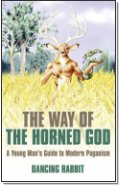
Review: The Way of the Horned God

Dancing Rabbit : The way of the Horned God – A young man’s guide to modern Paganism
O Books, 2010, 153 p. ISBN 978-1-84694-267-9
http://www.o-books.com/obookssite/book/detail/657

Cover of the book Way of the Horned God

There are not many books about male Pagan spirituality. Certainly not when compared to the number of books on female spirituality. This one is even more special, because it directs the young Pagan man, the growing boy with an interest in Paganism. It gives sound advice, without being patronizing. It is a guide, more than a book with lessons. The basics of Paganism are explained and the reader gets a good idea of how to get started practising Paganism. Starting with cleaning the room and learning how to use the washing machine, and grounding and centering. And even before that, by deciding how to deal with ones parents, if they are not Pagan.
After a chapter about ‘Encountering the Sacred’ – how to meditate, how to create a sacred space – there are chapters on The Goddess, on The Horned God and on ‘The Horned God and the Goddess’. The final chapter is about ‘Your passage into manhood’, separation from childhood and entering puberty – separate rituals that a boy or young man can do on his own if no one is around to guide him through it.
The author is an eclectic Wiccan and member of the Unitarian Universalist Church and has borrowed from Humanism too for this book. But boys and young men from (or with an interest in) any Pagan denomination can learn a lot from this book.

Geplaatst in Boeken, English articles | Getagged , | Reacties uitgeschakeld voor Review: The Way of the Horned God

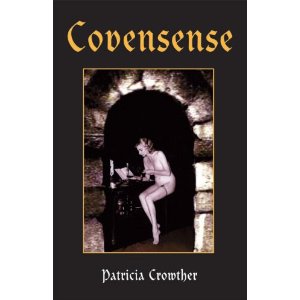
Review: Covensense

Patricia Crowther: Covensense
Hale, 2009, 224 p., hardcover, ISBN 978-0-7090-8720-5, £16.99.

Cover of the book Covensense

At eighty-one years of age, Pat Crowther is not as active as she used to be. But she still gives lectures, and people write to her. She was asked questions by several people, and followed the suggestion of compiling a ‘question and answer book’ with many of the questions asked her, and her answers. In this way Patricia Crowther enlightens her readers about many facets of wicca. The questions and answers are grouped around the subjects such as ‘The Magic Circle’, ‘Gerald Brousseau Gardner’ and ‘Symbols and Spells’. The Appendix gives general guidelines, and a Bibliography and Index are added. Some questions are basic, such as: ‘What is a witch’s ladder?’ But since many of the people asking questions are quite knowledgeable about wicca, the answers are informative for experienced witches too.

Geplaatst in Boeken, English articles | Getagged | Reacties uitgeschakeld voor Review: Covensense

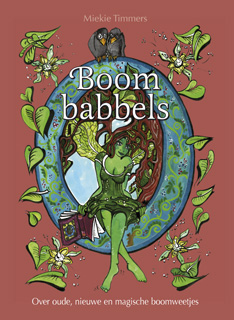
Recensie: Boombabbels

Miekie Timmers: Boombabbels – over oude, nieuwe en magische boomweetjes, en alles wat je altijd al van bomen wilde weten
Schors, 2008, 138 p. ISBN 978-90-6378-752-3
http://www.schors.nl/product.php?ArtikelID=398

Voorkant van het boek Boombabbels

Wat weten we eigenlijk van bomen, we letten er vaak nauwelijks op als we eronder lopen. In dit boek zijn het de wezentjes die in de bomen leven die vertellen over hun boomsoorten. Op die manier leren we de linde, berk, eik, beuk, den, kastanje, walnoot, es en appelboom beter kennen. De vorm zal misschien niet iedereen evenzeer aanspreken, maar dit is een charmant boek, met illustraties van de schrijfster, dat zowel geschikt om te lezen door volwassenen als door kinderen. Er staan ook een aantal recepten in, zoals een tinctuur tegen reumatische aandoeningen, die niet geschikt zijn voor de jeugdigere lezers, maar voor hen staat er weer veel in over Noordse en Griekse mythen. En misschien kan bij een volgende druk de typfout op p. 14 hersteld worden. Die methode om een plant of boom te vermeerderen, heet marcotteren, niet macrotteren.

Geplaatst in Boeken | Getagged | Reacties uitgeschakeld voor Recensie: Boombabbels

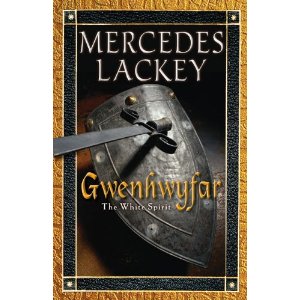
Review: Gwenhwyfar

Mercedes Lackey: Gwenhwyfar, the White Spirit
Daw Books, 2010, 407 p. ISBN 9780756406295
http://www.mercedeslackey.com/books/gwenhwyfar.html

Cover of the book Gwenhwyfar

This is another retelling of the Arthur saga, and Ms Lackey has found a new angle: the way Guinevere experiences the history. One of the Gwenhyfars that is, because the idea upon which this novel is based, is Triad 56 of the Trioedd Ynys Prydein, that lists the ‘Three Great Queens’ of Arthur’s court. All of them by the name of Gwenhwyfar. And there’s supposed to be a fourth one, a ‘little Guinevere’ and she also is a character in this story.
The setting is not so different from ‘Mists of Avalon’ by Marion Zimmer Bradley, friend and mentor of Mercedes Lackey. Arthur’s Britain is a realm on the verge of Paganism and Christianity. The Saxons form a constant threat. Arthur has united the Celtic tribes with the help of his companions, and of the Merlin. Main character Gwen is the third daughter of a Celtic king, drawn to her fathers beautiful warhorses and dreaming of becoming a warrior. In that she succeeds, but then the story takes another turn. I did not find the last part the best Mercedes Lackey ever has written, but the reason may be that I do not like the tragic ending of the Arthur story. And that is not something Ms Lackey could change. But like Marion Bradley, she has given a plausible story, and she had me enthralled while reading it.

Geplaatst in Boeken, English articles | Getagged , | 1 reactie

Review: Over van alles, maar vooral over de liefde

Tiny Fisscher : Over van alles, maar vooral over de liefde.
Moon, 2008. 238 p. ISBN 978-90-488-0112-1.
Zie ook http://www.tinyfisscher.nl/12-2/over-van-alles-maar-vooral-over-de-liefde/ 

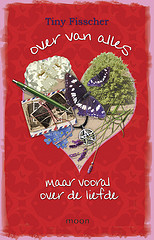
Voorkant van het boek Over van alles, maar vooral over de liefde

Het pentagram op de kaft sprak me aan, en maakte me nieuwsgierig naar het boek. Het gaat over jongeren (ook de lezersdoelgroep) en leest lekker weg, terwijl het toch een aantal stevige onderwerpen aanroert. De opa van Brid is overleden, en Brid ziet – net als toen ze klein was – weer aura’s, ze hoort haar opa praten en ze weet dingen van mensen zonder dat die aan haar verteld zijn. En ondertussen praat ze met haar vriendin en met haar nichtje, en is ze verliefd op een jongen van school. De dialogen, en de manier waarop ook brieven en e-mails in het boek verwerkt zijn, maken het verhaal herkenbaar en inleefbaar, ook voor degenen die het allemaal niet meegemaakt hebben. Ook wicca wordt op een natuurlijke manier verweven in het verhaal. Grappig is dat ik een spreuk terugvond die ik ooit zelf vertaald heb. Het artikel, uit een Wiccan Rede uit 1986, is niet op internet te vinden, en het lijkt me zeer onwaarschijnlijk dat iemand anders de tekst van Starhawk met dezelfde woorden vertaald heeft. Je kunt zien dat de schrijfster research heeft gedaan voor dit onderdeel van het boek.
Als je zelf geen belangstelling hebt voor jeugdboeken, geef het dan cadeau aan een meisje in je omgeving. Grote kans dat ze er blij mee is!

Geplaatst in Boeken | Getagged , | Reacties uitgeschakeld voor Review: Over van alles, maar vooral over de liefde

Colofon

Wiccan Rede is een Nederlands/Engels kwartaalblad over wicca en hekserij. Wiccan Rede Online is de voortzetting van het papieren tijdschrift Wiccan Rede dat verscheen van voorjaar 1980 tot en met Lammas 2010.

[See here for an English article on the Background of Wiccan Rede]

Het nummer Yule/Winter 2010 is een proefnummer. De redactie test de mogelijkheden uit die het online medium biedt. De bedoeling is om vanaf Imbolc / Voorjaar 2011 elk kwartaal een nieuw aanbod aan artikelen, recensies en meer te bieden. Sommige rubrieken worden tussentijds aangevuld met nieuwe berichten. De redacteuren beslissen zelf of er op hun artikelen gereageerd kan worden. Reacties moeten wel eerst worden goedgekeurd door de redacteur.

Discussies zijn ook welkom op het Silver Circle Forum, waar je uitgebreid kunt discussiëren, vragen stellen en op de hoogte blijven van nieuws en evenementen. Surf naar www.forum.silvercircle.org .

Wiccan Rede Online wordt kosteloos ter beschikking gesteld aan de lezer, maar is niet gratis. Er worden kosten gemaakt, en we stellen donaties zeer op prijs. Je bijdrage is welkom op bankrek. 45.64.08.401 t.n.v. Silver Circle, Zeist, o.v.v. ‘donatie Wiccan Rede’. Je kunt ook de PayPal-knop ‘Doneren’ gebruiken.

Geplaatst in Artikelen | Getagged , , , , , , | Reacties uitgeschakeld voor Colofon