Harran: Last Refuge of Classical Paganism – part I

Harran: Last Refuge of Classical Paganism (Version 2.0 – April 2014)

For many years, I have been researching and writing a book on the subject of the origins of the modern Witchcraft movement.  I now believe that a direct line of transmission can be traced from the Hermetic and Neoplatonic theurgy of late antiquity to the beginnings of the modern Craft movement in the 1930s.  Of course, any such transmission must be embedded within the wider context of the transmission of Hermeticism in general from the Classical world to the European Renaissance and the beginnings of the Enlightenment.

Anyone looking into this history cannot help but be struck by a glaring gap.  At the end of the Pagan world in the latter days of the Roman Empire, so the sources tell us, several Hermetic and Neoplatonic scholars left the Empire to go “to the East”.  At the beginning of the revival and rediscovery of Classical knowledge in Europe, Classical texts in Arabic translations, including the Hermetica (the revealed teachings of Hermes Trismegistus), came back to Europe “from the East”.  What happened during the 500 or so years in-between?  And where “in the East” did classical Graeco-Roman knowledge (and possibly classical Greco-Roman Paganism) survive?

One name comes up over and over again: Harran.  Even so, there is relatively little information about this ancient city in Western sources.  As more and more of my sources pointed to Harran, and in the face of an almost total lack (in the 1990s) of available information about the city and its people, I resolved to go and see for myself, talk to the local authorities and scholars, and find what I could.  Anna Korn and I visited the area in January of 1998.  This article incorporates many of our findings.

Harran before the Neoplatonists

The city of Harran was founded c. 2000 BCE as a merchant outpost of Ur, situated on the major trade route across northern Mesopotamia (Green 1992: 19).  The name comes from the Sumerian and Akkadian “Harran-U”, meaning “journey”, “caravan”, or “crossroad” (Kurkcuoglu 1996: 11).  For centuries it was a prominent Assyrian city, known for its Temple of “Sin”, the Moon God (Green 1992: 23).  Harran is in the middle of a flat, dry plain that was described as a “barren wasteland” even in antiquity, nourished only by its many wells (another possible meaning of “Harran-U” is “broiling heat”).  In this baking, desolate landscape, the Sun was an enemy and the Night a comforter.  The Moon, the ruler of the Night, must therefore be the supreme deity and therefore, to a patriarchal culture, male.  Sin was the giver of fertility and of oracles.  In this latter capacity, he also served as kingmaker.  Many rulers sought his blessings and confirmation of their reign, endowing the city of Harran and its temples with riches in the process.

As early as the middle of the 2nd millennium BCE, the Harranians established a pilgrimage site at the Giza Plateau in Egypt (Hassan 1946: 34).  In later centuries, they would say that the Pyramids were the tombs of their gods, Idris (Hermes) and Seth (Agathodaimon) (Green 1992: 110, 174, 212).  Beginning in the 6th century BCE, after the fall of Nabonidus, Harran was ruled by the Persians until the coming of Alexander the Great.  In the 4th century BCE, Alexander conquered the area.  After him, Harran was part of the Hellenistic Seleucid Kingdom until the 2nd century BCE, when the Parthians conquered the Seleucids.  In the 1st century BCE, the Romans arrived.  During this time, Harran passed through many hands, usually at least nominally under foreign authority, but in practice independent.  It was during this period that a Roman army led by Crassus was defeated by the Parthians near Harran (called Carrhae by the Romans) in May of 53 BCE.  It was one of the worst military defeats in Roman history; one the Romans would never forget (Stark 1966: 114-23).

In the 4th century, 363 CE, the last Pagan Emperor Julian stopped at Harran at the beginning of his Persian campaign.  He consulted the oracles at the Temple of the Moon (called either “Selene” or “Luna” in the Roman histories, reflecting Roman ideas of the Moon’s gender).  The oracles warned of disaster. Julian ignored the warnings and was killed during the campaign; some say by a Christian in his own ranks (Smith 1976: 114).  His body was brought back by way of Harran, and Harran was the only city in the Empire to declare citywide mourning after his death.

This complex history of Harran is important in order to understand the city’s eventual fate.  For much of its history, Harran welcomed any would-be conqueror that came along, switching allegiances at the drop of a hat, and so went peacefully on about its own business.

The Coming of the Neoplatonists

By the 6th century CE, Paganism in the Roman Empire was fighting a losing battle for survival.  Pagans had been forbidden to teach, and finally, to sacrifice.  Temples were being closed – if not destroyed – all over the Empire.  In 529 CE, the Byzantine Emperor Justinian ordered the closing of the Academy at Athens, the last true bastion of Pagan learning in the Empire.  In response, the last teachers of the Academy, including the Neoplatonists Damascius and Simplicius, invited by a Persian monarch who knew the value of philosophers, fled “to the East”, specifically, to Harran (Chuvin 1990: 137).  There, they founded a Neoplatonic academy that survived at Harran up into the 11th century (Chuvin 1990: 139, 149).

Neoplatonism began as a school of philosophic & spiritual thought in the 3rd century CE with the works of the Roman philosopher Plotinus (b. 205 CE).  Educated in Alexandria, he travelled to Persia and eventually settled in Rome to teach.  Beginning with the Middle Platonic concept of the Divine Creator of the universe, or Demiurge, Plotinus introduced three radical concepts.

First, he postulated the existence of a divine, ineffable unity more fundamental than the Demiurge.  This he called “the One”, although it was also sometimes called “the Good”, “the True”, and “the Beautiful” (akin to “the Dryghton” of some contemporary Craft traditions).

Second, Plotinus argued that all Being emanates from the One through a hierarchy of realities consisting of: the One Mind (the Gods & the Demiurge) Soul (the Daimons) Matter, and at the same time returns to the One.  The Natural World, as we experience it, is the interaction of the organizing properties of Soul with the chaotic properties of Matter.

Third, Plotinus explained that while this hierarchy is ontologically true, emanation (prohodos) and return (epistrophe) are neither temporal nor spatial.  In other words, all things are always both emanating from and returning to the One and exist simultaneously at all levels of the hierarchy.  (An excellent, simple introduction to the concepts of Neoplatonism can be found in David Fideler’s Introduction to Porphyry’s Letter to His Wife Marcella (Zimmern 1986: 7-35).  For a more in-depth presentation, I recommend R.T. Wallis’ Neoplatonism, (Charles Scribner’s Sons, New York, 1972) or Pauliina Remes’ Neoplatonism (Univ. of California Press, Berkeley 2008).

Plotinus focused on a contemplative, ascetic approach to union with the One, as did his student Porphyry (b. 233 CE), who is responsible for organizing Plotinus’ teachings into the text known as The Enneads.  However, Porphyry’s student, Iamblichus of Chalcis (b. 250 CE), favoured an approach to the One that was known as “theurgy” or “god-making”.  If the One is immanent in all of the Natural World, reasoned Iamblichus, then not only is the Natural World inherently good, but all things in the Natural World are paths to the One.

Iamblichus also introduced a concept now called “the law of mean terms”.  This stated that for there to be any communication between any two things or concepts there had to be a third thing in between that partakes of both.  Since this idea can be applied ad infinitum, it meant that there could be no gaps between the levels of reality.  The spiritual universe of the Neoplatonists, therefore, became fluid and continuous, without defined boundaries between its many constituent parts and levels.  As a result, the Neoplatonists were polytheistic monists, understanding and relating to the many Gods & Goddesses as multiple faces or manifestations of a singular, all-encompassing Divine – the One.

Neoplatonic theurgy used techniques that we would recognize as “natural magick” in rituals designed to facilitate union with the One.  Its source material consisted of the writings of Plotinus, Porphyry, and Iamblichus (as well as earlier Platonists), the Egyptian writings attributed to Hermes Trismegistus (the Hermetica), the texts collected as the Greek Magical Papyri (PGM), and collected teachings (the Chaldean Oracles) “channeled” from Hekate and other deities by two 2nd century Roman theurgists (the Julianii).  With these texts as guides, Neoplatonic theurgy focused on two forms of “god-making”: deity possession and the creation of animated statues.  The former was very similar, if not identical, to the practice modern Witches know as “Drawing Down the Moon”, and indeed this phrase was used in antiquity to describe this practice.  The latter involved techniques that we have all but lost, but vestiges of which remain in certain contemporary Craft traditions.

Neo-Pythagoreanism was a 1st century CE revival of the number mysticism of Pythagoras.  Incorporating elements of astrology and Eastern magical lore, it was very popular with Iamblichus and was eventually subsumed into Neoplatonism.

Proclus of Athens (b. 412 CE) was the last major Neoplatonic writer before the closing of the School at Athens and the flight of the surviving Neoplatonic theurgists to safety in the Persian Empire.

In addition to its emphasis on philosophy and theurgy, the later Neoplatonists also stressed the importance of traditional Pagan popular religion (Athanassiadi 1993: 7-8; Shaw 1995: 148-152).  The continued performance of time-honored rites formed a necessary foundation to the more intellectual pursuits of Neoplatonic philosophy.  The Neoplatonists sought to incorporate and synthesize the practices of all Pagans known to them, believing that all were divinely inspired. In this, they were in tune with the syncretic nature of their age, in which composite, cross-cultural deities such as Serapis and Jupiter-Ammon came to predominate.  Accordingly, most Neoplatonists not only continued to practice traditional popular Paganism, but were also initiates of the Mysteries of Mithras, Isis, and others.  The 4th century Neoplatonist, Macrobius (writing in Saturnalia), reconciled the mythologies of the many Pagan traditions by asserting that all Gods were actually aspects of a single Sun God, and all Goddesses aspects of a single Moon Goddess, and that really there was just the God and the Goddess – and beyond them, of course, the One. (discussed in Godwin 1993: 142-143).

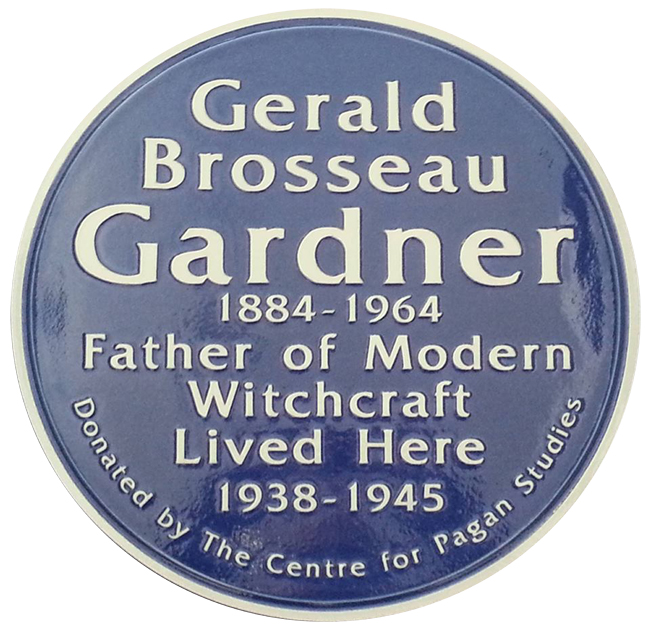
When Julian attempted his revival of traditional Paganism in the 4th century, he asked his friend Sallustius to write a sort of “catechism” of Paganism from a Neoplatonic point of view.  This text, On the Gods and the World, survives (best published version is Nock 1926).  It is not insignificant, I think, that Gerald Gardner – often called the founder of the modern Witchcraft movement – refers to this text in The Meaning of Witchcraft (Aquarian Press, 1959):

Now, the thing that will, I think, strike most the consciousness of the reader who is well versed in the teaching of the higher types of spiritualist and occult circles generally is not the antiquity of this teaching of Sallustius, but its startling modernity.  It might have been spoken yesterday.  Further, it might have been spoken at a witch meeting, at any time, as a general statement of their creed … the spirit of his [Sallustius’] teaching, the spirit of the Mysteries of his day, which is also the spirit of the beliefs of the witch cult, is timeless (Gardner 1959: 188-189).

Gardner specifically states that this Neoplatonic text from the ancient world may be understood as explaining the theology of the Craft as he understood it.  This statement alone should engender interest in Neoplatonism on the part of contemporary Witches.

In the 8th century CE, the Neoplatonic academy at Harran – the last bearers of the teachings of Plato’s Academy – were joined by other illustrious scholars…

Harran under Islam

In 717 CE, the Muslim caliph Umar II founded the first Muslim university in the world at Harran.  To give this university a good start, Umar brought many of the last remaining scholars (including Hermeticists) from Alexandria and installed them at Harran.  A later Harranian author, Ibn Wahshiya, would write about these Hermeticists in the mid-9th century CE:

The Hermesians let nobody into the secrets of their knowledge but their disciples, lest the arts and sciences should be debased by being common amongst the vulgar. They hid therefore their secrets and treasures from them by the means of this alphabet, and by inscriptions, which could be read by nobody except the sons of wisdom and learning.

These initiated scholars were divided into four classes. The first Class comprehended the sect Hara’misah Alhawmiyah, who were all descendants of Hermes the Great. … No man in the world was acquainted with any of their secrets: they alone possessed them. They were the authors of the books commonly called the books of Edris (Enoch) [Hermes – DHF]. They constructed temples dedicated to spirits, and buildings of magical wisdom. …

The second class of the Hermesians, called Hara’misah Alpina’walu’ziyah, the sons of the brother of Hermes, whose name was Asclibianos. … They never communicated their secrets, and Hermetic treasures to any body, but they preserved them from generation to generation, till our days. …

The third class was called Ashra’kiyu’n (Eastern) or children of the sister of Hermes, who is known amongst the Greek by the name of Trismegistos Thoosdios. … Their sciences and knowledge are come down to us.

The fourth class, denominated Masha’wun (walkers, or peripatetic philosophers), was formed by the strangers, who found means to mingle with the children and family of Hermes. They were the first who introduced the worship of the stars and constellations, … From hence came their divisions, and everything that has been handed down to us, proceeds originally from these two sects, the Ashra’kiyu’n, eastern, and Masha’wun, peripatetic philosophers (Hammer-Purgstall 1806: pp 23-30).In the mid-8th century, the Caliph Marwan made Harran his home and temporarily moved the capital of the Umayyad Empire from Damascus to Harran.

Later in the 8th century, Harun al-Rashid (the Caliph of Arabian Nights fame) founded the Bayt al-Hikmah (“House of Wisdom”) at Baghdad to be a centre for the translation of Greek and Latin texts into Arabic.  Scholars from Harran would later be brought there.

In the 9th century, 830 CE, the Caliph Abdallah al-Mamun (son of al-Rashid) arrived at Harran at the head of a conquering army and the question of how the Harranians responded has dominated both scholarship on Harran and the potential for archaeological excavation ever since.

The “Con-job story” and the “Sabians” of Harran

Al-Mamun was outside the gates of Harran, intent upon razing the city.  He demanded to know if the inhabitants were Muslims.  No, they said.  Were they Christians or Jews?  No.  Well, al-Mamun said, if they were not ahl al-kitab (“People of the Book”), they were not protected from violence by the Qur’an and he would sack their city.  What happened next depends on whom (or really, what) you believe (Green 1992: 4 -6, 100-123; Gunduz 1994: 15-52).

Some accounts say that the Harranians immediately replied, “We are Sabians!”

But one account, that of the writer Abu Yusuf Isha’ al-Qatiy’i, a Christian historian of the time who tended to make both Pagans and Muslims look bad in his histories, says that al-Mamun gave the Harranians a week to come up with an answer.  The Harranians then consulted a lawyer knowledgeable in Islamic law who told them, “Tell him you’re Sabians. No one knows what they are, but they’re protected!”  Either way, the Harranians claimed to be Sabians, produced a copy of the Hermetica as their version of “the “Book” and claimed as their prophet Hermes.  Hermes – under the name “Idrīs” or “Enoch” – was recognized by Muslims of the time as one of the prophets sent by God before Muhammed (PBUH) (Nasr 1981: 57, 105; Islam 1999: 30-35).

The question hinged (and still hinges) around three verses in the Qur’an (Ali 1405 AH: 26-27, 308-309, 953-954):

*Qur’an 2:62

Those who believe (in the Qur’an).

And those who follow the Jewish (scriptures),
And the Christians and the Sabians,
Any who believe in Allah
And the Last Day,
And work righteousness,
Shall have their reward
With their Lord on them
Shall be no fear, nor shall they grieve.

*Qur’an 5:69

Those who believe (in the Qur’an).

Those who follow the Jewish (scriptures),
And the Sabians and the Christians
Any who believe in Allah
And the Last Day,
And work righteousness,
On them shall be no fear,
Nor shall they grieve.

… and a third passage that is a paraphrase of these:

*Qur’an 22:17

Those who believe (in the Qur’an),
Those who follow the Jewish (scriptures),
And the Sabians, Christians,
Magians, and Polytheists,
Allah will judge between them
On the Day of Judgment:
For Allah is witness
Of all things.

At this point, history becomes a matter of doctrine, with one’s preference being determined by one’s interpretation of and beliefs about the Qur’an.

In the days of al-Mamun, the dominant interpretation of Islam was known as Mu’tazilism (Green 1992: 130-135).  Mu’tazilism relied upon an approach called kalam (“rationalist theology”) and argued that revelation was an ongoing process in which scripture guided and informed direct mystical experience of the Divine, to which one then applied reason in analysis and understanding.  Mu’tazilism was the view of the Abbasid caliphs (including both al-Rashid and al-Mamun) and led to a valuing of the philosophical writings of the Greeks and Romans.  Most of the writings available to them were those of the Neoplatonists and the Hermeticists.  (While most Islamic scholars of the time thought they were reading Plato and Aristotle, more often than not they were actually reading Neoplatonic commentators on Plato and Aristotle.)  The logical and philosophical arguments of the Neoplatonists in support of theurgy could be used to support the Mu’tazilite reliance on kalam.  After the Abbasids, in a period of religious upheaval, Mu’tazilism was replaced by a new dominant interpretation of Islam, Ash’arism.  Ash’arism was and is much more devotional in approach, focused primarily on the Qur’an and Hadith (recorded sayings of the Prophet).  It is much more conservative than Mu’tazilism, downplays mysticism (although there is a certain grudging acceptance of Sufism), and definitely wants nothing to do with Paganism.  (Interestingly enough, under Ash’arism the followers of Shi’ite Islam, who also believe in a form of continuing revelation, would rely on the arguments of the Harranians for support, protecting them where possible from oppression.  The idea of Shi’ite Muslims protecting Pagans from oppression will no doubt surprise many modern Pagans.)

An Ash’arite interpretation of the Qur’an favors the “con-job story”, assuming that the would never have protected any kind of Paganism.  Ash’arism remains the dominant interpretation of Islam to this day.

Accordingly, most books by modern Muslim scholars (e.g. Şinasi Gunduz) tend to endorse the “con-job story”, while most books by modern non-Muslim scholars (e.g. Tamara Green) tend to point out the following problems with the story:

1) The primary source for the “con-job story”, the Christian Abu Yusuf, had a vested interest in making both the Harranians and the Muslims look bad, the former as con-men and the latter as their dupes.

2) The people of Harran, clearly identified as “Sabians” and Pagans”, had paid the poll tax as non-Muslim “People of the Book” to the caliphate for many years prior to the arrival of al-Mamun.  Tamara Green notes that:

… the jurist Abu Hanifa (d. 767 C.E.) and two of his disciples has discussed the legal status of the Sabians of Harran in the century before al’Ma’mun’s visit [c. 830 C.E.] … it is indisputable that the Harranians were the representatives of the ancient pagan religion (Green 1992: 112).

In other words – and this is crucial – the Sabians of Harran were recognized as both “Pagans” and “People of the Book” long before al-Mamun’s arrival.

3) Harran was an extremely well known centre of learning at the time.  Having been the capital of Marwan’s Umayyad Empire only 80 years earlier, there is no way that al-Mamun or his administrators could not have known about the religion of the Harranians.

4) The Harranians are called “Sabians” in Islamic documents at least 75 years before al-Mamun’s visit.

The most reasonable conclusion is that the Harranians were indeed the Sabians of the Qur’an.  If so, what could the Lord have meant when he directed the Prophet to include these “Pagans” among the protected people?

Paganism in the Qur’an

Mecca at the time of Muhammed (PBUH) was steeped in traditions of the earlier prophet Abraham.  Abraham came to Mecca from Harran (the Well of Abraham, mentioned in the Old Testament, is outside Harran’s walls).  It is entirely possible that the Prophet was aware of the Neoplatonic / Hermetic religion of some of the Harranians and distinguished its philosophical / theurgical approach from the practices of the Pagans of Mecca, perceived as mired in superstition, “idolatry”, and priestly corruption.

The surviving textual evidence supports the conclusion that Muslim scholars of the time (as opposed to today) distinguished between the Sabians of Harran (i.e. philosophical, Hermetic / Neoplatonic “Pagans” who believed in the One and possessed a revealed text – the Hermetica – given by a prophet recognized by Islam) and “idolaters” (i.e. followers of popular “Paganism” as understood at the time).

One such contemporary Muslim author was al-Masudi, who visited Harran in 943 C.E.  Summarizing Michael Tardieu’s comments at the 6th International Congress on Gnosticism (U. of Oklahoma, 1984), Ilsetraut Hadot reports:

The ‘Sabians of Harran’ who explained to al-Masudi the Syriac inscription engraved on the knocker of their front door [“Who knows his own essence becomes divine.”] and who considered themselves to be ‘Greek Sabians’, are nothing other than ‘Platonists’ in the strict sense, or rather Neoplatonists. … al-Masudi grouped the Harranians into two categories: [those] ‘of a low and vulgar level’, partisans of the pagan religions of the city and the ‘sages in the strict sense’, the heirs of the Greek philosophers. … al-Masudi therefore distinguishes perfectly between the ordinary pagans of Harran and the Harranian philosophers (Hadot 1990: 282-283).

Qur’anic scholar D. Gimaret notes in the Encyclopaedia of Islam that the Muslim term for “polytheism” is shirk, literally “associationism”, as in “the giving of partners to God” or “accepting the presence at His side of other divinities”.  Indeed, both the Qur’an and Hadith condemn this on many occasions.  But most importantly for the point under consideration here, Gimaret notes that:

It would normally be anticipated that they [Muslims] would include all those who, in one way or another, accept the existence of gods other than the one God.  It would therefore be logical to expect to find the Christians described as such, seeing that, according to the Kur’an, the Christians make of God “the third of three” (V, 73), they deify Christ (V, 72), and “take for two gods beside God …” Jesus and his mother (V, 116).  However, this is not the case. The Christians belong to the “People of the Book” …, and the Kur’an takes care to distinguish — even if they are considered comparable to disbelievers …  – between “associators” and the People of the Book (or “those to whom the Book has been given”) … In other words, the Kur’anic term mushrikun [those who practice shirk or polytheism – DHF] does not in fact denote all those who, in some manner, practice a form of associationism, but only a minority among them – those among whom this associationism is most flagrant – i.e. the worshippers of idols … (Gimaret 1999: 484b-485b)

Gimaret goes on to say:

“For the Kur’an, in any case, it is evident, in view of the clear distinction indicated above, that the “associators” represent a category of disbelievers other than that of the “People of the Book”, i.e. the category of committed polytheists, these polytheists being identified at the time with idolators.”

It should be clear from this that the Sabians of Harran could be both monistic polytheists, in the same sense Christians were, and at the same time be “People of the Book” as described in the Qur’an.  There appears to be no a priori contradiction here.

Such a monistic polytheism, the dominant view among Pagan intellectuals in late antiquity (Athanassiadi 1999), is also at the core of the Craft tradition passed to Gerald Gardner, as he explained in Witchcraft Today:

They [the Witches] quite realize that there must be some great “Prime Mover”, some Supreme Deity; but they think that if It gives them no means of knowing It, it is because It does not want to be known; also, possibly, at our present stage of evolution we are incapable of understanding It.  So It has appointed what might be called various Under-Gods, who manifest as the tribal gods of different peoples; as the Elohim of the Jews, for instance, … Isis, Osiris, and Horus of the Egyptians; … [etc.] … and the Horned God and the Goddess of the witches (Gardner 1959: 26-27).

This monistic polytheistic cosmology of the early Craft is preserved and expressed in “the Dryghton Prayer”, recited in almost every Gardnerian circle:

In the name of Dryghtyn, the Ancient Providence, which was from the beginning, and is for eternity,

male and female, the original source of all things; all-knowing, all-pervading, all-powerful, changeless, eternal.      [à the One]

In the name of the Lady of the Moon, and the Horned Lord of Death and Resurrection;   [à Mind]

in the name of the Mighty Ones of the Four Quarters,                      [à Soul]

the Kings of the Elements,                                                                 [à Matter]

Bless this place, and this time and they who are with us.

(Crowther 1974: 39-40).

However, from the time of al-Mamun forward, in common usage “Sabian” became virtually synonymous with “Harranian”.  And as the writings of Arabic scholars about the planetary religion of the Harranian Sabians became more widespread, “Sabian” became synonymous with “astrologer” and sometimes “sorcerer” (as had the word “Chaldean” among the Romans).  However, the continuing controversy around the identification of Harranians as Sabians means that in modern discourse one must always refer to “Harranian Sabians” to distinguish them from the many other attempts to identify the Sabians as another group (most often the Mandaeans or “marsh Arabs” of southern Iraq, followers of John the Baptist who deny Jesus as an usurper and perverter of John’s message).

(An etymological aside … The very early connection between Harran and Egypt mentioned above, while noted by Egyptologists, has been largely ignored by those studying Harran.  As a result, a possible source for the name “Sabian” has also been ignored.  Most have focused either on the Arabic verb saba’a, ”to convert”, the Hebrew word saba, meaning “troops”, the Ethiopic word sbh, meaning “dispensing alms”, or the Syriac verb sb’, ”to baptize”.  I lean towards the Egyptian root sba, meaning “star”, “star-god”, and “teacher”.  As both followers of what has been called “astral” religion and renowned teachers and scholars, this would seem to be appropriate and fitting.)

(End of part I; continue at Part II and see Part III, Photo Gallery

Geplaatst in English articles | Getagged , , , | 2 reacties

Review: Magic of the North Gate

Magic of the North Gate
Josephine McCarthy
Mandrake of Oxford, 2013. 270 p. ISBN 978-1-906958-54-1
mandrake.uk.net

Cover of the book Magic of the North Gate by Josephine McCarthy

This is not a book for beginners or for people who think magic is an easy way to achieve your goals. Magic is hard work, it takes a long time to learn and long hours of practice. It can drain your body and will reveal the weaknesses of your body. (The chapter on ‘The body and magic’ gives some interesting insights).

Magicians and occultists have long spent their time in isolation, indoors, ignoring the land and beings around; the magic totally disconnected from the tides of power, knowledge and contact that flow from the surrounding land. How to connect with the land? One way is to explore the landscape and the inner populace of a land via spirituality/religious format and the other is to explore without the religious/cultural interface but with more of an attitude of what power is here? How does it work and how do I interact with it? It depends on the magician which way to choose. But even when you want to escape the city and build yourself a house in your private woods, the first thing to do is really look at the land, and learn how it works, how it would be if you were not there. We have to relearn things our ancestors probably knew well. The patterns and tides are much bigger than we are and it can be scary. Read the local myths and legends and ask for advice to your guides, be they spirits or deities. The building of shrines as a place for contact and to exchange energies is one of the tasks of a magician. The book gives ample examples of how working with the local spirits can work well, but also of the opposite.

Chapter 6 is dedicated to ‘Working with the magical elements’ and it starts by mentioning that two things are to be observed: 1. “Some recently formed traditions have aligned their use of the magical directions in accordance with psychology and poetic expression. That is more relevant for a religious pattern, like Wicca for example, but not so useful for magic, particularly magic that reaches deep into the inner worlds. The psychologised use of the directions and elements works only on the threshold of the human psyche and not beyond and is therefore limited in deeper magic.” 2. Some magical/Pagan traditions developed their use of the magical directions in direct relationship with the lay-out of the land where it developed. When the tradition moves to another land, that may be no longer relevant or helpful.

Chapter 7 is devoted to ‘Divine power and its containers’, chapter 8 to ‘The dead, the living and the living dead’ and chapter 9 to ‘Weaving power into form’.
Appendices deal with ‘The magical understanding of good and evil’ and ‘Understanding the void and the inner worlds’ and there’s an index.


Geplaatst in Boeken, English articles | Getagged , , | Reacties uitgeschakeld voor Review: Magic of the North Gate

Recensie: Mehen : essays over het oude Egypte (3)

Mehen : essays over het oude Egypte
Eindredacteur Jan Koek
Mehen, 2013. 160 p. ISBN 978-90-817536-2-3
www.mehen.nl

Voorkant van het derde boek Essays over het oude Egypte van Mehen.

Mehen, Studiecentrum voor het oude Egypte, is een stichting zonder winstoogmerk en wordt ondersteund door donateurs. De stichting verzorgt cursussen, lezingen, reizen en rondleidingen. En nu al drie boeken. Dit boek bevat essays over heel verschillende aspecten van het oude Egypte (achterin staat een chronologie van het oude Egypte), en prachtige foto’s die de verhalen ondersteunen en verduidelijken. Onno Mastenbroek geeft een beschrijving van de tempel van Seti I in Abydos, met foto’s van Wim de Jong, van wie ook een aparte fotoreportage is over deze tempel. Tijdens het Nieuwe Rijk vormde Koesj (of Nubië) een onderdeel van Egypte. Een van de meest heilige plaatsen in Koesj, de Gebel Barkal, vormt het onderwerp van een artikel door Jac Strijbos. Jan Wieringa schreef over de landbouwwerkzaamheden in het Oude Rijk, met vele afbeeldingen van mastaba’s uit die periode. De zieke Hans Alers schreef een bijdrage over de zodiak in de tempel van Dendera, over de geschiedenis en wat er op de zodiak is te zien. Jan Koek schreef over de Opettempel in Karnak en Karel van Dam over het graf van Irinefer in Deir el Medina. Dat is het arbeidersdorp in de Thebaanse dodenstad. Van Dam schreef eerder drie artikelen in het jubileumnummer van de IBIS ter gelegenheid van het veertigjarig bestaan van de vereniging Sjemsoethot. Daarin beschreef hij drie arbeidersgraven die hij op zijn reizen naar Luxor had bezocht.

Voor mij meest interessant zijn de essays van Liesbeth Honsbeek over ‘De inwijding van de godsgemalin Anchnesneferibra’ en van Marianne Goes over ‘De menat, een bijzonder cultusobject’.
Anchnesneferibra wordt als meisje van een jaar of tien naar Thebe gestuurd om voor de farao, die in het noorden zetelt, de politieke macht te bestendigen. De stèle waarop de inwijding van Anchnesferibra tot godsgemalin staat, bevindt zich in het museum van Caïro. Op de stèle staan haar aankomst, adoptie en de inwijding, tien jaar na haar aankomst, tot godsgemalin van Amon. Ze krijgt de titel van grote zangeres, degene die de bloemen draagt in de tempel, degene die voorop loopt bij de volgelingen van Amon en de titel van hoogste profeet. Die titel werd normaliter alleen gedragen door de hoogste priester in rang. De titel godsgemalin van Amon is alleen bekend uit Thebe, en tijdens de 18e dynastie alleen bij de belangrijkste koningin: Ahmose-Nefertari, Hatsjepsoet en haar te jong overleden dochter Neferoera. De godsgemalin was de aardse vrouw van Amon en moest voor een troonopvolger zorgen. Ze kreeg niet alleen een aantal titels maar ook koninklijke privileges: ze kreeg inkomsten en het beheer van landerijen en veeteelt. Anchnesneferibra heeft veertig jaar als godsgemalin geregeerd.

De menat is een cultusobject van de godin Hathor, net als het bekendere sistrum. Door het schudden van beide instrumenten worden levengevende, helende krachten opgeroepen. “Een menat bestaat uit drie delen: 1. een groot aantal vrij hangende kralensnoeren, waarvan beide uiteinden samenkomen in een dopje; 2. twee strengen met grotere kralen die eindigen in een 3. contragewicht of pendant, dat op de rug hangt om de zware ketting op de borst in evenwicht te houden. Dit contragewicht fungeert als handvat en komt ook als ‘pars pro toto’ voor.” Als de menat wordt geschud, maken de kralen een ruisend geluid. Het contragewicht is vaak van brons, gegoten in een mal van klei. Er staan foto’s van een aantal fraaie contragewichten in het boek. De kralenstrengen van de menat zijn vaak blauw, blauwgroen of groen van kleur: turkoois, malachiet of faience (geglazuurd aardewerk).

“Als cultusobject verscheen de menat voor het eerst in het Oude Rijk, gedragen door Nebet en Sesjesesjet, priesteressen van Hathor.” In het Nieuwe Rijk zijn veel meer voorbeelden te vinden van de menat als attribuut van Hathor en ook andere godinnen dragen de menat, soms ook goden, vooral Chonsoe en Osiris. Als halssieraad wordt de menat vaak door mannen gedragen terwijl vrouwen de menat meestal in de hand dragen. Op veel afbeeldingen dragen ze in de ene hand een sistrum en in de andere de menat. Beide instrumenten beschermen en brengen de zegeningen van de wedergeboorte en eeuwig leven en roepen de kracht van Hathor op.
De verleiding is groot om het hele essay hier te citeren, maar beter is als de lezers van deze recensie zelf het prachtige boek aanschaffen!

Geplaatst in Boeken | Getagged , | Reacties uitgeschakeld voor Recensie: Mehen : essays over het oude Egypte (3)

Harran: Last Refuge of Classical Paganism – part III – photo gallery

Don Frew and Anna Korn

Harran: Last Refuge of Classical Paganism – part III – photo gallery.
(Have you read Part I and Part II?)

This is a very small selection of the photos that Don Frew and Anna Korn took of HARRAN, TURKEY  and the surrounding area:

OLYMPUS DIGITAL CAMERA

OLYMPUS DIGITAL CAMERA OLYMPUS DIGITAL CAMERA OLYMPUS DIGITAL CAMERA OLYMPUS DIGITAL CAMERA OLYMPUS DIGITAL CAMERA

OLYMPUS DIGITAL CAMERA OLYMPUS DIGITAL CAMERA OLYMPUS DIGITAL CAMERA


OLYMPUS DIGITAL CAMERA

OLYMPUS DIGITAL CAMERA


OLYMPUS DIGITAL CAMERAOLYMPUS DIGITAL CAMERA


OLYMPUS DIGITAL CAMERA


OLYMPUS DIGITAL CAMERA


OLYMPUS DIGITAL CAMERA


OLYMPUS DIGITAL CAMERA


OLYMPUS DIGITAL CAMERA


OLYMPUS DIGITAL CAMERA


OLYMPUS DIGITAL CAMERA

With many thanks to Don & Anna for letting us use their photographs!

Of course I love the beehive shaped houses. I bet there will be some bee priestesses there somewhere 🙂

Hopefully I can visit Harran one day and see it all for my self. The importance of Harran, as Don has described in his article, is immense.  So much hasn’t been excavated. Let’s hope that in the future further research will be done. Don & Anna are continuing their work but it is so vast that extra hands will be welcome.

If you would like to contact them please let me know and I will pass on your email address.

Other addresses to check out:

Lost & Endangered Religions Project

http://www.religionsproject.org/

The LERP Staff may be reached online at LostRelig::at::aol.com.


Geplaatst in English articles | Getagged , , | Reacties uitgeschakeld voor Harran: Last Refuge of Classical Paganism – part III – photo gallery

Review: Wild Hunt and Furious Host

Wild Hunt and Furious Host : a literary prowl
GardenStone
Usingen, 2012. 257 p. ISBN 978-3-7322-4838-4
www.boudicca.de

Wild_Hunt_and_Furious_Host

Another book by the author of books on Goddess Holle, The Nerthus Claim and The Mercury-Woden Complex. As well-researched as ever, with facts and some fiction to make the story come alive, and with a clear distinction between facts and speculation and fiction. Not just the theories are offered, but also the original sources of the testimonies and many retold folk tales. In this book the prowl is a walk through a historical-literary landscape of folk belief, more specifically the areas where the Wild Hunt, the Wild Hunter and the Furious Host occur.
There’s a multitude of sources and texts from the classical antiquity, through the Middle Ages to the age of enlightenment and romantism and our time. There are stories from diverse socio-cultural environments and from all over Europe. Not all those stories have reached us in their original form. The stories are presented in chronological order quoted and discussed. GardenStone analyzes whether the popular assumption of an ancient connection between Woden and the Wild Hunter or the Furious Host was indeed passed down from the ages of the pagan Vikings, or even from much earlier pre-Christian times of the Germanic tribes.

Almost at the end of the book GardenStone reflects on the subject and examines which questions remain open and gives some explanatory comments. After that he shows us some work by artists (from the Romantic era and contemporary) and there are a lot of appendices and references to books and websites.

A well illustrated book on a very interesting subject and again highly recommended!

Geplaatst in Boeken, English articles | Getagged , | Reacties uitgeschakeld voor Review: Wild Hunt and Furious Host

Review: Dionysos, Exciter to Frenzy

Dionysos, Exciter to Frenzy : a study of the god Dionysos: history, myth and lore
Vikki Bramshaw
London, Avalonia, 2013. 237 p. ISBN 978-1-905297-67-2
www.avaloniabooks.co.uk

Cover of the book Dionysos, exciter to frenzy, by Vikki Bramshaw.

This book is written from a Western Mystery Tradition viewpoint, and the material in this book is the interpretation of what has already been written about Dionysos, together with her own inspiration and ritual experiences. These experiences are quite extensive: the author and her ritual group have worked with Dionysos and Hekate for several years. She does encourage her readers to reading the academic material about Dionysos by writers like Walter Otto, Karl Kerenyi and Robert Brown.

Dionysos is a ‘complex’ god and is called Dionysos Dimorphos, ‘dual-formed’ and Dionysos Dimetor, ‘born of two mothers’. “His dual nature bestows him the authority of a liminal god: he who stands on the threshold between the worlds as a god of prophecy and initiation, and he who traverses the processes of birth, life, death and rebirth. As an ascended god Dionysos occupies the heavens, yet he also dwells in the depths of the underworld acting as a guide for souls, spirits and shades. As the bull-formed lord of death and rebirth, he is Dionysis Dikerotes, ’the two-horned one’. He is the hunter, yet also the hunted – and he is dead, yet also alive; these cycles of opposition were the driving force behind his cult rites. Dionysos offers us the joyous freedom of choice, yet he is also the toxicity that we ourselves administer by our erroneous decisions; he is Dionysos Bromios, ’the roarer’ and loud-shouting god of pandemonium; ‘yet silence and stillness often fell upon those who were possessed by him’. Often symbolic of extreme and contrasting states of being, he embodies the primal emotions that drive us and makes us who we are.”
Not just the hedonistic god of lustful processions and drunken debauchery that he is taken for so often.

Vikki Bramshaw takes the reader along the multi faces and forms of Dyonisos, who – like his vines – spread throughout the ancient world. There are chapters on honey and mead, grapes and vine and on the animals associated with Dionysos. There’s a chapter on his origins and one on ‘Sacrifice, dismemberment & rejuvenation’ and one on Dionysos as liberator. Freedom from imprisonment; the liberation of spirit; oppression and war; and social and civic liberation and equality. There’s a chapter on Dionysos as a god of possession and the oracles and one on the god as Lord of Hieros Gamos. He is shown as a unique and diverse deity who is underrated and misunderstood, but still remembered, and still relevant.

Geplaatst in Boeken, English articles | Getagged , | Reacties uitgeschakeld voor Review: Dionysos, Exciter to Frenzy

Review: The Breath of Isis

The Breath of Isis
Naomi Ozaniec
See for ordering as an e-book: http://theaquarianqabalah.com/ebooks/the-breath-of-isis/

Breath of isis-cover-Ozaniec

Contents

1. Awakening
2 The Call of Isis
3. The Mantle of Isis
4. The Rites of Isis
5. The Garments of Isis
6. The Breath of Isis
7. The Light of Isis
8. The Mysteries of Isis
9. The Sorrows of Isis
Introduction to the Archive
The Ascension of Osiris
11 The Adoration of Sekhmet
111 The Blessings of Hathor
IV The Roses of Isis
V The Mysteries of Isis and Osiris

Biography
Naomi Ozaniec has been involved in the Western Mystery tradition since 1975. She was the Oracular Voice of Isis at the World Parliament of Religions in Chicago. Although her main interest is in the spirituality of ancient Egypt, Naomi is an inspirational and original writer; she has written on many aspects of the Western tradition including meditation, Tarot as an in initiatory symbol system, Qabalah and the historical role of the priestess. As part of her commitment to the empowerment of women, Naomi is passionate about the re-emergence of the Divine Feminine as a vitalising presence in the creation of a new global vision. Naomi is the founder of The House of Life – An Aquarian Mystery School founded on the mysticism of Ancient Egypt.”

From: http://www.sophos.uk.com/naomiozaniec.htm

I have known of Naomi for many years and it was in fact her first book “Meditation the Inner Way” (The Aquarian Press, 1987) which helped me to understand the difference between Eastern & Western methodology. We have since met in person and I have always enjoyed her writings and insights.

This new book is wonderful to read since it not only tells her life story and how she has developed various techniques but she also describes the “dynamic of being a priestess”.

She describes her meetings and working with many people who are also accomplished writers and practitioners. Many names are familiar … Marian Green, Lady Olivia Robertson, Dolores Ashcroft-Nowicki, Gareth Knight to mention but a few.

Naomi also attended the World Parliament of Religions both in Chicago (1993) and in Melbourne (2009). Both parliaments made a huge impact on here but it was in 2009 that she met her ‘soul-sister’ Naza Cogo.

She writes: “When she (Naza) met me at the airport, I knew at once that we were soul-sisters in Isis. When I left her almost three weeks later, I cried tears behind my big sunglasses. During our time together, it was as if Isis herself had joined us, she has most certainly brought us together. It is impossible to convey the intensity of the exchanges between Naza and myself, nor is this the place to do so. Naza will have her own story to tell but I will say that in Naza I recognized the breath of Isis in the first instant of our meeting. This extraordinary, beautiful and wonderful heart connection of course continues and it was during this time that Isis took up Her place in the Mystery School which She had knitted together with such patience over so many years. I suddenly knew that She had never been absent but only silent watching me stumble and fall so many times. How She must have wept at my stupidity and folly, my blindness to goodness and my deafness to counsel. What an arduous homecoming I have made of it.” (p.101)

In the section ‘Introduction to the Archive’ Naomi describes how she actually works and the creative process involved. ‘The House of Life’ is where she has created a platform for rituals. She prepares us for practical work and gives us The Ascension of Osiris – A Mystery Drama based on The Pyramid Texts.

Her second offering is The Adoration of SekhmetNaomi: The Litany of Sekhmet is the script used for the weekend The Adoration of Sekhmet. It is indebted to the inspiration provided by Robert Masters** and quite unlike any other ritual script I have used before or since. I hope it is not seen as a plagiarism but as a sincere attempt to place his words in a ceremonial context. Despite its brevity and apparent simplicity, the Litany is deceptively powerful as the entire rite is a lengthy extended invocation.” (**Robert Masters, Goddess Sekhmet:Psycho-Spiritual Exercises of the Fifth Way) (p. 120)

The third offering is: The Blessings of Hathor. Naomi: “It has always been my belief that the priestesses of Hathor danced to extend, enliven and exalt through a sacred understanding of movement as the conductor of sublime and ecstatic energies.”

 The Roses of Isis is a meditation which Naomi gave at the Melbourne Parliament. Its theme is that of transformation.

And finally Gathering the Fragments of Being – The Re-Membering of Osiris and the The Mysteries of Isis and Osiris. 

Naomi: “I see now that I have been inspired by Isis all my life and especially since 1977. But my story is no more than template for the unfolding of your own story. The re-telling of my story shows me the many ways in which Her inspiration has come to me.” (p. 60)

Indeed this book reads as a journey of transformation and of inspiration. Even if you can’t actually perform the rituals with a number of people, using them as a guided visualisation is also a possibility.

Highly recommended (as are most of Naomi’s books)

Naomi Ozaniec

Contact details:
– e-mail
– Books by Naomi Ozaniec on Amazon
– Facebook.


Geplaatst in Boeken, English articles, Recensies | Getagged , , , , | Reacties uitgeschakeld voor Review: The Breath of Isis

In memoriam: Judy Harrow: (March 3, 1945 – March 20, 2014)

Judy Harrow 2014

“Judy, also known as Judith Harrow, was born in the Bronx and lived the majority of her life in New York City. She later lived in northern New Jersey. Harrow died on 20 March 2014″ (http://en.wikipedia.org/wiki/Judy_Harrow) I couldn’t believe the news last Friday night when Link texted me from Miami. Judy had been writing on her Facebook page only the day before. We had been in touch since the 1990’s by email. In 2004 at the World Parliament for Religions in Barcelona we met in person. She was a remarkable woman. She was way before her time. I am saddened to read that some people still speak of her in a most disrespectful way because she dared to change things, particularly with respect to Gardnerian Wicca. She was a courageous and compassionate lady and an inspiration to all of us. In the last couple of weeks there have been many tributes to her. I would like to include a few that I have found and have been sent. Fare thee well Judy!

Morgana

*** In the Wild Hunt Jason Pitzl-Waters writes: On Friday, word emerged slowly through Facebook and private correspondences that Judy Harrow, Wiccan Elder, Pagan community organizer, counsellor, and author, had unexpectedly passed in her sleep. While Harrow may not have been as high-profile as some prominent individuals within our community, she had been hugely influential, laying the groundwork for many of the projects, institutions, and modes of thought we now associate with our movement. Coming to Gardnerian Witchcraft in the middle 1970s, Harrow went on to co-found Proteus Coven, a theologically liberal manifestation of her tradition. Shortly after this, Proteus Coven affiliated with the newly-formed Covenant of the Goddess, with Harrow serving in a number of leadership roles within the national organization in the 1980s. In 1985, she was the first member of COG to be legally registered as clergy in New York City. Founding the Pagan Pastoral Counselling Network in 1982, she would go on to head the Pastoral Care and Counselling Department at Cherry Hill Seminary. In addition, Harrow did important outreach work within the fields of professional counselling and interfaith. – See more tributes: http://wildhunt.org/201 … vmA2FiA.dpuf http://wildhunt.org/2014/03/judy-harrow-1945-2014.html

Fialkora from Ukraine – and National Coordinator for PFI Ukraine –  had the great pleasure of meeting Judy last year, writes: “She was incredibly amazing person. That she was one of those who motivated me to visit her in America. I am grateful to her for her spirit that she gave me the opportunity to live in her house some time during my visit and the ability to communicate with her. Amazing wise priestess…”  Judy & Fialkora 1 Judy & Fialkora, October 2013 (- photo Fialkora) Judy & Fialkora 2 Judy & Fialkora, October 2013 (- photo Fialkora)

Rowan Fairgrove wrote this of Judy: I posted something on Judy’s wall, not that everyone will see that, so I wanted to share something here. To join the chorus of folks shocked and saddened by Judy Harrow’s sudden passing. I’m not sure when we met, but Judy and I crossed paths many, many times in different ways over decades. She was always thoughtful, feisty, opinionated, warm and full of energy. She believed we could make the world better and she worked to do so — studying, teaching students, writing books and articles, living a mindful life. Her long advocacy for Wiccans to perform marriages in NYC is the reason the requirement that marriage officiants no longer need to have “gone to seminary” to marry someone. Her work with Covenant of the Goddess and in the Interfaith movement represented us and her well. I am blessed to have known her and I am very, very saddened by her passing. Judy Harrow  & Rowan Fairgrove Judy & Rowan Fairgrove (photo Rowan Fairgrove) 

Selena Fox of Circle Sanctuary wrote: Hail & Farewell to Wiccan Priestess, Pagan Elder, & long-time friend Judy Harrow (1945-2014). Word has come to me that she died in her sleep last night. Thankful for her writings, insights, service & many contributions to the Craft & Paganism, Interfaith relations, & the Mental Health profession. Remembering our good times together, including being part of the Parliament of the World’s Religions in Spain in 2004. 

In 2009: “Cherry Hill Seminary Honors Judy Harrow by Library Naming” Judy Harrow 3 2014 “Columbia, S.C. – The Board of Directors of Cherry Hill Seminary has approved the naming of its online library, the Judy Harrow Library & Information Center. Harrow, recently retired as Chair of the Pastoral Care and Counseling Department, has served the Seminary as faculty since 2000, and for the past year as a board member. The first Wiccan to be legally registered as clergy in New York City in 1985, after a five-year effort requiring the assistance of New York Civil Liberties Union, Harrow has a long record of public service, including:

  • Association for Humanistic Psychology and of the American Counseling Association;
  • Association for Specialists in Group Work (ASGW)
  • International Association of Marriage and Family Counselors (IAMFC);
  • Religious Coalition for Reproductive Choice;
  • Book Review Board of the Family Journal, a publication of IAMFC;
  • National Advisory Board of the Consultation on Multifaith Education;
  • Steering committee of the Interfaith Council of Greater New York
  • Former President of the Association for Spiritual, Ethical and Religious Values in Counseling (ASERVIC); 

A Wiccan priestess since 1977, Harrow founded Proteus Coven in 1981, and held several leadership offices for Covenant of the Goddess, on both national and regional levels, including National First Officer in 1984. She founded the Pagan Pastoral Counseling Network in 1982, and served as the first editor of the Network’s publication. Harrow co-created a successful workshop series, “Basic Counseling Skills for Coven Leaders,” which grew into a series of intensive workshops for Pagan elders on a range of topics. She also founded the New York Area Coven Leaders’ Peer Support Group, and served as Program Coordinator for the first Mid-Atlantic Pan-Pagan Conference and Festival, as well as several other Pagan gatherings.”

Judy Harrow the author: She is the author of two books, Wicca Covens (1999), Spiritual Mentoring, (2002), and edited and contributed to Devoted to You: Honoring Deity in Wiccan Practice, (2004). She has contributed to Modern Rites of Passage (1993), Magical Religion and Modern Witchcraft, (1996). Her articles have been published in journals such as AHP Perspective (the newsletter of the Association for Humanistic Psychology), Counseling and Values (the Journal of the Association for Spiritual, Ethical and Religious Values in Counseling), Gnosis, and PanGaia. http://cherryhillseminary.org/blog/news-releases/cherry-hill-seminary-honors-judy-harrow-by-library-naming/

Geplaatst in English articles | Getagged , , , | Reacties uitgeschakeld voor In memoriam: Judy Harrow: (March 3, 1945 – March 20, 2014)

Review: The Angels in Between

The Angels in Between – The Book of Muse
Marcia Brennan
Axis Mundi, 2013. 203 p. ISBN 978-1-78279-114-0
www.axismundi-books.com

Cover of the book 'Angels in between' by Marcia Brennan.

When I was asked to review this book my immediate response was ‘No, I don’t relate to angels at all. That belongs to the Christianity I never really belonged to and left long ago’. But leafing through the book I noticed a chapter called ‘Using humor to transform situations’, that started with the lines “Angels have a terrific sense of humor. They are experts at showing us how humor and play, including playing with words and energetic variables, can dramatically alter a situation. By transforming our attitudes, humor can enhance our personal power.” That won me for it and I’ve read the book cover to cover.

Marcia Brennan is associate professor of art history and religious studies at Rice University in Houston, Texas. She also serves as an artist in residence in the Department of palliative medicine at the M.D. Anderson Cancer Center in Houston. And that is a place where angels do a very good job, helping the dying people, their relatives and the ones that are there to support them. Marcia Brennan also is a clairvoyant, has been since her early years. One day as an adult she was standing in line in the post office, being annoyed at how long this was going to take. Then she realized the best approach was to cool down and be patient, and when she looked up again, she noticed the aura of the postal worker before her, and of his co-workers and the other people in line before her. A golden-white light looking like a softly rounded field that extended a few inches around the physical body, resembling a halo. “This experience produced a feeling of absolute joy. It was as though the light was coming into my eyes so quickly that I almost couldn’t see, yet at the same time I couldn’t stop looking, and I felt a powerful softness and tender acceptance of people in their humanity.”

That acceptance of people in their humanity is the attitude of the angels, as Marcia Brennan describes them. Apparently they are always present, just not visible to each of us. Although: Brennan does give exercises at the end of each chapter: Practicing seeing auras; Reading energy as a second language; Recognizing how dreams can serve as links between worlds; Practicing meditation; Seeing angels; et cetera. What strikes me most in all the stories of angelic presence is the compassion with which they meet humans. They are here to help us, and they use practical means as well by nudging people to other humans that can answer their questions. Or give pencils and paper to children who are about to lose their mother to cancer so they can express their emotions in a drawing.

I do believe the stories Marcia Brennan tells, even though I cannot see the angels. If only because her stories match with those I heard from other people about angels helping people in need. I’m still wondering about the nature of the angels. Are they the same as devas? It seems so because Ms Brennan describes the angels of the rose bushes and of palm trees just like plants have devas according to other authors. The thing is: the (arch)angels Marcia meets have specific names: Ariel, Azrael, Haniel, Michael, St. Therese and others. That suggests specific beings, persons, that belong to a certain world or ‘pantheon’ (by lack of a better word). Is it possible that a non-Catholic sees the same angelic person, but interprets it differently?

An intriguing subject! And there’s an important lesson at the end of each exercise: “As always, express gratitude to the angelic realm.” “As you increasingly open your heart to angelic presences, thank them for their constant love and care, and send your love back to them in turn.” Thank you angels, for ‘meeting’ you in this book and for all your caring and healing!

Geplaatst in Boeken, English articles | Getagged , | Reacties uitgeschakeld voor Review: The Angels in Between

Review: The Faerie Queens

The Faerie Queens
Edited by Sorita d’Este & David Rankine
Avalonia Books,  264 p.  ISBN 978-1-905297-64-1
See also: http://avaloniabooks.co.uk/catalogue/celtic_myth/the-faerie-queens/ 

faeriequeens-197x300

This lovely, sweet, and beauteous Fairy Queen,
Begins to rise, when Hesperus is seen;
For she is kin unto the God of night,
Unto Diana, and the stars so bright
                  ~ Margaret Cavendish, 17th century

Contents:

  • To See A Garlanded Lady by Sorita d’Este & David Rankine
  • Digging Deeper: Faery Queens, Death and The Soul by Emily Carding
  • Spirits at the Table: Faerie Queens in the Grimoires by Dan Harms
  • Writing Faery: A Tale Of Viviane by Jack Wolf
  • Maids of Ice and Meadows by Cliff Seruntine
  • Transatlantic Fairy Queen: Helen Adam by Katie Stewart
  • Melusine: Enduring Serpentine Queen by David Rankine
  • Holda: Winter’s Faerie Queen by Ceri Norman
  • The Skogsrå: Queen of the Wild Woods of Sweden by Helena Lundvik
  • Diana’s Moon Rays by Sorita d’Este
  • The Valkyries: Norse Fairie Queens? by Valerie Karlson
  • Morveren: The Sea Queen by Dorothy Abrams
  • The Transforming Illusion of Morgan Le Fay by Frances Billinghurst
  • Nimue: Ambiguous Enchantress by Aili Mirage
  • Cliodhna: Faerie Queen and Potent Banshee by Pamela Norrie
  • Rhiannon: Faerie Queen, Mortal Throne, Divine Equine by Halo Quin
  • Áine: Celtic Faerie Queen of the Summer Solstice by Joanna Rowan Mullane
  • Whose Queen? by Thea Faye
  • Queen of the Underworld and the Fruit Of Knowledge by Felicity Fyr le Fay
  • An A-Z Of European Faerie Queens
  • Conjurations from the Grimoires by David Rankine 

Last year I seemed to be tripping over the name ‘Melusine’ and the connection of the Faerie Queens to the European Royal families. I reviewed a book called From Aphrodite to Melusine. Reflections on the Archaeology and the History of Cyprus. (See WROnline – Lughnasadh 2013). “The Melusine tale was connected to the Lusignan family who came from Poitiers. In their family arms there is a snake-woman, since 1192 they had been the Master of Cyprus when Guy de Luisgnan bought it from Richard the Lionheart. It is believed that the Melusine tale was brought to Southern France via Cyprus.”

I showed David Rankine this book when he came over for the PFI Netherlands conference 2013 and he told me about the book that he and Sorita d’Este had edited. The Faerie Queens. Recently I received a copy to review. And what a delightful book!

David’s essay Melusine: Enduring Serpentine Queen is fascinating and made me even more curious to learn more about the ‘Regal link’. He notes: “King Edward IV (1442-1483) married Elizabeth Woodville (1437-1492) in 1464, whose mother Jacquetta of Luxembourg (the duchess of Bedford) traced her ancestry to Melusine. Bingham noted of Elizabeth, described as the most beautiful woman in Britain … It is curious to note that Edward & Elizabeth had ten legitimate children, mirroring the ten children of Melusine and Raymondin, and to further add to the continuation of the mythic theme, on Edward IV’s death, his brother, who became King Richard III, had the marriage to Elizabeth declared illegitimate an subsequently claimed the throne for himself. He was the last of the Plantagenet line, which died with him, in the manner that Melusine had predicted her line would die out.”

Readers who watched the BBC series The White Queen last year will no doubt remember Jacquetta and daughter Elizabeth and their ‘Melusine magic’. The name Plantagenet coincidentally means ‘sprig of broom’. And so in several other essays we read of the influence of the Faerie Queens in poetry, literature, folklore and magic from Arthurian Romance to the Renaissance; from ancient Greece to Scandinavia. Ever present, ever elusive… the Faerie Queen.

And when she is weary of these plays,
She takes her coach and doth go her ways,
Unto her paradise the centre deep
Where she the store-house doth of nature keep.
                 ~ Margaret Cavendish, 17th century.
Geplaatst in Boeken, English articles, Recensies | Getagged , , , , , | Reacties uitgeschakeld voor Review: The Faerie Queens