Net als de andere boeken van Rob Ruggenberg is dit boek gebaseerd op de geschiedenis. In dit geval een vondst uit de bronstijd in de buurt waar Ruggenberg opgroeide, Wassenaar. Het is zijn laatste boek: hij overleed drie dagen na het inzenden van zijn manuscript, 73 jaar oud.
De schrijver heeft veel gesproken met de archeologen die de opgraving in Wassenaar deden, en met andere deskundigen over de bronstijd. Hij maakt gebruik van wetenschappelijke kennis over grafheuvels, bronsgieten, en wat er bekend is over waar de mensen uit de bronstijd leefden, waar ze vandaan kwamen en hoe ze leefden. Maar het boek is een bedacht verhaal, dat spannend is en soms ook wel gruwelijk.
Aïn is geboren op de Veluwe, maar slaat op de vlucht. Gelukkig is Kraai bij haar. Samen ontkomen ze aan gevaren die hen bedreigen: de omgeving met grafheuvels en moerassen. En aan mensen die hen bedreigen: de agressieve ‘Jonge Wolven’ en een vijandige heksenmeester.
Het verhaal speelt zich af in drie omgevingen in de bronstijd: op de Veluwe, langs de Rijn en bij Wassenaar. Ruggenberg heeft het aannemelijk gemaakt dat de jonge hoofdrolspelers een reis maken die van ‘Falwa’ naar ‘Wasnare’ voert. Hij beschrijft genoeg van het leven van destijds om het interessant te maken, zonder dat het afdoet aan de vaart van het verhaal.
Boeiend voor de lezers van Wiccan Rede Online is dat Ruggenberg een schets geeft van hoe mensen destijds omgingen met natuurlijke verschijnselen, en hoe ze misschien de goden hebben gezien: de moerasgodin, de riviergodin, de zeegodin. Maar ook gaat het over feesten, over mensenoffers en over hoe er werd aangekeken tegen mensen die ‘anders’ waren.
De epiloog, de verantwoording en de woordenlijst aan het einde van het boek zijn een goede aanvulling. Het is handig dat er op de eerste bladzijde van het verhaal al wordt verwezen naar de woordenlijst.
Offerkind stond terecht op de shortlist van vijf genomineerden voor de Archeon Thea Beckman prijs 2021, op de nominaties van de leesjury.be en voor de prijs voor de Jonge Jury 2021.
Websites that might interest our readers. In this issue: websites on eco-friendly funerals, woodland burial sites, celebrants (Pagan and general). Interessante websites die we verzamelden voor de lezers, over natuurvriendelijke uitvaarten, natuurbegraafplaatsen en over ritueelbegeleiders.
In Dutch
Natuurbegraafplaatsen
Natuurbegraafplaatsen in Nederland (Landelijke Organisatie van Begraafplaatsen)
Actueel overzicht van natuurbegraafplaatsen, natuurbegraafplaatsen in ontwikkeling, asbestemmingen in de natuur en begraafplaatsen met een natuurlijk karakter in Nederland.
Alle Natuurbegraafplaatsen.nl
Het natuurgehalte van de verschillende natuurbegraafplaatsen loopt zeer uiteen. Zo krijgt de natuur op sommige plekken alle ruimte, terwijl andere locaties deel uitmaken van een reguliere begraafplaats. Om het zoekproces voor u te vergemakkelijken, hebben we een voorselectie gemaakt in de vorm van ‘natuurscores’.
Milieuvriendelijke uitvaart
Groene Uitvaart.nl (van Uitvaart.com)
Hoe groen is de gemiddelde Nederlandse uitvaart op dit moment? En zijn milieuvriendelijkheid en duurzaamheid onderwerpen die belangrijk zijn binnen de uitvaartbranche? U leest het hier.
Er zijn drie onderzoeken geweest naar de milieuaspecten van de uitvaart
Ritueelbegeleiders
LBvR
Landelijke Beroepsvereniging van Ritueelbegeleiders
In English
Pagan Funerals
Pagan Funerals (Funeral Guide)
What to expect at a Pagan funeral service
Green Burial Council (USA and Canada)
Green burial is a way of caring for the dead with minimal environmental impact that aids in the conservation of natural resources, reduction of carbon emissions, protection of worker health,and the restoration and/or preservation of habitat. Books, blogs, articles, videos Research
The Natural Death Centre, independent funeral advice (UK)
‘Lifting the lid on dying and funerals’
What is missing on many English websites, is mention of transportation. Transport – of the attendants of a funeral – is the most polluting part of a funeral. So: share cars when travelling to a funeral, or use more eco-friendly ways of transportation, and organize the whole funeral at one location, or on locations at walking-distance.
Op reis met de Tarot Corrie van Hese Balten A3Boeken, ISBN: 978 94 91557 65 1. € 22,50
Op reis met de tarot gaat uit van de Rider Waite Tarot van Arthur Edward Waite en Pamela Colman Smith. Als Rozenkruiser en lid van de Hermetic Order of the Golden Dawn waren beiden ingewijd in de (hermetische) kennis van oude culturen en mysteriën. Corrie van Hese Balten heeft zich decennia verdiept in die oude kennis en deelt deze in dit boek. Zij duidt de kaarten onder meer naar symboliek, numerologie, de elementen, licht en schaduw. Ze gaat in op de universele wijsheid per kaart en laat die volgen door een persoonlijke bespiegeling. Voorts biedt ze per kaart een visualisatie (grote arcana) en een oefening (beide arcana’s), die je inspireren en uitnodigen om buiten je comfortzone de diepte in te duiken. Om je spirituele kracht en natuurlijke gaven te herwinnen. Om jezelf te helen, te transformeren en te versterken. Om je angsten te doorzien en obstakels die je tegenhouden je unieke licht te schijnen, te begrijpen. Om je pijn in kracht te transformeren en te ontdekken hoeveel wijsheid je zelf al in pacht hebt.
Met Op reis met de tarot overstijgt Corrie van Hese Balten het reguliere tarothandboek. Het leest op onderdelen als een spirituele ontdekkingsreis, het is ook een werkboek en kan zelfs op zichzelf als orakelboek worden gebruikt.
Recensie: Serotia Vors
Inspirerende uitleg en nieuwe inzichten!
Na een korte inleiding en uitleg over hoe een tarotdeck in elkaar steekt, en hoe je ze kan bestuderen en benaderen, neemt Corrie je inderdaad mee op reis door de tarot. Het gaat mij nu te ver om uitleg te geven wat een tarotdeck is en wat voor kaarten erin zitten, daar zijn ook zat andere boeken over.
Het vorige boek van Corrie, Arcana, de geheimen van het leven, was eigenlijk een reis door haar leven, en hoe zij de tarotkaarten identificeerde met perioden uit haar leven, en waarbij dus niet alle 78 kaarten omschreven werden.
Ik persoonlijk ben dus erg blij dat ze nu een echt tarotboek heeft geschreven waarbij zowel de grote als kleine arcanakaarten allemaal beschreven worden op haar eigen manier. Die eigen manier maakt dit boek ook interessant, en anders dan andere tarotboeken, waar je vaak hetzelfde verhaal steeds leest.
Corrie begint uitgebreid met de grote arcana, en vertelt over de kaart zelf, maar ook over de symboliek die erop staat, zo leer je die symboliek begrijpen en zien. Ze gaat uit van het Rider-Waitedeck gemaakt door A. Waite met de tekeningen gemaakt door P. Smith.
Ze benadert de kaarten ook vanuit een licht-donker-perspectief en geeft je een reflectie in de vorm van vragen. En bij iedere grote arcanakaart staan een visualisatie en een oefening. Zo leer je te werken met deze kaart en er op een andere manier naar te kijken.
Bij de kleine arcanakaarten zit een uitgebreide omschrijving per element en een kortere omschrijving per kaart, maar wel weer een bijbehorende oefening. Zo ook voor de hofkaarten. Aan het eind van het boek legt ze de getallen in de tarot uit, want numerologie is een belangrijk aspect in een deck.
Zelf ben ik al meer dan 40 jaar bezig met tarot en ik word er blij van als ik dan toch weer een boek in handen krijg waar een nieuwe inspirerende manier van uitleg en inzichten in staan.
Jaarwerkboek – In het Licht van de Maan Petra Stam A3Boeken, ISBN: 978 94 91557 69 9. € 15,00
Dit werkboek nodigt je uit om dertien manen lang bij te houden welke ervaringen je hebt tijdens de nieuwe en volle manen, wat je droomt, wat je doet, welke Maankaart je trekt of welk advies je krijgt, en wat hierbij je gedachten en gevoelens zijn. Tevens is er aan het eind van elke maanperiode ruimte om te reflecteren. Zo breng je in kaart wat jouw onderbewuste je te vertellen heeft. Hierdoor kun je keuzes maken die jouw leven meer in overeenstemming brengen met wat je in je hart wilt.
Recensie: Serotia Vors
Beleef magische Maanavonden!
Het Jaarwerkboek van Petra Stam is bedoeld om een heel jaar lang, alle nieuwe en volle maanfases bewust te beleven. Iedere maan heeft een korte duidelijk omschrijving en geeft aan waar het om gaat.
Petra heeft haar eigen benamingen voor de manen, en indeling qua tijdsbepalingen. Persoonlijk maakt het mij niet veel uit hoe de naam is, tenslotte is het de datum en het tijdstip waar het om draait in de maanfases.
Bij iedere maan staat een prachtige mandala die je zou kunnen inkleuren in de tinten die passen bij de tijd van het jaar.
Daarnaast is het dus echt een werkboek en wordt het een verzameling van jouw ervaringen en belevingen.
Iedere maan heeft ruimte in het boek om jouw ervaringen erbij te schrijven, van bijv. een meditatie, of de energie die bij je bij deze maan voelt, de dromen in deze periode, activiteiten, of de maankaart die je erbij getrokken hebt. En dat dus voor de nieuwe maan en de volle maan van een maancyclus. Dit om ook het verschil in energie tussen nieuwe/donkere en volle maan te ervaren.
Je kan er al je aantekeningen in kwijt, en krijgt zo een waardevol werkboek, volgeschreven met jouw belevenissen, tekeningen, uitleg van kaarten etc. Maak er een compleet mooi maan-journal van, op jouw manier.
Het mooie is dat je een rode draad gaat herkennen in de manier hoe je je voelt en gedraagt gedurende deze maancyclussen, maar ook door de seizoenen heen. En misschien haal je op deze manier de sterke en zwakkere dagen er ook uit.
Zelf vond ik het in de tijd dat ik menstrueerde erg waardevol om mijn eigen cyclus eens tegen die van de maancyclus te houden en te vergelijken. Hoe voelde ik mijzelf met volle maan en hoe met nieuwe maan? Kom je er bijv. achter dat je met de volle maan minder lekker in je vel zit, dan moet je belangrijke gebeurtenissen niet rond volle maan plannen, of vakanties dan maar even een weekje verschuiven. Of visa versa met nieuwe maan.
Pak het volgend jaar er weer eens bij, en is er verandering in jouw beleving gekomen?Kortom een waardevol iets om jezelf op deze manier, met dit handvat, eens onder de loep te nemen, en jouw innerlijke wereld wat beter te leren kennen.
Je kan het handboek “In het licht van de Maan” erbij aanschaffen, voor meer informatie, tips, tarotleggingen, wieroken, verhalen, maar het is niet noodzakelijk om met het werkboek te kunnen werken. Idem geldt voor het kaartendeck “De Maan”, want je kan elk willekeurig tarotdeck of orakel gebruiken om een kaart te trekken. Leuk is het wel om deze waardevolle drie-eenheid samen te gebruiken, omdat alles zo mooi op elkaar aansluit.
€ 47,95 LET OP: niet te koop online via Amazon of Bol. Bestellen via Stichting Aliran en/of Ivonne. Zij is hier ook te vinden: Online inzage Facebookgroep
Kortingscode, voor WRO Lezers: Wil je het boek bestellen zonder verzendkosten? Stuur een mailtje naar Morgana – om de kortingscode te ontvangen. Geldig tm 31 dec 2022.
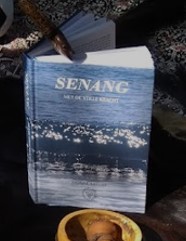
Dit kleurrijke ‘hardcover’ boek van Stichting Aliran telt maar liefst 368 pagina’s. Het is voorzien van vele illustraties en staat boordevol informatie. Het weegt maar liefst 1.5 kilo en de productie/vormgeving is duidelijk het werk van Ivonne zelf. Kudos!
Het boek is tweeledig. Enerzijds biedt het een naslagwerk over Javaans cultureel erfgoed. Elk hoofdstuk bevat vijf pagina’s aan achtergrondinformatie bij een thema. Deze zijn allemaal gerelateerd aan tradities en technieken van de helende Stille Kracht. Deze achtergrondinformatie is gebaseerd op zowel geraadpleegde bronnen als op de zienswijze van Stichting Aliran.
‘SENANG met de Stille Kracht’ is anderzijds ook bedoeld als een zelfhulpboek. Met de verzameling tradities en technieken van de Stille Kracht voor balans, biedt dit boek vele handvatten voor persoonlijke ontwikkeling. Elk hoofdstuk bevat daarom naast de achtergrondinformatie ook vijf pagina’s aan toepassingen’.
Praktische oefeningen en inspirerende rituelen laten je kennismaken met 33 Javaanse tradities. Deze zijn er op gericht je innerlijke kracht te versterken en senang (blij, gelukkig, comfortabel) te zijn met de Stille Kracht.
(Presentatie op 4 september 2022 – photo Morgana)
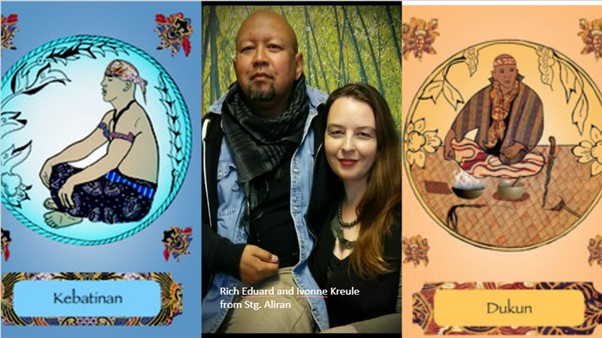
Ik heb contact gehad met Ivonne en Rich Eduard (Stichting Aliran) voor enkele jaren nu en in 2019 nam deel in de reis ‘ Travel to Tradition’. Ik heb hun manier van werken van dichtbij meegemaakt en zie dit boek als een kroon op hun werk.
Ik zou iedereen aanbevelen om niet alleen ‘Senang’ als boek te bestellen, maar ook de orakeldeck. Samen vormen ze een geheel. Met de meditaties en oefeningen maak je een bijzondere reis.
Ik heb zoveel van Rich Eduard & Ivonne geleerd. Dit boek is een absoluut ‘must’ voor iedereen die een hart voor Javanese mystiek heeft en wil concreet aan de slag.
(Ivonne aan het signeren, op 4 september – photo Morgana)
Als een persoonlijke kanttekening ben ik echt veel dank verschuldigd aan Rich Eduard en Ivonne voor hun hulp bij het begeleiden van een kleine groep van ons op de ‘Reis naar Traditie/ Travel to Tradition’ – november 2019. Het was heel bijzonder! Ivonne’s boek – ook met medewerking van Rich – is een tastbare herinnering.
Er zijn zowel tuinplanten als wilde planten die worden geassocieerd met de zon, vaak omdat de bloem eruitziet zoals wij de zon tekenen: rond met een stralenkrans. Maar ook bomen kunnen ‘solair’ van karakter zijn.
Bloemen en planten die aan de zon zijn gewijd, kunnen we in drie categorieën onderscheiden:
bloemen die lijken op de zon, of hoe wij die ons voorstellen
bloemen die alleen in de zon opengaan of alleen overdag open zijn
graan: de eetbare grassoorten die rond 1 augustus geoogst worden.
Zonnebloemen
Als eerste moet de zonnebloem genoemd worden, Helianthus annuus. Deze kan zo’n drie meter hoog worden, met een bloemscherm van zo’n 30 cm doorsnee. Zolang de bloem nog niet open is, draait de knop elke dag mee met de zon. Je kunt wedstrijden houden wie de hoogste zonnebloem heeft gekweekt (het Jeugdjournaal doet dat dit jaar) maar de bloem wordt ook grootschalig gekweekt voor de olie. Zonnebloemolie ja, uit Frankrijk of Oekraïne bijvoorbeeld.
Photo by todd kent on Unsplash
Het geslacht Doronicum heeft als Nederlandse naam ‘Voorjaarszonnebloem’. Hoewel veel kleiner dan de zonnebloem, is de naam duidelijk zodra je de bloem ziet: kleine gele harten met gele lintbloemen eromheen. Hij bloeit inderdaad wat vroeger in het jaar. Net als de zonnebloem behoren de doronicums tot de familie van de composieten, oftewel de samengesteldbloemigen. En ook de goudsbloem, Calendula officinalis, kun je beschouwen als een bloem van de zon, met zijn oranje (en soms gele) bloemen.
Samengesteldbloemigen
Tot de familie van de composieten of samengesteldbloemigen horen bloemen die eigenlijk uit allemaal losse bloemetjes bestaan, die in bloemhoofdjes bij elkaar staan. Klinkt ingewikkeld, maar kijk eens naar een madeliefje of margriet, dan is het gele hart het bloemhoofd (met buisbloemetjes) en de witte rand eromheen bestaat uit lintbloemen. Allemaal afzonderlijke bloemetjes met een eigen stampertje en meeldraad. De paardenbloem behoort ook tot deze familie, en als die is uitgebloeid zijn al die bloemetjes uitgegroeid tot zaadjes met een pluisje: die hele pluizenbol waarvan de ‘parapluutjes’ wegvliegen door de wind of als je ertegen blaast. De gele paardenbloem lijkt al op de zon, net als veel familie van deze plant: biggenkruid, leeuwentand, kruiskruidsoorten (hoewel klein kruiskruid, met alleen buisbloemen, nauwelijks opvalt), muizenoor, gele ganzenbloem, enzovoorts. Een aparte vermelding verdient de gele morgenster, waarvan de bloemen inderdaad alleen in de ochtend bloeien. De eerste morgensterren van het jaar (en van een plant) zijn groter dan de bloemen die zich later ontwikkelen, en meer concurrentie ondervinden, maar de pluizen zijn steeds groot en fraai. Die van de
Slaapmutsje
Een nieuwkomer uit Noord-Amerika is de goudpapaver, Eschscholzia californica, in het Engels ‘Californian poppy’ (Californische klaproos). Het slaapmutsje verwijst naar de lichtgroene ‘puntmuts’ die de kroonbladen beschut als de plant nog niet open is. Het mutsje schuift af als de plant zich opent en de oranjegele bloem zichtbaar wordt.
Dagschone
De driekleurige winde, Convolvulus tricolor, wordt ook wel ‘dagschone’ genoemd. De bloemen gaan ’s morgens open en zijn alleen overdag zichtbaar. De buitenrand van de kelkvormige bloem is violetblauw, het hart is geel en daartussen is de bloem wit. Volgens Planten en hun legenden van Jurrie Meulenhoff en Sophieke Nijhuis bevat het zaad geringe hoeveelheden LSD-achtige stoffen. “Daarom vermoedt men dat het een bestanddeel was van kukeon (Gr. = mengsel, namelijk van kaas, gerst en wijn, soms met honing). Dat werd gedronken bij de inwijding in de Eleusische mysteriën (ca. 2000 v.C.), in geheimzinnigheid gehulde plechtigheden ter ere van Demeter en Persephone.”
Het boek is een uitgave van het Nederlands Openluchtmuseum (2012) en een van de hoofdstukken is gewijd aan ‘zonnewijzerplanten’ die elk op andere tijdstippen opengaan en waaraan je dus zou kunnen aflezen hoe laat het is.
Graan
De Romeinse godin Ceres wordt wel afgebeeld met korenhalmen in haar handen. Zij is dan ook de graan- en oogstgodin rondom Rome, zoals Demeter dat is in Griekenland. Mogelijk was Tanfana ook een oogstgodin, in het Germaanse gebied. Koren is een algemene term voor graan dat voor voedsel wordt verbouwd. Het kan gaan om tarwe, rogge of gerst, dat zijn eetbare grassoorten. De bloeiwijze bij koren is meestal een aar (korenaar). Haver hoort ook bij de grassen, maar wordt niet beschouwd als koren.
Nomadische volkeren verzamelden al graankorrels van wilde grassen en zo’n 7000 jaar geleden werd al gerst verbouwd in Azië, en 4000 tot 5000 jaar geleden in Europa. Er werd pap van gemaakt, maar ook koeken en platte broden. In de Karolingische tijd (ca. 800 n.C.) was brood nog niet het belangrijkste voedingsmiddel.
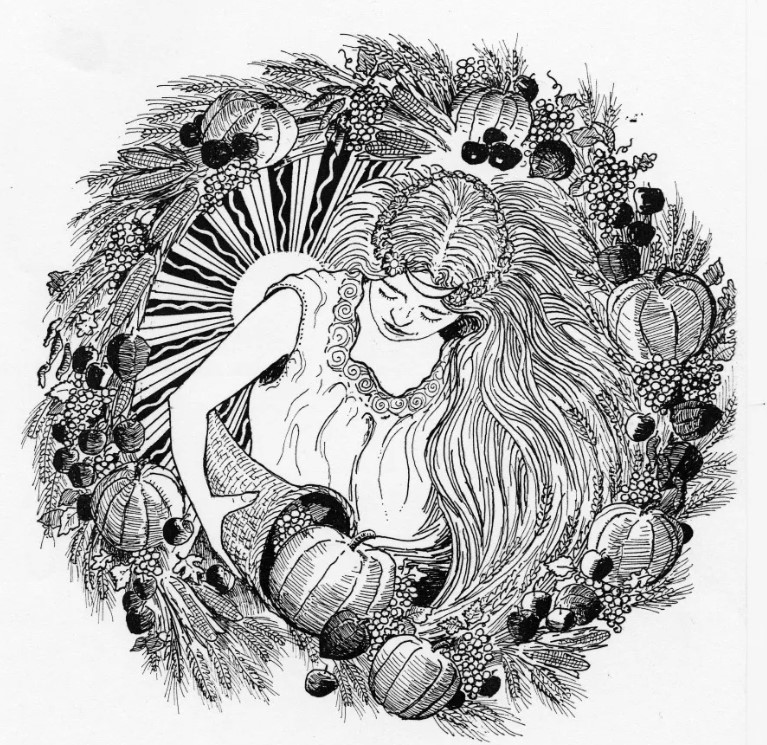
De Romeinen hadden echter al wel het Cerealia-feest voor Ceres, die ook wel met een krans van korenaren werd afgebeeld, en/of met een fakkel en een mand bloemen of vruchten.
Oogstfeesten werden ook in de Middeleeuwen en daarna gevierd als de oogst van rogge of tarwe binnen was gehaald, eind juli of half augustus. De eerste schoof werd met ceremonieel gesneden, en de laatste schoof bleef op het veld staan en kreeg een speciale naam (en werd in Eibergen, nog in het begin van de twintigste eeuw, aangekleed als een vrouw).
Solar-bomen
Maja Kooistra schreef een aantal boeken over bomen, plus het hoofdstuk ‘Bomen en welzijn’ in de bundel Bomen een mensen, een oeroude relatie. Zij ontdekte dat er bomen zijn die makkelijker naar buiten treden en bomen die meer in zichzelf gekeerd zijn. De extraverte bomen bleken van daglicht en zon te houden, en hebben overdag de grootste uitstraling. Typische ‘solar-bomen’ zijn bijvoorbeeld de walnoot, grove den, zomereik, es, haagbeuk en paardekastanje: deze soorten scoren boven de 80 solar (minder dan 20% lunar) op een schaal van 100% solar tot 100% lunar. Solar-bomen houden van licht en groeien grilliger om hier zoveel mogelijk van op te vangen. Er is meer te zeggen over solar en lunar bomen maar hier houden we het kort.
Hoe heet dat feest op de jaarlijkse kalender van wicca dat begin augustus wordt gevierd? Zowel het woord ‘Lammas’ als ‘Lughnasadh’ wordt gebruikt. Waar komen beide woorden vandaan?
Jaarkalender
Lughnasadh was een van de vier belangrijkste feesten van de middeleeuwse Keltische kalender: Imbolc begin februari, Beltane op de eerste mei, Lughnasadh in augustus en Samhain in oktober. Lughnasadh markeerde het begin van het oogstseizoen en het rijpen van de eerste vruchten, en was vanouds een tijd waarin de gemeenschap bijeenkwam, van marktfeesten, paardenraces en ontmoetingen met verre familie en vrienden.
Lughnasadh
Lughnadash, Lugnasa of Lughnasa (in nieuw-Iers: Lúnasa) is het feest van de god Lugh (Lú, in de nieuwe spelling). Hij is een heel belangrijke godheid in de vroegmiddeleeuwse Ierse literatuur. Lughnasadh is daarmee het enige oude Ierse feest dat is genoemd naar een god. Waarom zijn naam is verbonden aan juist dit feest, weten we niet. Hij was niet de god van de oogst en niet de god van de zon.
Het woord Lughnasadh kan worden opgesplitst in ‘Lugh Nasadh’ en betekent dan in Middel- of Oud-Iers de vergadering van Lugh of de uitvaartbijeenkomst van Lugh. Het Lughnasadh-feest zou zijn begonnen door de god Lugh als een uitvaartfeest met competitie (atletiek en andere sportwedstrijden) om zijn (pleeg)moeder Tailtiu te herdenken. Zij was naar verluidt gestorven aan uitputting nadat ze de vlakten van Ierland had schoongemaakt om plaats te maken voor landbouw.
In het moderne Iers betekent Lunasa zowel de eerste augustus als de hele maand augustus.
Brón Trogain
Lughnasadh is wel een heel oude naam, al is die misschien net niet zo oud als de Ierse naam ‘Bron Trogain’ voor dit oogstfeest. Die naam komt voor in de Tochmarc Emire (’the wooing of Emer’, ofwel ‘het dingen naar de hand van Emer’). Dat is een van de verhalen in de Ulster-cyclus van de Ierse mythologie. Het gaat over de pogingen van de held Cú Chulainn om te trouwen met Emer, die in latere verhalen verschijnt als zijn vrouw, en zijn gevechtstraining bij de krijgsvrouw Scáthach. De Tochmarc dateert van de tiende eeuw, en mogelijk al uit de achtste eeuw.
Brón Trogain betekent zoiets als ‘het verdriet van de aarde’. Brón betekent verdriet, rouw, last of klaaglied. Trogain betekent niet alleen aarde en herfst, maar ook vrouwelijke raaf.
Lammas
In sommige Engelstalige landen in het noordelijk halfrond wordt 1 augustus Lammas Day genoemd, Lammasdag. Dat komt van het Angelsaksische ‘hlaf-mas’, ‘loaf-mass’ en is het ‘feest van het brood’. Ofwel het feest van de tarweoogst, het eerste oogstfeest in het jaar. Het was gebruik om op die dag een brood naar de kerk te brengen dat was gemaakt van (de eerste schoof van) de nieuwe oogst. Het brood werd gezegend en in het Angelsaksische Engeland kon het daarna ook worden gebruikt voor magie. Lammas werd ook ‘het feest van de eerste vruchten’ genoemd.
Het zou een groot oogstfeest zijn geweest in heel Europa, gewijd aan Ceres, Demeter en Juno Augusta, namen van godinnen die waakten over de rijpende oogst.
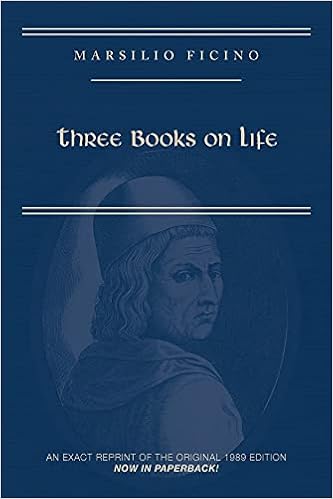
The tradition of astral magic is underappreciated in European magic. The ideas of its most prominent and influential practitioner in Europe, Marsilio Ficino (1433–1499), fell behind ceremonial magic in the 15th and 16th centuries, when occultism and astrology were on the rise in Europe due to the newfound accessibility of Greek and Hebrew sources in Latin. In this process Ficino participated as the leading translator from Greek into Latin and presented a medical manual to support the health of his fellow scholars. This manual is comprised of the three books on life (De Vita Libri Tres) of which the third is an introduction into his astral magic. It is my aim in this text to describe astral magic and motivate more pagans to revive it.
Medieval European astral magic has been considered one of the predecessors of modern mathematical physics. There is indeed a coherent narrative of the 300 years between the first Christian Kabbalist, Ramon Lull, and the founder of Enochian magic, John Dee, that makes sense if you wonder about how mathematics was introduced into physics in the first place. History of science is not our concern here, but to understand the history of magic better, you should know that, in medieval times, mathematics was restricted to astronomy and the realm of the stars, while the description of the physical world around us involved almost no mathematics. This is due to the cosmological separation between the realm above and below the moon that dominated scholasticism. Keep in mind that the physics we learn in school today, with all its formulas, was developed by Sir Isaac Newton, who was not born until 1642, more than 30 years after John Dee’s death in 1608. The scholastic separation between the stars and the physical world around us was challenged by astrology and symbolic magic because their theoretical foundation requires continuous connection between these two realms.
Ficino’s Three Books on Life was one of many contributions to these 300 years of progress.
Even though Ficino was by far the most active and important translator of works from Greek into Latin and friends with the most influential Hebrew scholars focusing on Kabbalism, his own magical work was more conservative and less fashionable. He mostly drew from sources which were already accessible in Latin for many hundreds of years: mostly Arabic sources and Proclus, a philosopher and one of the last Pagan religious activists against Christianity from the fifth century.
Without the Kabbalist’s promise of higher mystery for the Christian faith, Ficino’s ideas were absorbed and presented as a preliminary of the Kabbalist-influenced ceremonial magic of the early modern period. For instance, the actual father of European occultism, the German philosopher Agrippa von Nettesheim, presents content like Ficino’s in the first two parts of his book about occult philosophy, which are concerned with natural magic, but includes the more practical aspects right within or as a precondition to the third part, which is concerned with ceremonial magic, spirits, and angels in a Kabbalistic fashion. To me, it seems like not much has changed today. Of course, the Kabbalist idea of summoning angels or John Dee’s Enochian magic are not the leading magical traditions anymore, but ceremonial magic, with rituals aimed at invoking higher powers, spirits or deities, is still considered as the highest and most central form of magical practice. This is due to Gerald Gardner and Ross Nichols being influenced by the Freemasons and Rosicrucianism, which both rest on the occultist relations between Germany and the UK after Agrippa and John Dee.
Astral magic as Ficino understood it, however, was designed to break through the classical distinction between natural magic and ceremonial magic to expand the methods of natural magic without leaving its realm. It does so by including the cosmic harmony of the universe into the practice of natural magic instead of just relying on the magical properties of a single object.
An example might help to understand what “including the cosmic harmony of the universe into the practice of natural magic” means. An amulet is the classical hallmark of natural magic: wearing a particular crystal around your neck will support certain aspects of your health. The crystal is chosen for its magical properties, i.e. how it relates in the cosmos to the magical elements, the zodiac, and the planets. According to natural magic, these relationships, which are predominantly formulated in astrological terms, help the magician choose which crystal is appropriate for making the amulet. After the amulet is made, the crystal does the rest, simply by being close to the body. The important aspect here is that there is no requirement for the will of the magician or his skillset. No higher power, spirit or deity is additionally involved either. Natural magic is therefore taken as magic for the common public. In contrast to ceremonial magic, natural magic is, in this sense, magic anyone can do, because it does not require special training or conditioning. Natural magic is thus considered to be fairly limited. It cannot produce any effect which would not happen over time otherwise. In the case of healing, it is “only” supporting the healing powers of the body. When used to boost one’s creativity, you are already able to write a poem, a novel, or a song. The crystal is, at most, simply helping the writing process, which is generally possible without it. The same is true when using natural magic as support for ceremonial magic: selecting the right herbs for your incense or the right crystal for your wand can make rituals a good deal easier, but if you select slightly different materials, it might also work.
The idea of astral magic is to support these material things even further so that their support is even stronger. It does so by simply engraving the symbols of those magically relevant entities into the crystal that was selected by the magician because of its relations to these entities in the first place. The idea is that, through these symbols, the magical properties of the materials are reinforced through their relationship to the cosmic harmony as given by their connections to astrological entities. Therefore, after the engraving, the materials provide more effective support. In so doing, the amulet becomes a talisman. For example, engraving the symbol of the astrological sign Scorpio into your crystal amulet turns it into a talisman that supports antibiotics and your body in fighting against a UTI and prevents complications.
Moving on from classical natural magic to a magical practice that uses symbols but restricts their use merely to symbolise their connections to the stars might seem too restrictive. For occultists like Agrippa and his followers it certainly was. You might wonder, if engravings of astrological or elemental symbols can be used, why not go further and use engravings of stronger symbols, e.g. name sigils of higher spirits, angels, or deities. But you should ask yourself whether adding your willpower, spiritual or divine intervention into your own magical work is necessary or desirable. There are many reasons why you might not want to do so. For some, it might be piety towards the deity being called upon. For others, it might be a fear of the consequences of dealing with higher powers. And some other practitioners might even be atheists or deists who do not generally deal with higher forces. Besides these theological concerns, there is a very interesting magical implication. Ficino was the first to work through this, which is the reason for the praise he has received. Whatever keeps your body running – e.g. its spirit or soul – must be connected with your body at some point. And whatever this link between body and soul might be, it must at least be partly material. How else could it connect to a material body? Ficino called this link the spiritus. This was not meant as in the ghostly kind of “spirit”, but as in drinkable “spirits”. Ficino’s spiritus is a vapour that steams out of the blood (like alcohol when distilled) and connects the soul with the body. Since this link is material, it acts like a crystal or a herb in relation to the cosmic harmony of the universe, i.e. it is affected by the astrological conditions surrounding us. Moreover, since it connects the soul with the body, it must also be magical itself. Its magical properties can therefore be supported just like the magical properties of any other object. According to Ficino, one can therefore perform something that looks like ceremonial magic that is, in fact, not ceremonial magic at all, because it does not call upon any additional higher power, Spirits of the Land, Mother Nature, higher spirits, or deities, you can harmonise yourself with the cosmos (the current astrological conditions as shown by the horoscope of the day) to support your own body and abilities. Besides the theological concerns dealt with before, there is an additional good reason to avoid adding willpower or requests to higher beings: sometimes we simply do not know precisely what we want. It’s possible that we lack some insight into the situation, but we still want to support ourselves anyway. In this case, letting things flow with just a little support is the wiser choice.
This essay analyzes hotly contested issues within the contemporary American Pagan community. The arguments creating such discord rely on holding two contradictory positions at the same time. First, gender is socially, not biologically, defined. The second is there are only two genders, an ‘essentialist’ position. I support the first assertion and so, naturally enough, reject the second. Examining this issue takes us to the core distinction between NeoPaganism and many other modern religions. I have discovered that many readers prejudge the argument into one of two categories: progressive ‘wokeness,’ or ‘transphobia.’ My argument supports neither position, and arguing otherwise requires ignoring the arguments actually made here.
____________________________
In 2013 I published my book Faultlines: The Sixties, the Culture War, and the Return of the Divine Feminine. I argued there that our country’s growing national political and cultural divisions were rooted in the breakdown of thousands of years old patriarchal culture rooted in agriculture that was now taking increasingly pathological forms as it encountered urban technological cultures. At the same time, a new culture was arising, one revitalizing feminine values and appreciation for nature. No such fundamental change had happened to humanity since agriculture replaced hunting and gathering as our dominant culture. The result is a clash of civilizations, one degenerating, the other seeking to be born. I argued the points of greatest conflict between them were the roles of women, the status of feminine values, and our relationship with the natural world.
NeoPaganism was a particularly powerful example of this newly emerging culture. As a broad category, paganism is very old and diverse, and historically, largely reflected its patriarchal cultural context. NeoPaganism was different, and in harmony with the post-patriarchal culture rising around us, for our practice centred on the sacredness of the feminine and of nature. NeoPaganism offered a clear alternative to an increasingly dysfunctional patriarchal monotheism and the mainstream culture aping many of its core assumptions in a secular guise. It also spoke to a widely experienced spiritual need, and women in many mainstream religions were inspired by us to revitalize the sacred feminine within their own practices. A remarkable percentage of these women reported they had been inspired by workshops conducted by Starhawk. (Faultlines, p. 169-72) In response, many male practitioners reconsidered the role of women in their traditions. As Marcus Borg, a major theologian wrote in the late 1990s, religious feminism was “the single most important development of theology in my lifetime.” (Faultlines, p. 162) Today, the Dalai Lama calls himself a feminist. NeoPaganism’s impact was out of all proportion to our numbers.
Subsequent events have largely supported my analysis, with one unexpected and troubling exception. What made Neopaganism a uniquely powerful spiritual force in building a new culture has come under attack from within. The target is the status of women and of the divine feminine in all its forms, and the assault is relentless. At its core is a refusal to acknowledge the divinity within the feminine, not so much by denying it, as by making it invisible.
What is NeoPaganism?
To get a grip on this issue we need to get clear on what some words mean, and most importantly among them is “NeoPaganism.”
NeoPaganism arose here in the U. S. in the 50s and 60s. Initially, it was what we broadly call British Traditional Wicca (BTW), and Gardnerian Wiccans were its major influence in England and the U.S. The term “Pagan” was apparently first used by Oberon Zell, of the Church of All Worlds (CAW). Gardnerians quickly saw a common resemblance and adopted it as well. Over time, in America NeoPagans grew to include other traditions such as the New Reformed Orthodox Order of the Golden Dawn, (NROOGD) and Reclaiming. ALL emphasized the Divine Feminine in Her principle role as a Goddess or perhaps a triple goddess of Mother, Maiden, and Crone. So far as I know, all, and certainly most, emphasized the ritual primacy of the High Priestess. All emphasized the return of feminine values as central to what they are. When Dianic Wiccans, who focused only on the Goddess, wanted to join the Covenant of the Goddess (COG), it was because of this shared sacred feminine centre of gravity. And they became members.
Much ink has been spilt and many pixels illuminated in subsequent debates over NeoPaganism’s relationship to the broader category of Pagan religion, and European Paganism’s relation to what some, but not all, consider the Pagan religions of the Western hemisphere, Africa, and Asia. Interesting as it is, I will not enter this intellectual thicket here beyond arguing that the forms of Western Pagan religions that have emerged in the decades since, such as Heathenism, and many reconstructionist traditions, have gone to some pains to distinguish themselves from NeoPaganism as I have described it. Consequently, there are the original NeoPagan religions that resemble Wicca enough to be comfortable with NeoPaganism as a common umbrella term, and other contemporary Western-based Pagan religions that distinguish themselves from it for various reasons.
Another definition of NeoPaganism overlaps with this historical one. Any attempt to create or recreate a Pagan religion where there is no unbroken lineage of practice, and where those doing so are themselves modern, can also be called NeoPagan. But these two categories of NeoPaganism are not identical. Some NeoPagans in this second sense are not NeoPagans in the first sense. Reconstructionist Pagans would be NeoPagans by this second standard, but not the first.
This diversity emerges in no small part because there are no common sacred “NeoPagan” scriptures or oral traditions. Anyone can start a “tradition.” If it attracts others, it will grow. Unlike within the monotheisms, this diversity of traditions did not lead to significant conflict. No practice claimed authority over all who called themselves NeoPagans. People could fight and fuss within a tradition, in what are called “Witch wars,” but not so much between them. For example, we Gardnerians have our disagreements, sometimes strong ones. But in 35 years I’ve never heard Gardnerians attacking NROOGD or some other tradition as “wrong.” For many of us, that these two senses of NeoPagan differed did not much matter.
It starts coming apart
Pantheacon was the largest Pagan gathering on the West Coast. For many years it welcomed all who called themselves Pagans, with the sole exception of racist groups who attacked the legitimacy of other groups. For decades, thousands of people of many different traditions, as well as those simply interested or curious, gathered to attend workshops, group rituals, panels, and other events offered by other Pagans. And did so amicably.
But not anymore. Pantheacon died, and it died in part because this broad-based amity broke down completely over issues of gender and sex. Long-time participants were barred from holding workshops, books by leading Pagan authors were banned, formal invitations to participate were withdrawn, rituals were disrupted, and many NeoPagans who for years had participated peacefully with others were denounced.
Pantheacon’s demise was at least in part a casualty of the internal war waged by some people calling themselves NeoPagans against NeoPaganism in either form as described above. In their attack, they rejected the most fundamental core of NeoPaganism in the first sense, a core shared by many NeoPagans in the second sense: that the sacred was immanent in all things.
Attacking the sacred feminine
The NeoPaganism emerging in the 1960s was not the first time a renewed emphasis on the sacredness of the feminine had characterized a new religion. It had been a continual minor element in the religious landscape since the rise of patriarchal religion, particularly with innovators who founded new religious traditions. Buddhism once offered more equality to women than did the surrounding patriarchal society. (Faultlines, p. 64) It didn’t last. Christianity offered many Roman women more independence than they had in Rome’s stifling patriarchy. That didn’t last either. Mohammed treated women better than they had been in the society he transformed. That, also, didn’t last. In all these cases, those who sought to impose a common dogma, combined with hierarchies of control, always sought to institutionalize patriarchal domination. And succeeded.
Today the same fatal process has reared its head in the NeoPagan community. Because we have no canonical scriptures or their oral equivalents, nor any institutionalized authority, the exterior form of the attack is different. But the result is the same: the suppression of the sacred feminine, and with it, of women who most clearly embody its qualities. With us, the sacred feminine cannot be turned into something spiritually inferior, as happened in these earlier cases. It is too central to who we are. But it can be made to disappear by changing how it is conceived. A kind of newspeak is arising in some circles where, by shrinking vocabularies and eliminating subtleties, thinking about these issues becomes difficult.
Sex, gender, and the feminine
Today the NeoPagan community is deeply divided over issues of sexual identity and gender. In all this turmoil, the feminine, a term long central to who we are, is never mentioned. It is being dissolved into sex and gender. But “the feminine” is neither.
In Faultlines I, among many others, distinguished between two waves of feminism. The first wave argued women were as good as men in men’s terms. This was liberal feminism, and it was the source of women gaining many of the legal and political rights they enjoy today.
Second-wave feminists argued women were as good as men in women’s terms. The feminine values were equal to masculine ones. (Faultlines, pp. 155-62) NeoPaganism’s sacred feminine reflected second-wave feminism’s insights spiritually. The embodiment was as important an expression of the sacred as the disembodied spiritualities that characterized the ‘monotheisms.’ The cycles of life, within which women are more deeply enmeshed than men, were powerful expressions of the sacred, expressing the same sensibility that finds nature’s other cycles sacred. Feminine qualities were as sacred as masculine ones.
Women’s spirituality focuses on the basic patterns life women necessarily experience bodily, such as menstruation and birth. This focus is important at many levels. First, it links women with the basic rhythms of nature, and does so more strongly than is the case with men. Second, in patriarchal societies, women’s connection with such cycles have long been used to disempower them. (“She’s on the rag.”) The sacred in all its forms became increasingly disembodied, a matter of theory and not experience. From this perspective, our connections to the earth are considered inferior, and even barriers, to our connection with Spirit. Bodiless spirituality also makes men’s connections to these rhythms invisible. For example, many pre-agricultural societies that were not patriarchal ritually celebrated boys transitioning into men. No modern ones do.
Today, within the NeoPagan community, honouring the sacred feminine has come under attack through a sustained assault on the legitimacy of women’s spirituality. It reached a particularly painful crescendo during the Pantheacon celebration of 2019.
The rituals attacked were conducted by women for women, who were honouring the sacred dimension of basic dimensions of their experience as women, such as menarche, menstruation, giving birth, and menopause. These rituals were attacked as “transphobic” because they are closed to transwomen who had never had and never would have those experiences. The attacks were brutal in their condemnation of those wanting to keep them limited to women, and those seeking these experiences are called TERFs. The same people succeeded, in banning prominent women feminist scholars such as Max Dashu, who for decades had been a major figure in the study and practice of women’s spirituality. This was the second time Dashu had been banned from a major event over this issue. Institutions like the Red Tent, which provided services to women with an explicit connection to women’s spirituality, were treated similarly.
After the fact, some defended their actions by arguing that women-only rituals in an event where all paid the same to attend were inappropriate. That this was a less-than-honest response is made clear by Max Dashu’s treatment, where an invitation for her to be a special guest was withdrawn. Anyone could listen to Max’s talk. The Red Tent was not formally a part of Pantheacon, and paid for its own space. As for the ritual, Pantheacon had a great many events happening simultaneously, and women-only rituals had been a part of it from the beginning. These attacks ultimately had nothing to do with a ritual.
Basically, the physical experience of being a woman as an expression of the sacred worth of recognition was attacked. A person’s personal gender identity overrode the rest of the sacred as it manifests in the world within which we live. This is a remarkably disembodied position that is inherently masculine in the patriarchal sense since it subordinates embodiment to the abstract mind. There is nothing NeoPagan about it.
NeoPaganism is all about the sacredness of the world in which we live, and all its processes. With Samhain, we even honour death itself. We subordinate theology and disembodied thought to embodied experience and consider the latter as most important. What is called “women’s spirituality” in our context refers to women’s experience as women, and nothing else.
This iswho we are.
From Spirit to Power
Many NeoPagans’ worthy commitment to respecting other peoples’ spiritual paths has made us vulnerable to manipulation by those claiming to share our beliefs, while fundamentally rejecting them. If a woman’s physical experience is not sacred and not worthy of honouring as such, neither is anyone else’s. If this is true for people, it is also true for the physical world as a whole. The sacred becomes disembodied. We are who we think we are, and our thoughts render all other issues and views irrelevant. Ultimately, the ‘spiritual’ becomes defined by the ideology of a particularly arbitrary kind of identity politics. My most generous interpretation is this is yet one more New Age version of “we create our own reality,” a view concentrating power on the individual removed from embeddedness within the world. Fundamentally it is power oriented.
As politics is ultimately about winning, and therefore about power, from this perspective alternative points of view are threats to be overcome. The immanent cannot be honoured in the many forms in which it has been in Pagan societies across history. It must be politically correct. A religious practice focusing on experience and often encounter with the divine is subordinated to political dogma.
I cannot count the times that I have been told “transwomen are women in all ways that matter, and that ends it.” This is the ‘argument’ of a person with no argument to make. Consider the prominent transwoman, Dierdre McCloskey.
In “The Hedgehog,” a journal dealing with various approaches to current intellectual issues, she wrote “Straight Man to Queer Woman: Untimely Meditations on Transitioning.” In it she described experiences in academia and the larger world that fit what I knew of trans-women in my experience. For modern Pagans concerned about these issues, the surprise will be how little it mattered once people became familiar with her transition. The person who took the longest was her mother. McCloskey says there are certain places she does not frequent that might be unpleasant, such as a country Western bar, but otherwise has little difficulty.
So, does she think of herself as a woman? I quote her:
“The Des Moines Register put the news on the front page, repeatedly if not unsympathetically: ‘The University of Iowa Economics and History Professor to Become a Woman.’
“That, of course, is not possible. I’ll always have those pesky XY genes and can never have the life history of a girl or woman – never, for example, experience the hostility directed at an assertive female graduate student. At Harvard in the 1960s, Donald McCloskey was praised for such assertiveness. Ten years earlier, the economist Barbara Bergman had, she told me, been thoroughly dispraised for it.” The argument “A trans woman is a woman, end of issue” is fatuous nonsense, and one of the most successful transwomen of our time demonstrates it in her own life.
After asserting a transwoman is a woman, the person almost invariably refuses to enter into the reasoned discussion. This is the language of domination: something is true because I say so. Once this tactic is accepted, it is a tiny step to endorse other forms of domination, and this has happened within the most militant of the transactivist community.
We are in danger of reverting back to the world-denying spirituality of the monotheisms, and the intolerance that accompanies them tricked out in Pagan rhetoric.
Thinking clearly about women’s spirituality (and other forms as well)
Rituals are not parties, nor are well-conducted rituals simply psychodrama or performance art, although elements of both can be included. They seek to connect participants directly with the sacred. They focus on participants’ experiences.
When some people want to connect with the sacred dimensions of their experience, it is reasonable to do it with others similarly motivated. If you have not had certain experiences, then you are not part of a group that has had those experiences. If those experiences are relevant to what a group wants to do, then not having had them is a good reason not to be included. Yet women who wish to do this are attacked as “transphobic” and efforts are made to suppress, or at least disrupt, their efforts in places such as Pantheacon.
But is this “transphobic?” A little clear thinking immediately demonstrates it is not. Consider the following examples.
I am not Native American, though I have helped build a Sun Dance arbour on the Crow Reservation and, from the Alcatraz occupation to today, have continually supported Native peoples’ efforts to receive at least a modicum of decent treatment by those with the power to do so. At their invitation, I have also attended some of their rituals, and more rarely, participated. When I participated, I felt honoured with being given the opportunity.
But I would never claim to speak for Native Americans, nor would I be insulted if they conducted rituals closed to me, or held closed meetings for members of their tribe or several tribes. As, in fact, they do. I am an outsider, and always will be. I can be an ally, and hopefully a respected and worthy one, but I can never be a member.
And I am not insulted by this.
I am not Black and have not had the experiences many Black Americans have had. I travel without fear of arbitrary arrest or worse. I am not regarded as intrinsically inferior to others by the dominant culture. The places I hope to live have not been denied me because of my race. And much more. These experiences, common to so many, unites African Americans in a common identity we Whites can never share.
I can choose to be an ally of Black Americans, but I can never become one myself. I can demonstrate against the continual police murder of Black Americans, as I did and may well do again. But I would never presume to speak for them, nor think I had a right to get involved with a Black support group for African Americans. It would be arrogant, rude, and stupid of me to feel insulted for not being wanted in that context. If I complained, I would be told my “White entitlement” was showing.
The same holds true in NeoPagan circles. I have never felt insulted because, as a man, I was not invited to women’s circles. Why on earth should I feel entitled to attend a ritual honouring menarche or other experience unique to women?
If a woman had been raped and sought a healing ritual with other women who perhaps themselves had also been raped, what business is it of mine to want to be included? If I were invited, (perhaps the victim was a close and dear friend, for example) that would be an honour because they thought I could contribute. But it would never be a right. Who is invited is the business of the people organizing the ritual.
This second example brings up another point. Women share a common experience of subjugation as women. As a woman I know put it, this includes “sexual harassment and objectification, mansplaining, not being listened to, pushed aside, subjected to bias in the form of ‘jokes,’ and other dynamics of male entitlement or aggression.” Some of this can be violent and fear-inducing, and others are very subtle. Women’s groups provide places where these issues can be addressed by women in safe spaces and on women’s terms. When they are NeoPagan women, this can happen in ritual contexts, for there is no absolute divide between the sacred and the mundane. Yet the celebration of women’s spirituality, which provides a community where this can happen and contacts can be made, is attacked as ‘transphobic.’
There is nothing pejorative about my being excluded from these events. Further, there would be a big dose of male entitlement on my part if I had ever thought I should have been invited. But there need be no “male-phobia” in my not being invited. The same holds with respect to transwomen. In these contexts, the term “transphobia” is a false and belittling attack on women’s experience, denying its importance to them.
As we all should know, a powerful ritual depends on a unity of purpose. If I have not had the experience, how can I contribute in the way people who have had the experience can? Perhaps because I care deeply for others there, and so lend my energy to it. But to do that they need to want me there, and to feel comfortable with my presence. If my coven does a healing ritual for someone, all must be on board to increase its likelihood of success. The same holds for other purposes. If I am there because I want to be, despite the wishes of others in the group, I undermine its chances for success. I will have disrupted the unity of purpose that is essential for a ritual’s success. This is why becoming a member of the coven requires the consent of all involved. This is also Wicca 101.
Those attacking birth women only rituals attack the spiritual values distinguishing us from other religions. They attack the role of ritual and magick in what we do, and they attack the mutual respect NeoPagans need to conduct our ceremonies. They attack NeoPaganism at its core in the name of a political agenda.
An approach in keeping with recognizing sacred immanence would be to honour all genders as manifestations of the sacred. There can be rituals for women, for men, for transwomen, for transmen, for both genders called “she” and for both genders called “he” as well as for everyone, such as Sabbats and Esbats.
The fraud of transphobia
Most NeoPagans accused by others of transphobia would agree with J. K. Rowling when she tweeted;
“The idea that women like me, who’ve been empathetic to trans people for decades, feeling kinship because they’re vulnerable in the same way as women – i.e., to male violence – ‘hate’ trans people because they think sex is real and has lived consequences – is nonsense.
“I respect every trans person’s right to live any way that feels authentic and comfortable to them. I’d march with you if you were discriminated against on the basis of being trans. At the same time, my life has been shaped by being female. I do not believe it’s hateful to say so.”
When, despite these words, she was again attacked as transphobic, Rowling elaborated:
“If you could come inside my head and understand what I feel when I read about a trans woman dying at the hands of a violent man, you’d find solidarity and kinship. I have a visceral sense of the terror in which those trans women will have spent their last seconds on earth because I too have known moments of blind fear when I realised that the only
thing keeping me alive was the shaky self-restraint of my attacker.
“I believe the majority of trans-identified people not only pose zero threat to others but are vulnerable for all the reasons I’ve outlined. Trans people need and deserve protection. Like women, they’re most likely to be killed by sexual partners. Trans women who work in the sex industry, particularly trans women of colour, are at particular risk. Like every other domestic abuse and sexual assault survivor I know, I feel nothing but empathy and solidarity with trans women who’ve been abused by men.”
Despite the twaddle published in ‘woke’ circles, there is no “phobia” here, or in similar positions, I and many NeoPagan women and men are taking, any more than a Native American group is “White phobic” for not wanting Whites in every single one of their rituals and gatherings.
Accusing many of us as ‘transphobic’ is one of the biggest intellectual frauds perpetrated on our community. It is a 100% binary domination-powered demand that if you do not agree you are bad.
Yes, there are transphobic people, but remarkably few within the NeoPagan community. Openness to transmen and transwomen has been greater among NeoPagans than within any other mainstream religion. Genuine transphobes congregate on the right, with its rigid sense of there being only two proper gender roles.
Finding Clarity
We can learn from many traditional Native peoples who offer us an alternative way of framing the issue of relations between birth and trans men and women. Many tribes recognized more than two genders, sometimes as many as five, and respected them all. The common insistence by many ‘woke’ Pagans that gender is both socially constructed and there are only two makes no sense historically or logically. It incoherently combines relativism (gender is socially constructed) with essentialism (there are only two). Small wonder confusion, and worse, emerge from such thinking. It’s a mess. For Pagans I would suggest the peoples native to this land offer superior insights to illogical claims ultimately rooted in Genesis.
But there is another dimension to all this.
Pathological masculinity
I have been struck with the aggressive anger, and even hatred, with which some NeoPagans, especially women, have been denounced for wanting the right to conduct women’s rituals attended only by women. As some women have explained to me, it is their biological differences from men that have for millennia been used to justify their second-class status as human beings. Conducting these rituals is an act of affirming what distinguishes them from men as equally worthy to how men are different from women. What was culturally considered disempowering becomes empowering. (As I write these words I see a similarity with the African American community’s affirmation that “Black is beautiful.”)
Interestingly, the terms used in some online insults directed towards these women have been explicitly misogynistic, “Bitch” being one of the milder ones. Threats of violence are hardly unknown. Please enlarge these images sent to me by a NeoPagan woman depicting the extraordinary hate and fantasies of violence towards feminists. This misogyny comes from some transwomen or men claiming to defend transwomen, but is closer in spirit to incel hate!
And here, finally, we can access the deeper level of what we see happening around us.
In Faultlines I explored the pathological dimensions of the masculine and feminine. (If someone has trouble with these words, substitute Yang and Yin.) Both can take pathological forms but in different ways. (Faultlines, pp. 61-7) The pathological feminine manipulates, and the pathological masculine dominates. At a spiritual level, the attacks on birth women’s particular identities and spiritual experiences is an attack by pathological masculinity in ultimate defence of the increasingly debased patriarchy NeoPaganism challenges. It embodies domination.
The spirit of domination destroyed the openings early Buddhism made available to not only women but also to the sacred feminine. It destroyed early Christianity’s steps in that direction as well. Now it is doing the same to NeoPaganism. The difference here is that while in the first two patriarchy triumphed through controlling organizations and texts, neither organizations nor texts possess the similar authority to us. When Pantheacon became dominated by these people, it died. Domination can only triumph over us as a spiritual community by making it impossible to think coherently about the sacred feminine and women’s role in it. And that is what we see happening around us, with the erasure of the feminine by dissolving it into sex and gender.
We have the option of rejecting these false attacks, and in rejecting them, rendering them powerless. If we did, what would this look like?
Very much like it did before the so-called ‘trans-activists’ sowed such anger and division within us. NeoPaganism would have even more spiritual diversity. Trans women and trans men would devise rituals addressing the sacred dimensions of their own experiences. I can’t imagine any NeoPagan opposing this, and if someone did they would simply be ignored. Women and men could do the same, as they long have. Covens would be composed in many different ways, depending on what their members wanted. As there always have been, there would be many ritual gatherings where all who desire can attend.
And people would otherwise mind their own business.
Gus Dizerega
NeoPaganism, Divine Immanence, and the Sacred Feminine
Het is nu 24 juni, de zomer is net begonnen. Het is prachtig weer, warm en afwisselend regenachtig. De natuur gaat er goed op 🙂 De tuin is één bloemenweelde. Gisteravond voor het eerst in de tuin gezeten en genoten van de warme avond. Een egeltje kwam ons bezoeken en dronk (zowaar) een beetje water uit het vogelbadje. De weldadige rust van vorig jaar is nu ver te zoeken. We zijn weer aardig op stoom met ons groene werk. Vorig weekend weer Fable and Fantasy en volgende week LEEFfestival Wageningen. En daarna het team voor Castlefest op de rails zetten. En dat naast werk en mantelzorg 🙂 Maar we kunnen het en dat is iets om dankbaar voor te zijn. ‘Dankbaar’ was het woord dat ik 14 juni kreeg van B8. Uriël is verdwenen. Net zo plotseling als dat hij er stond, is hij verdwenen. Dus ik ben weer terug bij mijn oude vertrouwde boomvriend B8. Dankbaar voor alles wat op mijn pad komt, want het is mijn pad <3
2021-07-24 Volle maan van de Speer (Lughnassad)
“Ik Focus”
Thema: Bouw aan je zelfvertrouwen.
Indiaans Sjamanisme: Zij die heelt.
“Deze maan daagt je uit om je innerlijk vuur meester te worden, zodat je het richten kunt. Focus op de energie die je in je ziel en lichaam opgeslagen hebt. Onderzoek welke gebieden in jouw leven klaargemaakt kunnen gaan worden voor het oogstfeest Lughnassad. Wat heeft nog extra aandacht en bescherming nodig en wat kan je de vrijheid geven om te laten gaan?” (Modron)
Wat mooi dat deze volle maan binnen mijn vijfdaagse retraite valt. Voor het zoveelste jaar neem ik deel aan een Vipassana-meditatieretraite. En dan is deze focus natuurlijk zeer op z’n plaats! (Een linkje voor wie wil weten wat Vipassana inhoudt).
Jaren geleden ben ik op deze meditatievorm gestuit door met een vriendin mee te gaan naar een driedaagse retraite. De leider is een geweldige man van 86 jaar oud, die nog heel vitaal is en een enorme wijsheid in zich draagt. Hij heeft in ‘de Oost’ tijd in kloosters doorgebracht en vele jaren van zijn leven aan deze meditatievorm en yoga gewijd. Heerlijk om weer een tijdje onder zijn vleugels door te mogen brengen. En we hebben een klik omdat wij beiden zo gek zijn op de natuur en de helende werking daarvan. En dit jaar voor het eerst een vijfdaagse, ik ben heel benieuwd.
Het weekend ervoor werken mijn man en ik op het fantasyfestival ‘Fable and Fantasy’, en daar koop ik mijn eerste meditatiekussentje. Uiteraard een groen kussentje, met het teken van de hartchakra. Fijn dat deze keus prachtig aansluit bij waar het deze vijf dagen over gaat. Ik ben er helemaal klaar voor!
Eén van de regels van deze vijfdaagse is dat er niet gesproken wordt. Er heerst een weldadige stilte. Ook wisselen we geen ‘blikken’ uit. We zijn alleen op onszelf gefocust. Wat heb ik uitgezien naar deze dagen! Niets dat een beroep op mij doet, dan alleen ikzelf. Geen telefoon, geen camera, geen boeken, geen pen en papier, geen muziek… niets, alleen mijn eigen gedachten en ademhaling. Wel krijg ik last van mijn benen (op de vijfde dag besluit ik op een stoel te gaan zitten). Bij thuiskomst merk ik pas hoe vol mijn benen zijn gelopen! Vijf dagen veel stil zitten heeft een behoorlijke vochtophoping tot gevolg.
Ieder moment dat het mogelijk was heb ik gewandeld in het prachtige gebied waar we zaten (Havelte) en zo heb ik vele kilometers afgelegd op een dag. Maar dat was niet voldoende om de dikke benen voor te blijven. Maar het mocht de pret niet drukken.
Op zaterdag zal het volle maan zijn. Mijn voornemen was om om 4.00 op te staan en de natuur in te trekken. Maar een heftig onweer en de stortregen hielden mij hier vanaf. Ik stond dus maar om 5.00 op om de thee voor de groep klaar te maken. Om 6.00 startte het programma.
Gelukkig had ik die zaterdag al hele mooie ontmoetingen gehad en zal ik naar aanleiding daarvan mijn vollemaan-verslag maken.
Om 5.00 sta ik op om zoals, voor mij, gewoonlijk de thee klaar te maken voor de groep. Met deze taak hoef ik geen afwastaak meer te doen. Dus ik ben vrij om te gaan na het eten en na de yoga-oefeningen in de morgen. Ik gebruik al jaren geen ontbijt meer, dus dan kan ik een mooie lange wandeling maken.
Om 5.30 maak ik een korte wandeling om het bos waarin wij verblijven. In het hoge gras tegenover ons bos staan een reegeit en een reekalfje. Met z’n grote oren naar mij gekeerd kijkt hij me met grote ogen aan. Wat een mooie ontmoeting! Vreemd eigenlijk dat het reegeit, reebok en reekalf is. Bij kalf denk ik toch meer aan runderen :-/ detail 🙂 In deze buurt zijn behoorlijk wat reeën. Er kwamen op zondag zelfs twee reeën ons grasveld op gelopen terwijl we met 19 mensen yoga aan het beoefenen waren… in stilte. Ze schrokken zich rot en knalden tegen elkaar op in hun poging zo snel mogelijk weg te wezen van die vreemde stille mensen 🙂
Om 6.00 begint de zitmeditatie en om 6.45 de yoga in de buitenlucht. Om 7.45 mogen we ontbijten en om 9.15 begint het programma weer. Dus 1,5 uur om te wandelen! Ik vertrek richting natuurgebied aan de rand van ons bos. Daar is een rondwandeling van 2,5 km in een geweldig mooi divers gebied.
Als ik bij de toegang van het gebied kom staat daar een grijze Volkswagen Golf. Achter het stuur ‘hangt’ een jongeman achter zijn mobiel. We hebben even oogcontact en ik groet hem met een hoofdknikje. Als ik hem voorbij gelopen ben, hoor ik achter me dat ik geroepen word. De knul hangt uit zijn raampje, tot halverwege zijn lijf en vraagt of ik iets tegen hem zei. Ik schat hem in als knul met kort lontje (stem geluid, houding, manier van praten). Ik geef hem terug hem enkel vriendelijk gegroet te hebben. Ik loop op hem toe omdat mijn gehoor niet mijn beste kant is. Hij geeft aan net uit zijn nachtdienst te komen. Ik vraag hem of hij hier even komt genieten van de ochtend en of hij dan niet veel beter een stuk kan gaan wandelen. Hij zegt dat dat eigenlijk wel een goed idee is. Ik loop door naar het bankje tegenover de ingang van het gebied. De knul komt op mij toelopen en vraagt of ik hier bekend ben. Ik ontken dat, terwijl ik dit kleine stukje Drenthe al aardig in mijn ‘zak’ heb. Hij gaat achter mij het bos in om te plassen zoals hij dat aangeeft. Hij weet duidelijk de weg hier ook. Achter het bankje begint namelijk een paadje het bos in, een klein onduidelijk paadje dat je even moet weten. Ik besluit in de tussentijd mijn weg te vervolgen, maar niet het natuurgebiedje in. Mijn intuïtie zegt mij even op de openbare weg te blijven. Ik loop het rondje bos nog maar eens een keer 🙂 Ik kom straks, na de lunch, wel aan dit gebied toe.
Als ik mijn rondje bijna voltooid heb komt de grijze VW Golf op me toe gereden met een zwaaiende knul achter het stuur. Waarschijnlijk een alleraardigste jongeman, maar als er bij mij een ‘belletje’ gaat rinkelen, luister ik daar naar. Beter 100 x voor niets dan 1x niet geluisterd en te laat. Ik ben niet bang om alleen in de natuur te wandelen maar ik weet wel dat ik overdag gekkere ontmoetingen heb gehad dan ‘s nachts. Mijn overtuiging is dat mensen die kwaad willen niet in een verlaten donker bos rondlopen, die zijn over het algemeen banger dan ik voor hun eigen schaduw. Ik ben bedachtzamer overdag en zal zelden in de schermer een bos in gaan. Ik mag me graag beschermd voelen door de duisternis.
In de middag is ‘mijn’ gebiedje uitgestorven. En gaat mijn weg naar een, voor mij, opvallende den. Een prachtige grote, oude den die uit meerdere stammen bestaat. Hij viel mij eerder op in het ochtendlicht aan de rand van het bos. Een van zijn takken ligt op de grond en groeit daar op z’n eigen manier verder. Deze keer dus geen woord van mijn wilgje ‘Uriël’, maar van een oude den. Als ik mijn handen op zijn stam leg gebeurt er weinig. Ik leg mijn hoofd ook tegen zijn stam en krijg het woord ‘Verbondenheid’. Wat een mooi woord.
Op mijn wandeling verras ik nog een reebok die aan een struikje staat te knabbelen 🙂 Ik zie hem staan en merk dat hij mij niet ziet of hoort. Dus ik kan hem tot op een paar meter benaderen. Als ik daar een tijdje sta, merkt hij me pas op… dat is schrikken 🙂 Met grote sprongen verdwijnt hij in het hoge gras, af en toe staat hij even stil om om te kijken. Nee, ik volg hem niet. Ik vervolg mijn eigen weg.
Als ik weer op het terrein van ons gebouw ben valt me een leuke gedachte in. Er zijn drie gebouwen met in één een groep die djembé speelt (veel ‘herrie’), in een ander gebouw een groep die zich bezighoudt met Tantra (seksueel gericht), dan onze groep Vipassana-meditatie (volkomen stilte en geen contacten). Grappig is dat wij precies datgene niet doen wat de anderen wel doen 🙂 En toch zijn we verbonden met elkaar door op deze prachtige locatie te zijn.
Verbondenheid is de energie die ontstaat tussen mensen wanneer zij zich gezien, gehoord en gewaardeerd voelen; wanneer ze zonder te oordelen en beoordeeld te worden kunnen geven en ontvangen” (Brené Brown in haar boek De kracht van kwetsbaarheid).
Vipassana staat ook voor verbondenheid. Verbondenheid met jezelf, met je pijn, met mensen om je heen, ook met diegenen die je niet ‘liggen’, met de hele wereld (alles wat leeft en onze moeder aarde) en het hele universum. Ook het mediteren op Metta en Karuna was een dagelijks terugkerend onderdeel van deze vijfdaagse. Metta is het pali-woord voor Liefdevolle Vriendelijkheid. Het wordt ook wel vertaald met welwillendheid, goedwillendheid of liefde. Het gaat in ieder geval om een actieve interesse in anderen. Karuna is het pali-woord voor mededogen. Het erkent de waarheid dat alle wezens lijden en is de wens dat het lijden van alle wezens mag verminderen.
Op de laatste avond heb ik mijn oude pijnen eens nagelopen. Voor het slapengaan liep ik de jarenlange ‘foute en pijnlijke’ ervaringen langs. Een periode van 15 jaar! Vanaf mijn 10e tot aan mijn 25ste heb ik pijnlijke ervaringen opgedaan en foute beslissingen genomen, daarna ging het gelukkig veel beter! Het opruimen van ‘oud zeer’ is het beste wat ik ook heb gedaan. En nu ,35 jaar later, mag ik zeggen dat het ‘schoon’ is. Maar ik had nog nooit Karuna gezonden naar mijn jongere ik. En dat heb ik op de maandagochtend, de laatste ochtend, gedaan. Op mijn ochtendwandeling heb ik loopmeditatie gedaan en ben in gedachten naar mijn jongere ik gegaan. Ik zag mijn pijn en mijn steeds verder van zichzelf wegrakende ik. Tot ik zover buiten mezelf stond dat ik mezelf altijd vanaf boven bezag. Ik heb mezelf vanaf nu, 2021, Karuna gezonden. En dat was behoorlijk emotioneel. Ik heb mijn pijn overgedragen op een flinke (andere) den in ‘mijn’ wandelgebied. De pijn had ik lang achter me gelaten maar mededogen had ik mezelf nog nooit gestuurd. Door tijd en ruimte is dat dus mogelijk 🙂 Wat toen niemand met mij had, omdat ik nergens over sprak, had nu wel iemand… en wel de belangrijkste, moi! Ondertussen is alles bekend en besproken met degenen die me na staan. Het behoeft geen geheim meer te zijn dat ik in mijn jonge jaren een dubbel leven leidde en veel pijn voor me heb gehouden. En wat er nog restte mag deze stoere oude den als ‘shit’ gebruiken om te groeien.
In het kringgesprek als afsluiting van deze retraite heb ik dit ook verteld. En weer werd ik emotioneel en dat was goed. Het is een mooie afsluiting en ik had geen idee dat ik dit cadeau nog aan mezelf zou doen.
Tijdens mijn wandelingen had ik een dode klimop zien hangen aan een boom. Een dikke stok met een vertakking net boven de grond. Deze tak wilde ik graag meenemen naar huis want het leek mij een geweldige staf! En de Hedera staat ook voor verbondenheid. Zonder de boom waarin zij zich omhoog werkt kan zij niet blijven staan. Mijn man (die mij kwam ophalen met de auto) heeft de tak afgezaagd en ze is geweldig! Ze ligt heerlijk in de hand en is lang genoeg, had niet korter moeten zijn. Wel heb ik haar omgekeerd, zodat de vertakking naar boven is gericht. In de tak is een natuurlijke holte, daar ga ik nog een mooie steen voor zoeken. We hebben genoeg stenen in huis, dat komt wel goed. En heel vreemd was de leren veter die helemaal bovenaan de tak zat. Iemand heeft heel veel moeite gedaan om die daar te knopen (of hij is meegegroeid). De leren veter zal aan deze tak blijven… wat is geknoopt is verbonden 🙂
En zo is deze vollemaanwandeling prachtig op z’n plaats gevallen tijdens mijn retraite. En heb ik weer een stukje mogen helen dat gewond was.
Heerlijk om verbonden te zijn met zoveel mooie mensen en de natuur! En bovenal verbonden met mijn lieve man.
Liefs, Loes
De hederatak bleek vol houtworm te zitten 🙁 Helaas niet sterk genoeg om als staf te dienen en binnen is geen plaats voor houtworm. In de tuin mag deze mooie tak zijn, een plek voor andere klimmers en wie weet voor beestjes. Ik zag net dat de wespen mooi gebruik maken van zijn hout om hun nesten te maken en dat de houtworm nog actief is 🙂 Een jaar is zo snel voorbij. Dit jaar geen retraite voor mij, gewoon niet aan toe gekomen om te regelen. Wie weet ga ik een keer in de herfst mijn rustmoment pakken. De retraite van vorig jaar was wel heel bijzonder, fijn om het weer terug te lezen. Wat is schrijven toch een helend iets. Het zorgt voor overzicht, verbanden, inzichten, herinneren en zaken ‘rondbreien’. Rondbreien? Ja, zo noem ik het als al schrijvend gebeurtenissen en gedachten op hun plaats vallen. Dat er opeens een logisch of magisch verband bestaat tussen zaken. Heerlijk om zo iedere maand een moment te rommelen in mijn eigen bovenkamertje. Want zeg nou zelf, wat bewaren we een hoop rommel waar we niets mee doen. Alleen met het idee dat we er misschien nog eens iets mee kunnen doen… niets zo lekker als je zolderverdieping opgeruimd te houden. Dat zorgt voor lucht, een opgeruimd gevoel en het geeft overzicht. En het zorgt voor een betere verbondenheid met mezelf. Hedera is een goed voorbeeld. Door verbinding te zoeken kom je verder in je groei naar licht… je gaat het vanzelf zien 🙂
Liefs, Loes
Helaas geen foto’s van deze volle maan (retraite). Wel van de maan die hierop volgde 🙂 blauwe maan in Leeuw. En wat hekserige foto’s van de natuur rond deze maan, de heksenboleet (heel vroeg, begin augustus!) en de heksenspuug of heksenboter, een mooie gele verschijning in de vroege herfstbossen.
We use cookies on our website to give you the most relevant experience by remembering your preferences and repeat visits. By clicking “Accept All”, you consent to the use of ALL the cookies. However, you may visit "Cookie Settings" to provide a controlled consent.
This website uses cookies to improve your experience while you navigate through the website. Out of these, the cookies that are categorized as necessary are stored on your browser as they are essential for the working of basic functionalities of the website. We also use third-party cookies that help us analyze and understand how you use this website. These cookies will be stored in your browser only with your consent. You also have the option to opt-out of these cookies. But opting out of some of these cookies may affect your browsing experience.
Necessary cookies are absolutely essential for the website to function properly. These cookies ensure basic functionalities and security features of the website, anonymously.
Cookie
Duur
Beschrijving
cookielawinfo-checkbox-analytics
11 months
This cookie is set by GDPR Cookie Consent plugin. The cookie is used to store the user consent for the cookies in the category "Analytics".
cookielawinfo-checkbox-functional
11 months
The cookie is set by GDPR cookie consent to record the user consent for the cookies in the category "Functional".
cookielawinfo-checkbox-necessary
11 months
This cookie is set by GDPR Cookie Consent plugin. The cookies is used to store the user consent for the cookies in the category "Necessary".
cookielawinfo-checkbox-others
11 months
This cookie is set by GDPR Cookie Consent plugin. The cookie is used to store the user consent for the cookies in the category "Other.
cookielawinfo-checkbox-performance
11 months
This cookie is set by GDPR Cookie Consent plugin. The cookie is used to store the user consent for the cookies in the category "Performance".
viewed_cookie_policy
11 months
The cookie is set by the GDPR Cookie Consent plugin and is used to store whether or not user has consented to the use of cookies. It does not store any personal data.
Functional cookies help to perform certain functionalities like sharing the content of the website on social media platforms, collect feedbacks, and other third-party features.
Performance cookies are used to understand and analyze the key performance indexes of the website which helps in delivering a better user experience for the visitors.
Analytical cookies are used to understand how visitors interact with the website. These cookies help provide information on metrics the number of visitors, bounce rate, traffic source, etc.
Advertisement cookies are used to provide visitors with relevant ads and marketing campaigns. These cookies track visitors across websites and collect information to provide customized ads.