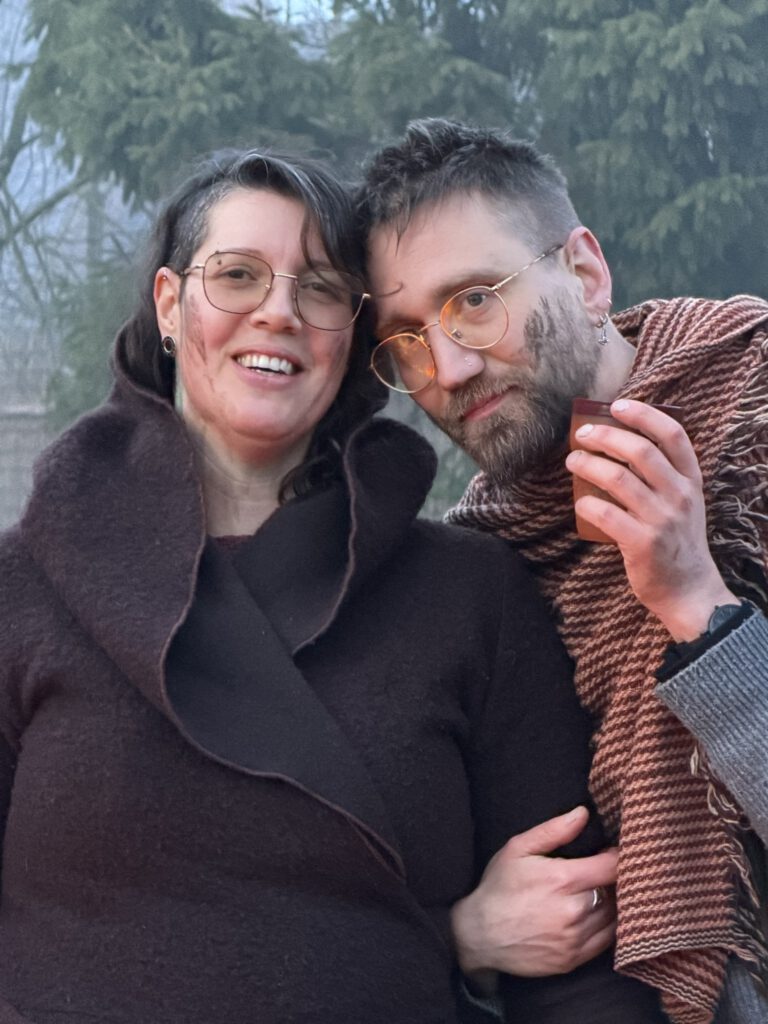
Taal is magie. Interview met Brighid

Wicca is méér dan een gezelligheidsvereniging bij volle maan of een jaarfeest. Het is ook hoe je leeft, hoe je je verantwoordelijkheid neemt. Creativiteit is van belang, maar ook taal, want taal is magie. Dus het is belangrijk hoe je spreekt en wat je zegt.

Wat ben je, hoe noem je jezelf?
Ik heb geen idee hoe ik me precies zou moeten of willen noemen. ‘Pagan’ is een bepaald etiket, ‘wicca’ is het nog meest omvattende, al moet je dat aan de buitenwereld altijd uitleggen. ‘Heks’ vind ik geen fijn woord, behalve als het historisch wordt gebruikt. Maar het dekt niet helemaal de lading als ik wicca zeg. Want in mijn geval zou ik ook het woord sjamanistisch gebruiken, dus: ‘wicca met een licht sjamanistisch trekje’. Maar dat is wel belangrijk.

Toen ik vroeg om een interview zei je dat je niet representatief bent voor wicca. Wat bedoelde je daarmee, en wat is dan wel representatief?
Als ik representatieve wicca’s voor mij zie – en dit is absoluut geen kritiek! – zijn dat mensen die alle Books of Shadow keurig hebben gekopieerd, digitaal of met de hand, die nooit een vergissing maken bij het oproepende of uitbannende pentagram, die alles heel erg volgens de regels van het boek doen. En dat past niet helemaal bij mij. Ik moet wel zeggen dat de structuur van een ritueel zoals we dat in wicca kennen wel helemaal bij me past: water en zout, de cirkel trekken, de windrichtingen aanroepen, het altaar inrichten. En de volgorde van het ritueel zelf: de jaarfeesten, eventueel magisch werk, meditatie en visualisatie – die twee heb ik er graag bij – cakes en wine, het afsluiten. Dat is voor mij een fijn kader, een goede structuur.

Zijn die rituelen het belangrijkste? Is wicca met name het doen van rituelen of uit zich dat ook op andere manieren in je leven?
Nee, het is ook hóe je leeft: met respect voor de natuur, voor dieren, planten, andere mensen. Het grote geheel en je éigen verantwoordelijkheid daarin, je eigen geweten. Zo zou het moeten zijn: dat wicca meer is dan een gezelligheidsvereniging met volle maan of een jaarfeest. Dus het heeft consequenties voor de rest van je leven. Het kan ook soberder. Ik vind dat we niet al te veel gebruik moeten maken van de bronnen die er zijn omdat de aarde ook verder moet zonder uitgeput te raken door ons gedrag. Het gaat verder dan met zijn allen in de cirkel staan. Zo zou het tenminste moeten zijn, als je jezelf wicca, paganist of sjamanist of heks noemt.

Ik begrijp hieruit dat je denkt dat niet voor iedereen geldt die zich pagan / wiccan / sjamanist enzovoorts noemt?
Nee, niet iedere pagan, wiccan of sjamaan doet dat. Ik hoef daar geen oordeel over te hebben. Ik heb onlangs het boek van Byron Katie gelezen: ‘The Work’, over de vier vragen die je leven veranderen. Ergens zegt ze: is het mijn zaak, is het jouw zaak, of een zaak van de God (of Godin)? Ik hoef niemand te bekeren en zal niet snel zeggen: ‘je vliegt wel erg veel hè’ of ‘je eet wel heel veel vlees’. Ik denk daar soms wel wat van, als het extreem is, maar iedereen moet dat zelf uitzoeken. Voor mij hoort bij wicca en sjamanisme een zekere mate van zelfkennis en beheersing. Het is niet de korfbalvereniging. Hoewel de korfbalvereniging ook eigen regels en wetten zal hebben.
Ik heb wel principes, bijvoorbeeld geen vlees, tenzij biologisch. Ik heb er geen oordeel over als iemand het zich niet kan veroorloven, maar vind dat ik best iets meer mag betalen aan dierenwelzijn.

Je noemde de structuur van rituelen. Er is meer structuur in wicca. Past dat wel bij je: de ‘dogma’s’, dat er God en Godin bij komen, dat je in reïncarnatie gelooft, inwijding, dat je de jaarfeesten en maanfeesten viert. Past die jaarstructuur wel bij je?
Die jaarstructuur vind ik heel erg fijn, dat is ook een beetje mijn passie, maar de manen laat ik voor wat ze zijn. Ik ben geen maanvierder. Via de Joodse spiritualiteit heb ik kennis gemaakt met Rosh Chodesh. Rosh is hoofd; chodesh is maand, dus letterlijk het hoofd van de maand, het begin van de nieuwe maand. Voor mij betekent de nieuwe maan het startpunt. Volle manen maken mij zenuwachtig en astrologisch gezien klopt dat ook.

Je houdt je bezig met astrologie? Dat hoort niet per se bij wicca.
Wat voor mij óók hoort bij wicca, naast het vieren van rituelen en de hele wicca-levenshouding, is dat je buiten dit puur vieren van de belangrijke punten in het jaar een bepaalde passie hebt die je eventueel kunt relateren aan wicca. Bijvoorbeeld kruiden, literatuur inclusief jeugdboeken op dit gebied, kennis van dieren. Ik ken mensen die met muziek bezig zijn en mensen die veel over het menselijk lichaam weten en die zich, bijvoorbeeld, bezig houden met chakra’s. Zelf houd ik me bezig met astrologie en ook wel met kruiden en oliën. Ik noem literatuur omdat het vertellen van verhalen ook heel belangrijk is.
Je bent ingewijd in wicca, dat is heel mooi, maar als je er niets extra’s naast hebt, vind ik het wel een beetje kaal worden. De meeste mensen doen er wel wat extra’s bij, die zijn goed in runen, chakra’s, muziek bijvoorbeeld. Ik ken iemand die alles weet van wat groeit en bloeit. Hij weet daar heel veel van en dat vind ik een geweldige aanvulling. Hij is daar ook heel toegewijd aan. En ik ken iemand die net zo toegewijd verhalen vertelt. Die toewijding vind ik waardevol en inspirerend. Er zijn bijvoorbeeld verhalen met magische thema’s, volksverhalen. Die zijn ook heel belangrijk, net als het bekijken van andere culturen, ook op spiritueel gebied. Je moet weten hoe een plant groeit en wat je ermee kunt doen. Joke Lankester was heel goed in het zelf maken van wijn, speciaal voor een jaarfeest, voor midzomer bijvoorbeeld. Dat vond ik geweldig. Het maakt niet uit wát je doet, als je het maar met passie doet, en niet alleen maar om te laten zien wat een mooi gewaad je hebt. Dan wordt het consumeren en daar houd ik niet van. De oude Grieken zeiden het al: Ken uzelve. Weet wat je zwakkere en sterkere punten zijn.

Wat heeft wicca jou gebracht?
Een verbinding met mensen die ik anders nooit zou hebben ontmoet. En inspiratie, dat ik door mensen geïnspireerd kan worden, en dat we op een bepaalde manier dezelfde taal spreken. Uiterlijke verschijningsvormen vind ik niet zo interessant.
Ik wil iets zeggen wat mij altijd opvalt: ik kan met iedereen in de cirkel staan, maar als je in een coven of rituele groep zit, betekent het niet dat het per se allemaal vriendjes en vriendinnetjes van je worden. Het kan wel: er zijn mooie vriendschappen ontstaan en prettige andere contacten. Soms heb je een enorme klik met iemand bij wie je je fijn voelt en die je vertrouwt. Maar als we buiten de cirkel zijn voel ik me niet automatisch verbonden met iedereen in mijn coven.
Je moet natuurlijk kijken of het goed met iemand gaat, en natuurlijk leef je mee als er iets aan de hand is. Er kán vriendschap ontstaan, een wederzijdse sympathie, maar het zou onzin zijn om te zeggen dat het altijd gebeurt. Je raakt niet automatisch hevig bevriend met iedereen. Ik leg ook niet bij iedereen meteen mijn hart en ziel en al mijn overtuigingen bij de ander neer. Wel als het de juiste plaats en tijd is, en het wordt persoonlijker, dan heb je een goed gesprek.

Je hebt een paar grote gebeurtenissen meegemaakt in je leven. Helpt wicca je om te gaan met rouw, om daarmee te leren leven?
Gedeeltelijk wel. Bij uitvaarten die ik heb ‘georganiseerd’ heb ik ook bevriende wicca’s uitgenodigd. Kaarsen, licht, muziek, maar ook het aanroepen van de windrichtingen vond ik heel belangrijk. En natuurlijk ook de steun vanuit die community. Rouw is iets heel ingewikkelds. Ja, in zekere zin helpt het.

Je hebt het over steun van mensen en over rituelen die troost bieden. Heb je ook steun aan de filosofie van wicca? Het is een kernbegrip in wicca: elkaar weer ontmoeten, en het idee van een leven na de dood.
Ik kom nogal wat mensen tegen die daar wel ervaring mee hebben, maar ook mensen die blijkbaar de donkere kant alleen als theorie zien. Die kennen die hele teksten uit hun hoofd en kunnen ze mooi oplepelen, maar zien niet dat ik alleen zit. Als ik dat zeg, worden zij benauwd en gaan ze even een drankje pakken. Dan denk ik: wat weet jij er nou van?

Mijn vraag was: heb jij iets gehad aan de rituele teksten die er zijn, en de filosofie van wicca?
Nee niet per se de teksten. Die zinvolle zinnetjes kom je overal tegen, niet alleen in wicca. Kaarsen aansteken ook. Het zijn niet de filosofieën of hele teksten die helpen, maar kleine dingen. Dat je bijvoorbeeld een diertje ziet dat ergens symbool voor staat. In het jodendom heb je het gebed voor de overledenen, de kaddish, en het grappige is dat dat niet over dood en leed en afdalen gaat, maar over het leven en spiritualiteit. Het vieren van Allerzielen, zoals in de katholieke kerk, vind ik ook fijn: het samenkomen, kaarsjes op bijvoorbeeld een graf zetten, gewoon eenvoudige handelingen doen.
Van die vier of vijf rouwfasen die Elizabeth Kübler Ross noemt, daar klopt werkelijk niets van, voor mij. Het zijn de kleine dingen die troostend zijn. De elementen, het reinigende van de regen of de sneeuw of het licht, dat het weer lichter wordt. Dat is troostend. Het is voor mij niet alleen een theorie maar ik probeer het ook te leven.

Je zegt dat je ook niet representatief bent voor wicca omdat je niet alle regels volgt.
Ik doe buiten de coven om ook wel eens rituelen met andere mensen: met een Alexandrian, en ook met een niet-ingewijde. Als mensen toegewijd zijn, vind ik het al super.
Vorig jaar hebben we aan zee, met volle maan, met drie mensen een fantastisch Aphrodite-ritueel gedaan. We hadden ons goed voorbereid en erg echt naar toegeleefd. Hoe meer je erin stopt, hoe meer je er ook uit krijgt. Een zekere toewijding is belangrijk. Als je ineens bedenkt: o, Beltane vanavond, we houden een ritueel, dat werkt niet. Deze drie mensen zijn allemaal spiritueel opgeleid, op het sjamanistische pad of anderszins, en hebben inzicht. Een ritueel vieren hoeft niet met de buurvrouwen, hoewel dat heel grappig zou zijn. Ik ken wel mensen die daar interesse in zouden hebben. Maar het is ook wel privé. Ik wil niet alles delen met iedereen, ook niet buiten de wicca.
Toeleven naar een ritueel vind ik belangrijk. Ik heb met die zelfde vrouwen, in een natuurhuisje, Samhain gevierd met foto’s en voorwerpen van onze voorouders. Dat was heel indrukwekkend. Als je een heel weekend bij elkaar bent, gaat het diep. En tegelijk blijft het luchtig. Diepgang plus vrolijkheid is een fijne combinatie. Alleen gezelligheid is te weinig en alleen diepgang is niet bevorderlijk voor de sfeer.

Ik heb wel eens aan rituelen meegedaan met mensen uit jouw coven en het viel me op dat er veel ruimte was voor spel, voor creativiteit, voor vrolijkheid in de rituelen.
Het is heel belangrijk om spel- of zelfs knutselelementen toe te voegen aan je ritueel, en dan kun je het voorwerp dat je gemaakt hebt toewijden. Je moet er tevoren wel over nadenken wat je gaat doen, wat je gaat verwerken in je knutsel. Ik ben er ook dol op om visualisaties te schrijven voor een groep. Je moet daar wel degelijk over nadenken: wat zijn de beelden die in me opkomen en hoe doe ik dat in een groep? Visualisaties en verhalen vertellen vind ik fijn. Al die creatieve zaken horen erbij. Ik zou een slechte Alexandrian zijn, want de Alexandrians gebruiken heel veel teksten, en die zijn heel mooi. Maar als ik met gewone woorden het oosten aanroep, komen de vertegenwoordigers van de windstreken ook. Theater en veel tekst past niet bij mij, maar het is ook kinnesinne, want ik kan niets uit mijn hoofd leren. Dat kon ik al niet toen ik 15 was.
Creativiteit is belangrijk, maar wel creativiteit van iederéén. Niet alleen consumeren wat anderen bedenken. Je kunt altijd het altaar mooi aankleden of godinnen en goden maken van keramiek, of takken mooi versieren. Creativiteit is breder dan tekenen of een verhaal vertellen, of een mooi ritueel gewaad maken.

Wat heeft de oudere heks nog aan wicca, of, vanuit ander standpunt: hoe verrijkt de oudere heks de wicca?
Daar heb ik een mooi voorbeeld van. Jonge mensen denken altijd: wij worden nooit oud, dus wat doen die oude mensen nog in wicca, maar het is Maid, Mother en Crone. Dit is crone-tijd. Ik denk dat het een wisselwerking is. Als iemand van 25 me aankijkt met een blik van ‘jij bent oud en je doet er eigenlijk niet toe’, dan kijk ik heel vals terug, met mijn Medusablik.
Wat ik zelf aan wicca heb is het zorgvuldig gebruiken van taal, omdat taal magie is. Taal is magie, dus het is belangrijk hoe je spreekt en wat je zegt.
Er zijn mensen die zeggen: ‘We worden oud. Ze kijken niet meer naar ons. We worden onzichtbaar’. Door wicca weet je dat ouder worden relatief is, dat een ‘spark’ behouden niet is voorbehouden aan twintigers. En dat als je dat maar lang genoeg zegt ‘we worden oud, ze zien ons niet staan’, dat het dan werkelijkheid wordt, dat je dan een flets vrouwtje wordt. Er hoort ook eigenwijsheid bij: wat kan mij het schelen wat een ander van me denkt? Juist omdat je je authenticiteit bewaart, word je wel opgemerkt. Nog zo’n domme uitspraak is ‘alle jonge mensen zijn mooi’. Sommige jonge mensen zien er helemaal niet mooi uit. Je kunt dat niet absoluut zeggen. Je kunt iets sprankelends hebben, een ‘je ne sais quoi’, en dat is leeftijdloos. Hoe meer maling je hebt aan die vastgeroeste opvattingen over leeftijd, hoe beter het is. Nog zo’n opvatting: ‘Jonge mensen nemen ons niet serieus meer’. Dat is niet mijn ervaring. Dat zijn simpele voorbeelden van dat taal magie is. Niet alleen in wicca, ook in de politiek, en bij columnisten in de krant. Als je alleen negativisme uitzendt, krijg je dat ook terug.

We hebben het een paar keer gehad over wat er speelt in de wereld. Kun jij vanuit de astrologie nog iets hoopvols toevoegen? Ik heb vaak gehoord dat de ‘Age of Aquarius’ nu begonnen zou zijn, en dat er dan meer gemeenschapszin zou zijn.
Er gebeuren hele vreselijke dingen. De wereld staat in brand. Het gekke is dat we doodsbang worden gemaakt voor Russen en Chinezen, maar dat het nu Amerika is dat verschrikkelijke dingen doet.
Maar ik merk inderdaad al verandering, dat merk ik echt al sterk, bijvoorbeeld in mijn buurt. We moeten het samen doen.
Ik denk dat saamhorigheid en groepsgevoel gaan toenemen, na een extreem egocentrische tijd. Ik zie het al gebeuren. Toen we onlangs hoorden dat we het water moesten koken, omdat er een bacterie in de leiding zat, stond er een buurman voor de deur die ook voor mij flesjes water had gekocht. Dat is een hoopvol gebaar.
Die toekomst komt en er zullen ook bepaalde dingen niet meer gepikt worden. Het is bijzonder dat sociale media nu aangevallen worden omdat veel dingen schadelijk zijn.
Nu is er een tijd van verwarring. Het allerbelangrijkste zijn innerlijke rust en innerlijk evenwicht. Zodat je een centrum in jezelf hebt waar het stil en kalm is.
We gaan langzamerhand doorkrijgen dat we het samen moeten doen. En ook dat we de ander niet als vijand zien. Ik ga er niet in mee om de ander als vijand te zien. Er zijn slechte mensen bij, maar die zijn er bij ons ook.
Deze ingewikkelde en gecompliceerde tijd zal uiteindelijk leiden tot diepgaande verbinding.

“Sneeuwklokjes, een hoopvol en krachtig plantje.” Foto van Bernfried Opala, Unsplash.

Geplaatst in Artikelen, Interviews | Getagged , , , , | Een reactie plaatsen

Brigid, a Universal Goddess

Who is Brigid / Brighid??

Brigid is the Daughter of the Dagda, one of the more universal deities of the pagan Gaelic world. Brigid (meaning ‘exalted one’ from Old Irish), Brigit or Brig is a goddess of pre-Christian Ireland. She appears in Irish mythology as a member of the Tuatha Dé Danann, (tooha-de-danan). She was the wife of Bres, with whom she had a son named Ruadán (Roo-aaaan).

She is associated with wisdom, poetry, healing, protection, blacksmithing and domesticated animals. Cormac’s Glossary, written in the 9th century by Christian monks, says that Brigid was “the goddess whom poets adored”. In Old Irish, Imbas means ‘inspiration’, and specifically refers to the sacred poetic inspiration believed to be possessed by the fili (Old Irish: inspired, visionary poets).

Saint Brigid shares many of the goddess’s attributes, and her feast day, 1 February, was originally a pagan festival (Imbolc). It has been argued that the saint is a Christianization of the goddess – a form of syncretism.

She embodies the concept of ‘harmony’ with her message and healing powers transcending the local and becoming a universal source of inspiration and energy.

Her status as a fire goddess was also apparent in her connection to the sun, and dawn in particular. Imbolc reflected the sun, the light, returning to the world as winter’s hold on the land lessened. Her name, “Exalted One”, reflected not only her nature as a solar deity but her connection to crafting and wisdom as well. 

Invocation to Brigid, Exalted One

O Brigid, Exalted One,
Goddess of fire, of flame, of light,
We call upon you in this sacred hour,
To kindle the spark within our hearts,
And guide us with your wisdom bright.

You, who dwell by the sacred wells,
Whose waters flow with ancient grace,
Grant us the strength to cleanse and heal,
And nourish us with your sacred embrace.

Lady of the forge, the hearth, the home,
Shape us as your hands do shape the stone.
Through your fire, may we be reborn,
Through your flame, may we be transformed.

O Exalted One, with eyes aglow,
To you, our hearts and voices flow.
We seek your blessings, we seek your grace,
May we walk forever in your sacred place.

The brightest of blessings. Brigid Bright!

Her invention of keening, a lament for the dead, reflected her status as a goddess of life and death. Brigid also protected cemeteries, which can be found at many of her holy sites.

Given the diversity of her attributes, Brigid was believed by many to be a triple goddess. Unlike most triple goddesses in Ireland, however, all of her aspects were named Brigid. Her status as a triple goddess allowed her to have multiple husbands, parents, and children without causing contradictions in the Celtic mythos. The sacred flame on her shrine at Kildare was never allowed to go out. Every nineteen days it was tended by the nuns who served her, and every twentieth day it burnt of its own accord.

Once in the thirteenth century an accident occurred and the flame was extinguished, but except for that moment it remained alight until the suppression of the monasteries by Henry VIII.

The fire goddess was honoured even when her origin had been forgotten.

As a triple goddess, Bride or Brigit was the goddess of poetry, the goddess of healing and the goddess of Smithcraft – not one would think a very expected subject for her patronage. But if the fire of the forge be remembered, then it is highly suitable for a goddess of fire to be served by the smiths.

A prayer to Brigid:

Brigid I seek you, Lady of the Well, the Forge and the Green Earth
I seek you
Warm my heart with your perpetual flame,
Heal my wounds with your gentle waters,
Cradle me in your mantle when I can walk no more
Brighid I seek you.

Brigid was a goddess full of contradiction. She was a goddess of healing, fertility, and motherhood, but also of passion and fire. Further complicating matters, Brigid was a goddess of serenity and water as well. Evidence of her worship has been found throughout Ireland, reflecting her importance as a powerful yet personal deity. When she was not protecting mothers and newborn children, Brigid inspired many of the writers and poets for whom Ireland is internationally renowned.”

Goddess of the Healing Wells:

Combining Water & Fire, like the many-petalled lotus of the Crown Chakra / Sahasrara, Brigid‘s universal healing powers emanate and cascade like a waterfall to the Earth. As crystal clear water replenishes the earth, so too are we rejuvenated as we drink Her sacred water.

Wells throughout the Celtic lands are named after Saint Brigit. There are many legends that the Saint had stopped by a well in her travels and blessed and healed people at the site. ‘Clooties’ are often tied to the trees (often Hawthorne) overhanging the wells, with healing wishes.

I walk, wrapped in your mantle
green as leaf on tree, newly blown on the wind
Hands still, I walk, silent and serene
in the knowledge that I walk alone, and never lonely
Light is reaching out over the hill
I take your hand. and walk into the dawn
that lights the grass, and never burns
Bride, Lady of my night, Lady of my morn
Rise ever and walk ever onward
blessing us with your grace.
(Finn)

Daughters of the Flame: On Imbolc, 1993, the Daughters of the Flame lit a fire in honour of the Goddess Brigit and the saint Bridget, modelled after the perpetual fire which once burned in Kildare. There, they share the task of tending the flame, on a twenty-day rotation; each woman tends the fire in her own way, so that it is a solitary devotion linked to the devotions of a larger group. On the twentieth day the Goddess Herself keeps the flame alive. Instead of burning in one grove, temple, or monastery, it burns on personal altars, desks, and picnic tables in countries east and west, south and north.

Brigid’s fire burns bright,
Sacred waters heal the soul,
Strength in flame and light.

Flame and water blend
Brigid, goddess of the earth,
Guide us with your grace.

References:

The Celtic goddess Brigid: https://www.facebook.com/photo/?fbid=928247405996286&set=a.653019206852442 and

https://kr.pinterest.com/pin/954552083517885115/

Daughters of the Flame: http://www.obsidianmagazine.com/DaughtersoftheFlame/index.htm

Survival of a Goddess: https://druidry.org/resources/brigid-survival-of-a-goddess

“I walk wrapped in your mantle green as leaf on tree newly blown on the wind Hands still, I walk silent and serene in the knowledge that I walk alone and never lonely Light is reaching out over the hill I take your hand and walk into the dawn that lights the grass and never burns Bride, lady of my night lady of my morn Rise ever and walk ever onward blessing us with your grace.”

https://www.instagram.com/p/yp9sqMG9Mr/ (marieisafreak)

However, without acknowledgements. ☹ I was never able to find out who ‘Finn’ is.

(Haiku style, 5-7-5)

Brigid’s fire burns bright,
Sacred waters heal the soul,
Strength in flame and light.

Flame and water blend, (fuse..)
Brigid, goddess of the earth,
Guide us with your grace.

Geplaatst in English articles | Getagged , , | Een reactie plaatsen

Henna Rituals in Turkish Culture

Morgana: Introducing Timea Kutlu as guest author.

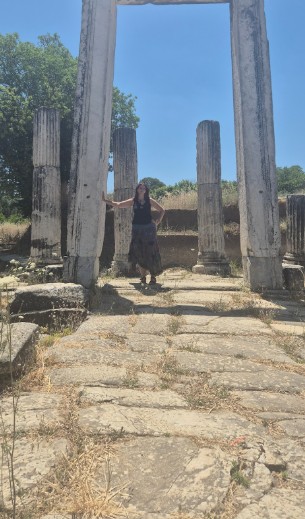
Timea is a Veterinary Doctor by profession. Also working as an interdisciplinary researcher and artist, her work integrates natural-scientific, ecological systems thinking with cultural analysis, as well as movement- and sound-based artistic practices. Her perspective is shaped by a Hungarian shamanistic worldview combined with long-term engagement in Turkish–Aegean culture.

Experiences rooted in the Aegean region and the Hellenistic legacy form key reference points in her work. Her primary artistic creation is Nardance, an intuitive, movement-centred artistic form that investigates the unity of body, sound, and space, reinterpreting Hellenistic ritual structures through contemporary practice and innovatively re-examining Aegean cultural knowledge.

In this article, she describes how Henna is used in Turkish Culture and how her Turkish family have involved her in celebrations and rituals using Henna.

Introduction – Symbolic and ritual significance

Across many cultures, henna (Lawsonia inermis) has played a prominent role for millennia, both in symbolic systems and everyday customs. In ancient Egypt, it gradually replaced red ochre, and since the,n it has remained a key element of body ornamentation and healing traditions in the Middle East and North Africa. The use of henna — whether for body painting, medicine, or cosmetics — has always meant more than mere decoration. The layers of meaning attached to the colour red — life and death, good and evil — endowed it with deeper spiritual significance. UNESCO recognised this rich cultural heritage in 2022, when “Henna rituals – aesthetic and social practices” were inscribed on the Representative List of the Intangible Cultural Heritage of Humanity.

Historically, henna also served as a ritual agent of purification and protection. Although these spiritual meanings have largely faded from common awareness, certain traditional communities — such as the Egyptian Zar cult — still preserve these older layers. Late 20th-century field research recorded beliefs that henna could ward off evil forces and bring bodily and spiritual purification. Today, henna is used primarily for cosmetic purposes: as hair dye and for decorating hands and feet, mainly among women from Morocco to Pakistan.

Its presence in rites of passage — especially wedding ceremonies — remains significant. The bride’s henna night (kına gecesi) is one of the rituals that has survived waves of modernisation — reinterpreted, yet still rooted in tradition. For centuries, henna has been part of the symbolic plant world of transitional rites. In many cultures, including Turkish tradition, its use marks bodily and spiritual transformation, supporting change in threshold situations. Its presence in ritual time and space signals renewal, rebirth, and transformation.

This study aims to examine the ritual dimensions of Turkish henna use — including biochemical, psychosomatic, and cultural aspects — in a region where henna continues to live, transform, and preserve layers of meaning now partly forgotten. Beyond its cultural and ritual dimensions, henna is also biochemically active. Understanding the physiological dialogue between henna and the human body opens deeper insight into ritual processes.

Henna (Lawsonia inermis L.) — known in Turkish as kına — is a plant whose history has long intertwined with ritual, medicine, and beauty practices. It belongs to the Lythraceae family and is its only known species. Originating in North Africa and South Asia, it is now widely cultivated in tropical and subtropical regions.

Powder made from dried leaves is traditionally used for body painting and hair colouring. Its real value lies in its complex phytochemical composition. More than seventy phenolic compounds have been identified, including naphthoquinones, terpenes, sterols, and alkaloids. These components underlie henna’s diverse medicinal effects recognised in traditional healing. Henna has antibacterial, antifungal, antioxidant, and wound-healing properties. Many cultures used it for beauty care, protection, and regeneration — for example, to prevent fungal infections on hands and feet or to treat lice and dandruff when applied to hair.

The complex interaction between henna and skin

Henna application is both a biochemical and a symbolic act, in which plant and human skin enter a living dialogue. The main active component, lawsone (2-hydroxy-1,4-naphthoquinone), does not function as a conventional dye. It penetrates the upper skin layer and forms a covalent bond with keratin, the skin’s fundamental protein. This bond is stronger and more durable than simple surface staining, meaning henna acts both on the surface and in deeper tissue layers. This is an active biological process: lawsone influences skin cell growth and renewal, modulates inflammatory responses, and contributes to natural skin defence. It can activate the aryl hydrocarbon receptor (AhR), which plays a key role in keratinocyte function, inflammation, and regeneration.

The Turkish expression kına yakmak — literally “to burn henna” — reflects this deep connection. The practice represents a transitional rite in which plant compounds and human skin bind at molecular level. The covalent bond between lawsone and keratin inscribes the plant into bodily tissue.

Through lawsone, the plant enters real molecular interaction with skin, leaving visible traces of transformation. The meeting point of body and plant becomes a space of transformation. As skin cells renew and old layers shed, the henna colour gradually fades — making change visible both symbolically and literally. Its anti-inflammatory, antibacterial, and regenerative properties protect the body while one enters a new state. The colour on the skin becomes proof of a bond with a plant that accompanies transformation like an ancient ally.

Cultural and symbolic meaning of henna

Henna is a deeply rooted cultural and symbolic carrier, interweaving ritual, medicine, and beauty for centuries. In Turkish culture, kına yakmak (“burning henna”) metaphorically expresses an initiation process where the plant leaves a mark on the body and consciousness. The imagery of burning refers to the warmth felt on the skin, but also symbolises transition, sacrifice, and permanent imprint. The plant “marks” the body, inscribing meaning, memory, and collective knowledge.

Henna’s cosmetic and medicinal use dates back to antiquity. In ancient Egypt, even mummies’ nails were dyed with henna. In Turkish folk culture, henna occupies a special place in healing, beauty, and traditional ceremonies. Across North Africa and the Middle East, it is essential to rituals, especially among women.

In Turkish tradition, henna has long been used to dye hands, feet, and hair, and folk medical records describe its use against eczema, burns, headaches, eye pain, ulcers, wounds, diarrhoea, leprosy, and fungal infections — confirming its multifunctionality.

Henna as a symbol of “flow” in nomadic culture

Field observations among Yörük nomads show henna carrying deep spiritual meaning. It is used to dissolve “heaviness” (fatigue, ageing, illness) and restore lightness, vitality, and freshness. Their ethnobotanical logic sees illness and ageing as a lack of “flow” in body and soul. Henna is an initiation returning the person to the flow of life — symbolically and physically renewing body and spirit. This reinforces henna’s role as a transformative and healing agent, restoring harmony.

In Turkish folk culture, bolluk (abundance) and bereket (fertility/blessing) go beyond economic meaning. They reflect a worldview linking natural cycles, social cohesion, and cosmic order. Their roots reach pre-Islamic Turkish beliefs and Anatolian traditions.

Bolluk denotes tangible abundance and wealth. Bereket signifies fertility, blessing, and harmony — invisible abundance. Folk imagination treats bereket as the sacred force from which visible abundance arises. Well-being is not merely material luck but the fruit of healthy spiritual and communal order.

Abundance is fragile, threatened by göz değmesi — the “touch of the eye”, harmful envy. Traditional protective devices like the nazar amulet express communal solidarity and defence. Henna rituals function as protection against such harm, maintaining bereket.

(Photos of using Henna in a Traditional Turkish wedding – used with permission)

Henna in the Turkish cultural tradition

Henna is embedded in Mediterranean and Middle Eastern rites of passage. In Turkey, it marks weddings, military send-offs, healing practices, infant protection, and even sacrificial animals before religious festivals. Its role is communal and protective, not limited to female symbolism.

The most theatrical and elaborate form is the bride’s henna night (kına gecesi), where clothing, songs, weeping, and decoration enact the transition from girlhood to womanhood.

The Turkish henna night (kına gecesi)

This ceremony marks the bride’s emotional and social transition. It unfolds in stages: joyful gathering, preparation of the henna tray, singing, bathing rituals, and finally the application of henna.

The bride sits on a decorated ceremonial seat, covered with a red veil. A respected married woman applies henna. The bride initially keeps her hand closed; it opens only when the mother-in-law offers a gold coin. This symbolises entry into the new family and the blessing of prosperity. The coin is placed in the palm under the henna, sealing abundance.

The hennaed hand is wrapped in red tulle and covered, followed by ritual weeping — a socially expected act expressing farewell and transformation. The red colour symbolises life, protection, and defence against the evil eye.

The bride’s ritual tears are not signs of unhappiness but prescribed expressions of transition. They mark liminality — the threshold between old and new identity. Scholars like Van Gennep, Durkheim, Radcliffe-Brown, and Turner interpret such weeping as social performance, reinforcing communal bonds and renewing order.

Garments such as the embroidered bindallı and kına önlüğü embody female heritage, fertility, and protection. Colours and metallic threads symbolise prosperity and respect. The final phase is a communal celebration confirming acceptance of the bride’s new status.

Henna night in a modern urban context

In contemporary cities, the henna night blends tradition with secular modernity. It adapts to consumer culture, event venues, and services while preserving symbolic structure. Hammams (bathhouses) remain important ritual spaces, now combining heritage and entertainment.

The Turkish henna night is more than a celebration: it is a complex rite of passage supporting transformation, social cohesion, and continuity of tradition within modern change. Henna remains a living cultural system combining biological effect, symbolism, and communal meaning.

Henna rituals in Turkish culture demonstrate how a plant can unite biochemical reality with symbolic meaning, embedding transformation into skin and society alike. They reveal how traditions survive by adapting, carrying old meanings into new forms.

Ebru & Osman Kina Gecesi – Kina Klibi

References:

(Photos of using Henna in a Traditional Turkish wedding – used with permission)

Geplaatst in English articles | Getagged , , , , , , , , , | Een reactie plaatsen

In the Belly, in the Womb

In the Belly, in the Womb, you
will be reborn; soon, very soon

The seeds beneath the covering soil,
they await to be awaken. They will
be reborn; soon, very soon

The standing-sleepers with buds to be
unfolded, the expectation of leaf-green
they will be reborn; not so very soon

In the Belly, in the Womb, Life itself
formed in an early state, the promise
to be born again; soon, very soon

Geplaatst in English articles, Gedichten / Poems | Getagged , , , | Een reactie plaatsen

Volle maan van de overstroming

De plas met wat ijsvliezen op het water, en boompjes aan de randen en op eilandjes in de plas.

Het is bijna oud en nieuw. De laatste hectische dagen van het jaar. Ik had me voorgenomen om na het wegbrengen van mama (Indonesische dagopvang) lekker te gaan sporten, daarna schrijven en dan de rest van de middag gezellig thuis te zijn met manlief <3 Vanavond komt de achterbuurman helpen met het digitaal aanleveren van de ‘uitbetaling aan derden’. Dat moet ieder jaar even opgegeven worden aan onze maatschappelijke spaarpot, de belastingdienst.

Maar om half 10 stond ik voor nop bij mama in huis. Ze lag nog te slapen, de dagopvang ging niet door, dat wist ik alleen niet 😛 Dus dan maar wat huishoudelijke zaken gedaan en hup naar huis. Op weg naar de sportschool gaat mijn mobieltje af. Het is mama, de traplift is stuk, ze kan niet naar beneden. Dus geen sportschool, maar mama verzorgen op de eerste verdieping. De monteur is er over twee uur. Nog even thuis geweest om te eten en het schrijfwerk voor te bereiden. Daarna weer naar mama, gelukkig was het een kleinigheid… knopje zover de armleuning in gedrukt dat het geen knopje meer is. Mama is echt niet ongeduldig 😛 Maar hij doet het weer!

Om half 3 eindelijk naar de sportschool 🙂 Om half 5 thuis en nu dan mijn verslag voor WRO afmaken, foto’s erbij zoeken en verzenden. En vanavond de belastingzaken afhandelen. En daarna weer in slaap vallen op de bank… en manlief moet weer vroeg naar bed, het werk gaat gewoon door. Weg gezellig samen zijn… dat wordt inhalen op oudjaarsdag 🙂

12-02-2025 volle maan van de overstroming

Thema: Welk oud patroon is zo gewoon geworden dat je het niet meer ziet?

Indiaans sjamanisme: Zij die wijsheid bewaart.

Het is woensdagavond en volle maan. Natuurlijk ben ik weer voor de televisie in slaap gevallen, dat kan ik héél goed! Het is ondertussen 22.00 en mijn bedje lokt. Ik besluit niet te gaan wandelen. Ik doe de lichten allemaal uit en loop naar de voordeur om ‘de haak’ erop te doen… ik kijk even achter het gordijn naar buiten. Oh, het is wat mistig en ziet er zó stil uit. De sneeuw vanuit het noorden zou over de Noordzee zo draaien dat hij weer bij Zeeland binnen komt vannacht… met andere woorden, wij (in Zwolle) zitten in het oog van deze draaikolk 🙂 Vandaar de mistigheid en stilte buiten, geen zuchtje wind. Ik trek mijn wandelschoenen aan, pak mijn wandelstaf en kleed me warm aan. De deur slaat achter me dicht, heerlijk om gewoon te gaan!

Natuurlijk is er geen maan te zien met deze mist, maar dat mag de pret niet drukken. De natuur staat te trappelen om te ontluiken. Van de week stonden de Canadese ganzen al te gakken om zodoende hun nestplaats te claimen.

Maar voor nu is het stil buiten. Mijn wandeling gaat een stukje door de wijk in plaats van langs de hockey-velden. Even een shortcut. Als ik langs de buitenkant van de woonwijk kom te lopen zie ik allemaal Canadese ganzen staan. Ze staan echt op wacht met z’n allen, maar reppen zich toch naar het water als ik aan kom lopen. Het is even een herrie van jewelste. Ik laat het struinpad voor wat het is, ik neem de wat langere route.

Opeens moet ik aan de berichten denken over de roedel van drie wolven die van de week huisgehouden hebben in een grote groep schapen, in het noorden van het land. Drie wolven die samen rondtrekken door het noorden. Ze lopen zo 50 km per nacht, die zwervers. Ik ben nooit bang geweest voor ‘de Wolf’, maar nu bekruipt me een unheimlich gevoel… schijter! Ik bemerk dat ik geregeld achter me kijk. Echt hè… een nieuw gevoel voor me! Van mensen ben ik niet bang, vreemde snuiters weet ik wel te tackelen 🙂 En de meeste mensen die ik ontmoet in de nacht zijn ook ‘nachtvlinders’. En mensen maken nu eenmaal herrie en licht in het donker, die ontmoet ik zelden plotseling 😛

afdruk van een wolvenpoot in de zachte aarde

Maar drie wolven… die hoor je niet. Die hebben geen licht bij zich. En daar helpt geen attitude of babbel tegen. Eén wolf, dat is nooit een probleem voor me geweest, qua gevoel… maar een roedel… Opeens heb ik geen trek het bos verder in te gaan.

Wat wil de wolf (in mijn hoofd) mij dan vertellen? Ik ben toch geen Roodkapje 😛 Even googelen…

“De wolf komt je vragen naar jouw positie in het grotere geheel. Dat kan gaan over de mensen met wie je veel tijd doorbrengt: vrienden en familie of vakgenoten en collega’s. Welke rol neem jij in, in deze groep? En past die rol jou nog? Wat is het evenwicht tussen jouw behoeften en die van de ander? Een wolf is diep verbonden met zijn instinct en heeft een groot lerend vermogen. Hij laat zien dat onze ongetemde, wilde kant niet iets is om bang voor te zijn. Durf te onderzoeken: wat past er ten diepste bij wie je bent? In welke rol zou je volledig tot je recht komen? Wat belemmert je? Misschien is het wel tijd om je leiderschapskwaliteiten wat meer te ontplooien, op werk- of privégebied. Een systeemopstelling kan je inzicht geven over jouw plaats in het grotere geheel. Als je het lastig vindt om in groepen te zijn, is de wolf een liefdevolle gids om je te helpen ontdekken hoe je op een natuurlijke manier je ruimte in zou kunnen nemen. Misschien mis je wel een archetypische rol in je omgeving, heb je behoefte aan een nar die wat luchtigheid brengt of een mentor die zijn wijsheid kan delen. Welke hartenwens zou jij willen roepen naar de maan?”

Deze tekst komt deels uit de handleiding van het Magische Krachtdieren deck, geschreven door Nicole van Borkulo. Wil jij meer weten over krachtdieren en hun boodschappen? Bestel het deck en ontdek de wijsheden van 40 magische krachtdieren.

Wat mooi! Welke hartewens zou ik willen roepen naar de maan? Ik zou zó graag op termijn (eerst mantelzorg voor mama) mijn coaching willen oppakken. Het is zó fijn om mensen op weg te helpen hun eigen wijsheid te vinden.

De leider en de nar ben ik zelf al binnen mijn eigen groene groep, daar heb ik geen gebrek aan 🙂 Maar de wijsheid in mezelf en de ander aan te boren is zó mooi… een wijze nar is me ook goed.

Ik weet van mezelf dat ik moeite heb met het vragen van geld voor coaching… luisteren en de goede vragen stellen is zoiets gewoon menselijks, dat zouden we meer moeten doen. Ik ben fysiek werk gewend en dat voelt als werken; luisteren en zitten staat lijnrecht tegenover 🙂 Misschien dat ik daar eens de kracht voor mag vinden… op m’n 64ste 😛

Maar wat heeft B8 me te vertellen, deze maan? Mijn wandeling is deze keer niet verder gegaan dan naar mijn bomenvriend. Tijdens het Greenthingz weekend en onze bingo op de zaterdagavond heb ik een boekje uitgezocht: The Magic (in de lijn van The Secret). Ik was benieuwd wat dit boekje te vertellen had. Ik heb wat bladzijden gelezen en het komt er op neer dat ‘dankbaarheid’ een plaats verdient in je leven. Maar dat je daar een heel boekje vol mee kan pennen… pppfffttt. Het schijnt dat veel mensen geen dankbaarheid meer ervaren. Nou, ik ben geregeld dankbaar. Iedere ochtend, dat ik wakker wordt en weet wat ik mag gaan doen die dag en ook de dagen dat ik niets op de agenda heb 🙂 Als ik op de sportschool mijn lichaam train op kracht, conditie, souplesse en balans… dat dat weer volop kan na wat blessures. Dat we nog volop kunnen vrijen op onze ouwe dag… veel paren kunnen dat niet meer. Dat de hagel in kleine stukjes naar beneden komt en niet in één blok 😛 Ik realiseer me vaak dat ik geniet, dankbaar en verwonderd ben.

Net nog naar de andere kant van Zwolle gefietst om een mooie wajangpop op te halen bij de kringloop. Gelukkig was hij er nog en ook dan ben ik dankbaar voor zoiets kleins 🙂 En dat ik dat stuk zomaar even heen en weer fiets, geen probleem… alleen koude voeten. Had ik maar niet met mijn sportschoenen moeten gaan 🙂

Het silhouet van een geknotte boom met kale takken, met op de achtergrond het water van de plas

Maar B8, wat heeft die te vertellen? Als ik bij mijn vriend aan kom sta ik even stil bij hem. En ik denk aan dat boekje. Ik zeg mijn vriend dat ik hem dankbaar ben voor onze vriendschap. Dan pas stap ik op hem af en en schud hem de tak, die letterlijk voor zijn stam hangt. Ik leg mijn handen op zijn stam en ik krijg “Fijn”. Meer niet… gewoon ‘fijn’. Niet: ”ik ben ook dankbaar voor onze vriendschap” of zoiets… het eigenlijk direct terugkaatsen van een compliment… mensen eigen. Of in ieder geval mij eigen 😛 B8 zegt gewoon ‘fijn’. Hij absorbeert mijn dankbaarheid en zegt dat hij dat fijn vindt. Dat is nou eens een goed voorbeeld voor mij. Ik wimpel de dankbaarheid van mijn moeder vaak weg als zij zegt zo dankbaar te zijn voor onze goede zorg voor haar. Ik zeg dan dat zij niet dankbaar hoeft te zijn omdat we het gewoon als een deel van onze dagelijkse taken ervaren. Maar het is gewoon fijn (yep, daar heb je hem) om dankbaar te mogen zijn. Mijn broer gaf ons beiden een groot bloemstuk voor onze verjaardag met een kaartje eraan… met veel dank voor de goede zorg voor mama. Ook hij gaf daar zijn dankbaarheid mee aan. Even googelen op dankbaarheid…

“Een van de belangrijkste manieren waarop dankbaarheid onze hersenen kan beïnvloeden, is door de productie van dopamine en serotonine te stimuleren, twee neurotransmitters die vaak bekend staan ​​als ‘feel-good’-chemicaliën. Wanneer we dankbaarheid uiten, kunnen onze hersenen deze chemicaliën vrijgeven, wat leidt tot gevoelens van geluk en tevredenheid.”

Onderzoekers hebben een verband vastgesteld tussen dankbaarheid en mentaal en fysiek welzijn. De feelgoodhormonen die vrijkomen bij het geven en dankbaar zijn, kunnen je helpen om stress te beheersen en je gelukkig te voelen, en op je beurt meer energie, een positieve mindset en een betere nachtrust te hebben.”

“Wat is dankbaarheid? Dankbaarheid is het vermogen om de waarde van iets of iemand te erkennen en te waarderen. Het is meer dan beleefd ‘dankjewel’ zeggen; het is een diep gevoel van waardering dat voortkomt uit het bewust ervaren van het goede in je leven.”

“Als dankbaarheid wordt afgedwongen of pijn omzeilt, kan het gevoelens van falen en hopeloosheid versterken. De donkere kant van dankbaarheid is dat het geweldig klinkt en gemakkelijk kan worden misbruikt. Let op jezelf, let op je hart, let op je emoties, ze zijn de sleutel tot de balans die we allemaal zoeken.”

Zo, er is veel te vinden op internet over dankbaarheid. Maar het gaat vooral over het dankbaar zijn, niet over het ontvangen ervan 🙂 En mooi dat er ook een donkere kant bestaat van dankbaarheid. Als het als ‘tool’ wordt ingezet! Niet vanuit het hart maar vanuit het hoofd. Of om emoties niet te voelen… je moet maar dankbaar zijn dat je… vul maar in 🙁 Dan slaat het de plank faliekant mis.

Mijn les van B8 is dat ik dankbaarheid van de mensen om mij heen gewoon mag absorberen… niet afwijzen door te spiegelen / terug te kaatsen. Ik mag gewoon “fijn” zeggen… net als B8. Mooie wijze boom van me <3

Misschien is mijn hartewens wel dat ik ‘dankbaarheid’ mag absorberen 🙂 Dat ik het echt mag laten aankomen. Daar ligt wel een stevige les voor mij 🙂

Ondertussen sta ik daar in het donker bij mijn bomenvriend. Ik staar naar het donkere bos voor me. En ik betrap mezelf op angst. Geen doodsangst maar ik vind het even te eng om het bos in te trekken. Maar dit wil ik niet… ik wil me vrij voelen om ‘mijn’ bos in te kunnen in de nacht. De wolf heeft me even een boodschap gegeven 🙂 mooi om me daar even dankbaar voor te voelen. De wolf en mijn boom hebben een hoop te vertellen. Volgende keer ga ik echt weer mijn bos in! Ik heb net een persoonlijk alarm gekocht 😛 110 decibel… ik denk dat ik me rot schrik en een eventuele roedel wolven ook 😛 het geeft mij in ieder geval een veilig gevoel. En dat een klein apparaatje dat voor mij kan betekenen is fijn… gewoon fijn.

Naast het struinpad zet de laagstaande, ondergaande zon, gezien door de bomen, alles in een oranjegoud licht.

Op de terugweg neem ik het struinpad door de weilanden… de shortcut. Toch een mooie wandeling van een uur en geen levende ziel ontmoet… op wat bange ganzen na. Ik liep alleen maar langs… dat doen wolven ook 🙂

Veel liefs,
Loes

Een paar weken later is er een wolf in Zwolle aanbeland! Er zijn veel filmpjes uit de buurt en berichten dat hij op Westerveld gespot is, op het struinpad naar het bos… mijn bos. In mijn wijk loopt hij door de straten, hij probeert een plek te vinden om de wijk uit te kunnen. En die vindt hij in het buitengebied waar ik graag wandel… hij is er, in zijn eentje.

En dan de volgende volle maan, als ik weer naar mijn bos ga. De 110 decibel in mijn zak (mijn man had het even geprobeerd thuis en ja, het is hard!!) voelen goed, als het nodig mocht zijn. Als ik langs de rand van de woonwijk loop hoor ik geweerschoten en zie ik grote zoeklichten in mijn bos.

Afgelopen dagen ben ik vaak in het bos geweest om sporen te zoeken en die heb ik veel gevonden! En nu wordt er geschoten!! Ik twijfel geen moment en bel direct de politie. Die kan de schoten ook horen als ik met hen aan de lijn ben. Met een kwartier zijn er drie auto’s waarvan een met honden. Alle in- en uitgangen van het bos worden afgezet. Maar de jagers laten zich niet zien en de politie durft de honden het bos niet in te sturen… logisch. Er zijn jagers die op honden/wolven schieten en wolven lusten honden rauw. Na drie kwartier druipen ze af. Er worden nergens auto’s aangetroffen en er komt echt niemand uit het bos 😛 Ze raden me af om nu nog mijn wandeling te maken… toch even bij mijn boom geweest. Fijn dat zij zo snel reageerden en de zaak hoog opnamen… van de wolf niets meer vernomen. Niet in de media en niet in het bos. Ik ben bang dat het voor deze wolf een doodlopend avontuur in Zwolle was… shit!

Mannelijke bloemen van de hazelaar bungelen aan een tak. Een vrouwelijk bloempje is te zien aan de tak.

Geplaatst in Volle Maan Wandelingen | Getagged , , | Een reactie plaatsen

Inspiratie voor beginners: elfjes als dichtvorm

Wil je zelf rituelen gaan vieren, maak ze dan vooral persoonlijk door er zelf iets voor te knutselen of te schrijven. Er zijn korte dichtvormen die je goed kunt gebruiken om te verwerken in een ritueel. Vooral het ‘elfje’. 

Je hebt kennisgemaakt met wicca en kunt niet wachten om een ritueel te doen voor het eerstvolgende jaarfeest. Je kunt op zoek gaan naar rituelen in boeken of op internet, maar ons advies is altijd om zelf een ritueel te schrijven. Houd het eenvoudig, maar ook persoonlijk. Er zijn een paar richtlijnen voor een ritueel in wicca zoals het trekken van een cirkel (* en zie deze artikelen). Daarbinnen kun je onderdelen toevoegen die voor jou betekenis hebben.

Op het moment dat dit artikel verschijnt, is het eigenlijk al te laat voor een Imbolc-ritueel. Maar Brigid is niet alleen de godin die wordt geassocieerd met dit jaarfeest, maar gaat onder andere ook over poëzie en inspiratie. Daarom toch nu dit artikel, met voorbeelden die passen in dit seizoen. Gebruik het later in het jaar voor andere rituelen, met andere associaties.

Begin op tijd. Vraag je af wat het seizoen voor jou betekent, en of dat thema ook een rol speelt in je leven, op dit moment. Denk aan ‘zaaien’, ‘groeien’, ‘oogsten’ en ‘verstilling’, door het jaar heen en in je leven. Zoek dan (en het liefst in deze volgorde) naar wat anderen over dit seizoen en over dit jaarfeest te zeggen hebben. Is er iets te vinden in folkloristische boeken: waren of zijn er in jouw regio bepaalde gebruiken die horen bij deze tijd van het jaar? En elders in het land of in Europa? Brigid is vooral bekend in de Keltische wereld, in Ierland. Daar is het gebruik om ’Bridgets crosses’ (uitleg met video) te maken van stro of biezen, en ‘Brigids cross buns’ (broodjes). Misschien kun je zelf iets maken van biezen, van brooddeeg als knutselmateriaal, of brood om te eten.

Brigid gaat ook over poëzie, zei ik al. Als je een goede dichter bent, schrijf je waarschijnlijk al gedichten voor de jaarfeesten. Maar als het je niet zo makkelijk afgaat, dan kun je een heel eind komen als je gebruik maakt van deze ‘simpele’ modellen: de haiku en de ‘elf’ of het ‘elfje’.

Een haiku ken je misschien al. Deze versvorm is afkomstig uit Japan, en heeft vaak als thema de natuur of het seizoen. Een haiku telt drie regels, van respectievelijk vijf, zeven en vijf lettergrepen. Er is genoeg literatuur te vinden over deze dichtvorm#. Laat je inspireren!

Een elf kom je niet zo vaak tegen, daarom hier wat meer informatie. Een elfje telt vijf regels, van respectievelijk één woord, twee woorden, drie woorden, vier woorden, en als laatste weer één woord, in totaal dus elf woorden, wat de naam verklaart). Het laatste woord vat het thema samen. Het kan de logische samenvatting zijn van de regels erboven, of juist een verrassing zijn: ‘o, dacht je in díe richting!’

Voordat je een elfje schrijft, is het daarom handig om te weten wat het ene woord is waarmee je wilt eindigen, zodat je niet al direct bij het begin je kruit verschiet. Je kunt er elk onderwerp in kwijt, maar als voorbeeld kies ik hier voor het seizoen. Je slotwoord, of je beginwoord, kan bijvoorbeeld ‘sneeuwklokje’ zijn, of ‘ijskristal’. Wat zegt dat woord jou, welke associaties heb je erbij?

IJskristallen, vormen samen sneeuwvlokken; zes puntjes en een heel patroon van ‘zijlijntjes’; ieder ijskristal is uniek. IJs is water, maar gestold water. Als het warmer wordt, is ie zo weggesmolten. Onder de microscoop zie je de schoonheid en complexiteit van een ijskristal pas goed.

Dat zijn een aantal karakteristieken van een ijskristal. Wat vind jij het belangrijkste kenmerk? Dat elk ijskristal uniek is, bijvoorbeeld? Dan kun je gaan spelen met die kenmerken. ‘Geen twee dezelfde’ zou je kunnen gebruiken als derde regel, want die bestaat immers uit drie woorden. En dan puzzelen met de rest.

IJskristal
Puntige schoonheid
Geen twee dezelfde
Ik wil ze bewaren
Dooi.

Dat laatste woord is niet heel poëtisch, al is het misschien verrassend. Maar als je dit elfje in een ritueel wilt gebruiken, bereik je misschien niet het effect dat je beoogt. Een nieuwe poging:

IJskristal
Bevroren water
Elk is uniek
Samen vallen ze neer
Sneeuwvlokken.

Ik ben er nog niet tevreden over, maar je snapt hopelijk de bedoeling.

Winter
Koude donsjes
zweven naar beneden
De wereld is wit
Sneeuw.

Probeer het zelf, en ook met andere woorden: voorjaar; zonsopkomst; verwachting; inspiratie; Brigid.

Lentefeest
Vuren branden
op alle heuvels
Het licht komt terug
Candlemas.

Bèèèh
Zacht gemekker
in de stal
Ooien zogen hun jong
Lammetjes.

Bèèèh
Zacht gemekker
in de stal
Ooien zogen hun lammeren
Imbolc.

Of ‘Oimelc’ als slotwoord van de vorige elf, het andere woord voor Imbolc (in de buik) dat letterlijk ‘ooimelk’ betekent. Candlemas is ook een naam voor dit jaarfeest, maar meer de christelijke versie.

Het belangrijkste is niet dat het een mooi gedicht wordt. Wel belangrijk is dat jij er zelf energie in steekt. Dat je je tevoren voorbereidt op de essentie van een jaarfeest, en dat je iets ‘eigens’ maakt van een ritueel. Iets persoonlijks. En als je het samen viert, kan iedereen een zelfgemaakte ‘elf’ meenemen en komen alle aspecten wel aan bod.

* Zie ook het Stappenplan voor beginners om Samhain te vieren, Mijn eerste ritueel; Samhain, zelf een jaarfeest vieren; Een (Beltane)ritueel samenstellen, iedere heks kan het.

# Zie bijvoorbeeld de website van Tekstwerkplaats of die van Schrijven online. of de site Weerwoord geven voor nog andere voorbeelden van Japanse dichtvormen. Over de elf als dichtvorm is ook wel meer te vinden met de zoekterm ‘elfje dichtvorm’.

Foto Vince M, Unsplash

Geplaatst in Artikelen | Getagged , , | Een reactie plaatsen

Review: Lucifer: Princeps

Lucifer: Princeps
Peter Grey
Originally published: Scarlet Imprint, 2015. Re-published: Scarlet Imprint, 2025 8vo (240 × 156 mm) 192 pp. Frontispiece Satan Arousing the Rebel Angels. William Blake, 1808. Issued in 4 editions – fine / standard hardback / paperback / digital

Part 1 Introduction

Grey’s Luciferian vision provides a re-framing of the Goetic tradition that infuses it with a new and far more positive light. We will return to consider how it does this shortly. Originally published in 2015 (and now again in 2025) Lucifer: Princeps is the first volume of a two-part study of the origins and evolution of the figure of Lucifer that has overshadowed Western culture generally, and the esoteric tradition in particular, for centuries. The second part of Grey’s comprehensive study, Lucifer: Praxis (2025) is covered in the second part of this review. The opus as we now have it is magisterial in scope, profound in its implications and surely destined to feature – much as Apocalyptic Witchcraft (2013) did over a decade ago – as one of the seminal works in the continuing evolution of the Western esoteric tradition. Is this opus now complete? Perhaps, perhaps not. Readers of Grey’s recent writing for his Substack account will know that he continues to pursue an insider track on the evolution of the esoteric tradition now reaching into the late twentieth century. Whether these pieces are the seeds of a concluding – or even a further – volume, we will have to wait and see. Concerning ‘Princeps’ and ‘Praxis’, Grey summarises their relationship as follows,

“[Whereas] Princeps gave a prehistory of the spirit of rebellion … Praxis engages with the emergent Lucifer in relation to the work of magic, and the exercise of power and influence in the world.” (Praxis: ix)

Evidently, Grey’s Luciferianism should not be thought of as one that is confined to private ritual practice, but rather encompasses larger issues of lifestyle and socio-political vision; though these issues remain unelaborated. As I have understood it, the motivation for writing ‘Princeps’ and ‘Praxis’ is a deeply felt need to re-align Goetic practice with contemporary realities, amongst which are the implications of Nietzsche’s famous statement to the effect that “God is dead”; though in Grey’s re-framing of esoteric history, Nietzsche’s pronouncement was at least a century too late. It is central to Grey’s Luciferian historical vision that the ‘death of god’ occurred sometime between 1789 and 1870 when a tide of Jacobin-inspired revolutionary fervour swept away Europe’s medieval political and economic order – dominated by the Church and absolute monarchies – and so gave birth to the modern nation states. From an esoteric perspective, Grey characterises this revolutionary tide as essentially ‘Luciferian’ in both ideology and inspiration; as ‘Praxis’ unfolds, we learn exactly why this is so. Returning to the key issues driving Grey’s Luciferianism, his drive for a reformation of Goetic theory and practice arises from the fact that,

“Given that we live in a post-Christian world, the challenge for modern practitioners is arguably not process, but theology. We can quickly grasp that there are a number of steps necessary to perform a successful conjuration, but where is our authority to be found when God, the guarantor of efficacy, is dead?” (Praxis: 85)

Briefly, Grey contends that contemporary practices continue to remain rooted in an unspoken, and largely unconscious, Christian monotheism and metaphysical dualism framed by the eschatology of the end-time. The operative residue of this worldview manifests as the characteristic modus operandi of Goetic practice: the demonisation of spirits and the employment of rites of coercion, of which the rite of exorcism remains paradigmatic. Grey’s Luciferian vision promulgates a radical re-visioning of both magical theoria and praxis. Grey’s alternative, Luciferian, approach is founded upon respectful, mutually beneficial pacts with spirits allied with equality and the development of “constructive relationships”.

Part 2: Lucifer: Princeps

Re-reading ‘Princeps’ after so many years, I was struck, once more, by the depth and thoroughness of its scholarly apparatus and the soundness of its arguments. ‘Princeps’ provides a dependable exposition of the origins and development of the Luciferian tradition – a “history of error” as Grey describes it – expertly navigating its labyrinth of false passageways, mistranslations, dubious genealogies and a ‘logic’ of ‘similarities’ rather than demonstrable identities; one that nevertheless renders a richly woven fabric of humanity’s profoundest spiritual and magical imaginings.

In particular, two key issues are raised in ‘Princeps’ that underpin the Luciferian mythos and therefore deserve closer scrutiny: the genealogy of Lucifer and the notion of cosmic rebellion.

Lucifer

How art thou fallen from heaven, O Lucifer, son of the morning! How art thou cut down to the ground, which didst weaken the nations!KJV Isaiah. 14:12. 

These lines would appear – at least on the surface – to provide a starting point as well as a measure of clarity concerning the origins and nature of Lucifer and hence of the Luciferian mythos in general. In point of fact, as Grey explains, they entirely undermine the existence of any historical veracity concerning the name,

Lucifer does not exist until the stroke of a pen in 382 CE. The genealogy is straightforward to plot. First, the apparent name given in Isaiah 14:12 is not Lucifer, but Hêlēl Ben Šaḥar; this is transformed in the Septuagint, the Greek translation of the Hebrew Bible, into Ἑωσφόρος (Heōsphóros): dawn bringer. This is the specific Greek term for the god of the planet Venus when it rises. There is no ambiguity in its astral identification as the morning star.” (Princeps: 13)

That “stroke of a pen in 382 CE” to which Grey is referring is Saint Jerome’s historic mistranslation of the Greek ‘Heōsphóros’ not as ‘dawn bringer’ – in other words, the morning star – but as ‘light bringer’ whose Latin equivalent, ‘Lucifer’, is the only warrant for the existence of the name. The resulting story of Lucifer, 

“… can be read as the history of the falsehoods, myths, hopes, hatreds and dreams that this one line has engendered.” (Princeps: 1)

The Myth of Cosmic Rebellion

Whereas the Luciferian mythos is predicated upon the archetype of a cosmic rebellion, attempts to locate relevant precedents amongst the mythologies of the Near East has, by and large, failed.([1]) The search, however, has revealed a series of striking myths – such as that of Atrahasis (Princeps: 97-192); an ancient tale concerning the gods’ interactions with each other as well as with humanity. As Grey notes, as a possible precedent for cosmic rebellion, however, it misses its mark. The distinctive Luciferian flavour of cosmic rebellion entertains a quite different complexion from that of the various myths of usurpation and succession characteristic of the corpus of Near Eastern mythology.

Characteristically, it concerns the rejection and, ultimately, desertion of a supreme god in favour of following one’s own desires; and it is this that brings about a fatalistic intervention with humanity for which the myth of Prometheus is paradigmatic. As ‘Princeps’ makes clear, despite the conception of a ‘fallen Lucifer’ conveyed by Jerome’s mistranslation of Isaiah, there is no corresponding idea of a rebellious Lucifer-like deity in Near Eastern mythology. In other words, with the ‘Tale of the Watchers’, we have left the world of polytheism behind and are now immersed in an essentially monotheistic vision of reality that posits one supreme, all-ruling God who makes disobedience cosmically significant; and this is, in essence, exactly what we encounter in the comparatively late, Hellenistic, ‘Tale of the Watchers’.

Although only briefly alluded to in Genesis (6:1-4), the account appears in its fullest form in the ‘Book of Enoch’ (1 Enoch). There, we learn that the angels formed a compact with each other to defy the supreme god and, driven by lust, descend and exchange their know-how of diverse arts and sciences in exchange for intercourse with human women. The offspring of their miscegenation, the Nephilim or Giants, are then implicated in the myth of the great flood, so that at this point the tale rejoins the mainstream of Near Eastern mythology.

That said, the ‘Principate’ – the fallen angels whose names and specialities are clearly specified in the second, companion volume (Praxis: 176-180) – do not include one named ‘Lucifer’; so we are still short of a context in which these disparate traditions converge. In fact, the historical situation was such that the name ‘Lucifer’ was drawn, ineluctably, into the tale of the Watchers by the tendency of Christians to demonise the entire world of spirits,

“… the exorcistic ministry of Jesus and the eschatology of the Second Coming … swept a whole slew of entities into a single despised category lurking under the descriptor ‘demons.’ (Praxis: [1]).

Moving from ‘Princeps’ to ‘Praxis’, we leave the comprehensive charting of the mythological and biblical genealogies of the spirits to consider the means of their operationalisation. To those contemplating the purchase of these volumes, I can say that they constitute a definitive contemporary articulation of the Luciferian tradition from both a theoretical and an operative perspective, and a defining work in the evolutionary unfolding of the Western esoteric tradition. As such, they are modern classics.

Istanbul, August, 2025

[1] Page, H.R. (1996) The Myth of Cosmic Rebellion: A Study of its Reflexes in Ugaritic & Biblical Literature.

Geplaatst in Boeken, English articles, Recensies | Getagged , , , , | Een reactie plaatsen

Review: Lucifer: Praxis

Lucifer: Praxis
Peter Grey
Scarlet Imprint, 2025. 8vo (240 × 156 mm) 248 p.
Frontispiece Satan in his Original Glory: ‘Thou wast Perfect till Iniquity was Found in Thee’. William Blake, c.1805. Including three drawings by Blake of the Book of Enoch. Issued in 4 editions – fine/standard hardback/paperback/digital

“I commenced this book in a thunderstorm, heavy plashing rain falling on our house beneath Buck’s Hill on the river of blood in the valley of the star temple. It is a place where the goshawks stare back at you, and the sky locks antlers with the oak-crowned slopes to clash and bellow. I had many questions: Who are the rebel angels named by Enoch, and who is the angel we call Lucifer? How is magic to be done in a world where the tyrant God is dead, but the spirit persists? What does our tradition amount to? Who are its heroes and what are their works? And what ritual actions are ours to perform?”  Lucifer: Praxis: 210.

Part 1 Introduction

With these words, Grey encapsulates the key issues that he sought to resolve in ‘Lucifer: Praxis’. A revolutionary work, Grey’s Luciferian vision provides a re-framing of the Goetic tradition that infuses it with a new and far more positive light. We will return to consider how it does this shortly.

Praxis’ is the long-awaited companion volume to Lucifer: Princeps (2015). The opus as we now have it is magisterial in scope, profound in its implications and surely destined to feature – much as Apocalyptic Witchcraft (2013) did over a decade ago – as one of the seminal works in the continuing evolution of the Western esoteric tradition. Is this opus now complete? Perhaps, perhaps not. Readers of Grey’s recent writing for his Substack account will know that he continues to pursue an insider track on the evolution of the esoteric tradition now reaching into the late twentieth century. Whether these pieces are the seeds of a concluding – or even a further – volume, we will have to wait and see.

Concerning ‘Princeps’ and ‘Praxis’, Grey summarises their relationship as follows,

“[Whereas] Princeps gave a prehistory of the spirit of rebellion … Praxis engages with the emergent Lucifer in relation to the work of magic, and the exercise of power and influence in the world.” (Praxis: ix)

Evidently, Grey’s Luciferianism should not be thought of as one that is confined to private ritual practice but rather encompasses larger issues of lifestyle and socio-political vision, though these issues remain unelaborated. As I have understood it, the motivation for writing ‘Princeps’ and ‘Praxis’ is a deeply felt need to re-align Goetic practice with contemporary realities, amongst which are the implications of Nietzsche’s famous statement to the effect that “God is dead”; though in Grey’s re-framing of esoteric history, Nietzsche’s pronouncement was at least a century too late. It is central to Grey’s Luciferian historical vision that the ‘death of god’ occurred sometime between 1789 and 1870 when a tide of Jacobin-inspired revolutionary fervour swept away Europe’s medieval political and economic order – dominated by the Church and absolute monarchies – and so gave birth to the modern nation states. From an esoteric perspective, Grey characterises this revolutionary tide as essentially ‘Luciferian’ in both ideology and inspiration; as ‘Praxis’ unfolds, we will learn exactly why this is so.

Returning to the key issues driving Grey’s Luciferianism, his drive for a reformation of Goetic theory and practice arises from the fact that,

“Given that we live in a post-Christian world, the challenge for modern practitioners is arguably not process, but theology. We can quickly grasp that there are a number of steps necessary to perform a successful conjuration, but where is our authority to be found when God, the guarantor of efficacy, is dead?” (Praxis: 85)

Briefly, Grey contends that contemporary practices continue to remain rooted in an unspoken, and largely unconscious, Christian monotheism and metaphysical dualism framed by the eschatology of the end-time. The operative residue of this worldview manifests as the characteristic modus operandi of Goetic practice: the demonisation of spirits and the employment of rites of coercion, of which the rite of exorcism remains paradigmatic (Praxis: 69-77). Grey’s Luciferian vision promulgates a radical re-visioning of both magical theoria and praxis,

“It is here that a Luciferian approach fundamentally breaks with the Solomonic paradigm. Though we leverage hierarchy and command, our aim is to create constructive relationships with willing spirits.” (Praxis: 91)

The alternative, Luciferian, approach is therefore founded upon respectful, mutually beneficial pacts with spirits allied with equality and the development of “constructive relationships”,

“The sacred feast as an alternative to compulsion is an important formula, and one that can be missed in Western magic, which operates, for the most part, according to the principles of exorcism.” (Praxis: 69)

On a much deeper level, for Grey, the ultimate ‘driver’ of magical efficacy is the primaeval force of Eros articulated in a way that allows it to serve as the menstruum into which otherworldly spirits are drawn into communing,

“At the heart of magic is eros, and the myth of angelic desire that transgresses all boundaries, all laws and limits. It is a mystery of communion both carnal and sacred, of knowledge, forbidden and concealed …” (Praxis: ix).

This brief paragraph encapsulates the work in a way that does justice not only to archaic tradition but to the phenomenology of spiritual encounter.

Structurally, ‘Praxis’ egalitarian vision is articulated through the division of the work into two major parts.

Part one (Praxis: 1-116) introduces three fundamental building blocks of Grey’s Luciferian practice: firstly, the ‘Principate’, a spiritual hierarchy drawn from the annals of Near Eastern magical and spiritual practice over the course of many millennia; secondly, a series of some eleven rituals designed to operationalise magical activity in a way that is consistent with the egalitarian principles of Luciferianism; and, thirdly, and most importantly, introduces the ‘magical assistant’ or ‘Parhedros’, a key element of the Papyri Graecae Magicae (PGM),

“The Greek magical papyri are one of our primary sources for the practice of magic, which both preserves and demonstrates its enduring principles, drawn from the creative fusion of Egyptian temple magic, Graeco-Roman paganism, Judaism, Christianity and folk sources. For our purposes, the most valuable comparative example we can draw from this cache of treasures is the parhedros or magical assistant of PGM I.42:195 described as Lord of the Air, a blazing star …” (Praxis: 50).

Part two (Praxis: 117-209) examines the literary sources that contributed to the evolution of the Luciferian mythos and provided the ideological inspiration behind Europe’s revolutionary century, roughly between 1789 and 1870. We can gauge something of the ideological and revolutionary popularity of Lucifer-as-liberator by the successive appearance of monumental statues of Lucifer in Paris (1842), Liège (1843), Milan (1862), Madrid (1878), Turin (1879) and Prague (1898); heralding, as it were, the birth of Modernism and the overthrow of ossified forms in the arts as well as in the social, cultural and political life of Europe. However, any optimism engendered by this shift in sensibility needs to be tempered by the realisation that this was also the great age of the European empires. The elaborate architectural and decorative modernism known as Art Nouveau that graces cities like Brussels was paid for by exactions from the Empire; in this case, from the Belgian Congo, with all of the attendant horrors captured in Joseph Conrad’s Heart of Darkness.

By way of concluding this brief introductory paragraph, and before examining ‘Praxis’ in greater detail, I wish to note the quality of the scholarship and argumentation that Grey deploys as well as the literary quality of the prose, which is first-rate with respect to clarity of exposition and expressiveness.

Part 2: Lucifer: Praxis

“Failure to acknowledge the cognitive dissonance involved in the recounting of stories that enshrine the worldview of the tyrant Jehovah is the dirty little secret of contemporary practice. Perhaps that has arisen from an undue focus on props and process to the neglect of theology and a lack of understanding that power is leveraged on the fulcrum of narrative, historiola. The entire set of conjurations as they stand has to be repurposed.” (Praxis: 89).

From the outset, ‘Praxis’ declares its intent, renders a promise and asserts its warranty,

“I will tell of magic from before the Great Flood until today, and of who the angels were, and how we may converse with them. These are the teachings of the fallen angels as I have received them, the rites of pact, divination, charm, feast, evocation, congress and revolt.” (Praxis: ix).

‘Praxis’ is predicated upon a grand synthesis of traditions spanning millennia; a synthesis centred on well-attested commonalities evinced by spirits in their epiphanic appearances,

“My work, therefore, aims to encompass pre-, anti- and post-Christian perspectives, requiring the resources of the Bible, poetry, literature and art. Without this context, we are reduced to picking over a great Gehenna, a smouldering tip of broken and unclean material from which we can extract neither sense nor order.” (Praxis: 2)

We find these most defining encounters reprised in the PGM in connection with the unifying idea of the paredroi, the “assistants”, who,

fall into various categories, such as the daimones, the god Eros, or the assistance of some verses. But the word can also refer to the spell itself, or to a deity who is manifested as a different entity.

In a pivotal paragraph, Grey observes,

“The myth of the fallen angels has flowed through Christendom as a submerged current, breaking the surface at significant historical moments. As a spirit throng in exile, they will recall their origins when we tell their stories in our rituals and thence draw them forward into presence. Crucially, these stories mate and hybridise with the spirits of the lands into which they penetrate, whether sirens, giants or mighty men. Their transposition into our own cycles and seasons and houses of unlettered stone is as valid as the presence of Christianity itself, practised by gentiles beyond the holy land for some 2000 years.” (Praxis: 4).

It is this understanding that infuses the program of ‘Praxis’ and opens the opportunity for a synthesis of traditions subsumed under a common series of rites.

The Rites

The opening chapter of ‘Praxis’ – ‘The Angelic Principate’ (Praxis: 1 to 30) – usefully catalogues the qualities and relevance to particular types of working of a whole series of spiritual beings. Here we find the fallen angels described in terms of their epiphanic appearances and significance. As far as I am aware, this material is unique and can only be derived from extensive and intensive, firsthand work. The spirit catalogue is preparatory to the description of the proper form and invocation of the eleven complete rituals that follow (Praxis: 31-131).

Each ritual includes recommendations for ensuring its optimal performance, a visualisation and the invocation itself, including both words and ritual gestures. For example, the first ritual, Mons Angelorum, enacts the descent of the rebel angels and the swearing of a pact with them. The titles of the subsequent rituals are as follows: Spirit litany; The Marriage of Gods and Women; The Sons of God; The Children of Disobedience; A Wormwood Star; The Sworn Secret of Isis; Rite of the Blazing Star; Sacred Magic of Simon Magus, Centum Regum and The Burning Throne.

The Parhedros

“The Greek magical papyri are one of our primary sources for the practice of magic … the most valuable comparative example we can draw from this cache of treasures is the parhedros or magical assistant of PGM I 42:195 described as Lord of the Air, a blazing star …” (Praxis: 50)

The ‘shift’ that this rationalisation confers is from one organised around the imperious commands of the operator to a cooperative style of working that is far more attuned to a modern sensibility. ‘Praxis’ enumerates the dynamic range of capabilities that the ‘assistant’ enables, including, but not limited to,o sending dreams, fetching people, causing destruction, stirring winds, bringing wealth, liberating from bondage, making invisible, and even transporting in the air (Praxis: 51). In relation to these powers, Grey observes,

“Remarkably, the powers bestowed are an almost exact match to those we find in the later grimoires. It is astonishing to witness the depth of time at which these concepts emerge. However, in the grimoire,s these powers are for the most part distributed amongst a cacophony of demons beneath a ruler, inverted trinity and/or elemental quaternity.” (Praxis: 51)

Drawing the twinned, woven threads of Grey’s meta-thesis together, on the one hand, in words reminiscent of Crowley’s, “Abrogate are all rituals, all ordeals, all words and signs” Grey affirms,

“With the loss of Christianity and king, the infernal hierarchies lose their rationale and power … The words of power, even the four ‘great gods’ of Adonay, Elohim, Ariel and Jehowah enshrined in the blue grimoires, are abrogated.” (Praxis: 124).

Whilst on the other hand, the ‘demons’ of the ancien régime are restored to their true glory and splendour,

“The shapes of hell are turned once more to loveliness … The demons do not melt away but are infused with the energies of the ancient gods.” (Praxis: 125).

From Grey’s perspective, this transformation owed much to a sea-change heralded by the English poet, John Milton, in the 17th century, who began the process that Nietzsche subsequently dubbed the ‘transvaluation of all values’

Part 3: The Hourglass

The pivotal ‘Hourglass’ chapter divides the book as we cross from ritual into vision. The visionary method departs from the formal workings of the first half of the study, but the bodies of these authors conspire to complete a circuit with the animating and terrifying forces of the angels of the Principate.” (Praxis: x)

As we noted in the introduction, Grey’s Luciferian vision is expressed through two connected movements captured in the metaphor of the hourglass. The emptying of sand through the narrow waist of one of the glasses represents the draining away of the foundations of one historical epoch dominated by a narrow absolutism of belief and power. The complementary filling of the other glass is symbolically illumined by the figure of Lucifer and ideologically informed by the emergence of a revolutionary literature.

In Grey’s view, this emergent literary tradition is exemplified first and foremost by John Milton’s Paradise Lost (1667); a work that fashioned the metaphors necessary to facilitate the emergence of new thinking and the warrant for radical action,

“There is no Lucifer we would recognise without John Milton. The protagonist of Paradise Lost is a creation of the most committed intellectual and spiritual endeavour in the English language.” (Praxis: 193)

Grey charts this emergent literary tradition through the work of subsequent writers, chiefly William Blake (Praxis: 132-163) and the so-called ‘Satanic School’ comprised of Lord Byron (Praxis: 170-176) and Percy Bysshe Shelley (Praxis: 176-192); both of whom recognised the liberating implications of ‘Paradise Lost’ and pushed open the door that Milton (Praxis: 193-201) had discovered.

With respect to Grey’s writing on literature, and on Blake and Shelley in particular, I was delighted to be able to encounter their work fully situated in the context of their esoteric interests, understanding and practice rather than having this aspect of their lives and works sanitised, in a way that has become normalised for mainstream scholarship. The profound interest in this literature that Grey both exhibits and extolls is not merely for didactic purposes; rather, it has a far more important, and profoundly esoteric, role for,

“The cultivation of the imaginal – in our waking thoughts, reveries, meditations and dreams – is the practice we must pursue. It is the dimension where we engage with the spiritual powers, creatures and intelligences. Freed from authority, we must learn to trust the personal visionary realm and give the encounter primacy … The senses are the doors to the realm where the extent of your powers and those of mankind wait to be discovered, with the angels as our teachers, co-creators and companions.” (Praxis: 162).

 The development of the powers of the creative imagination – the phantasia of the Platonists – is instrumental to the development of a higher order of magical efficacy since,

“The poet and magician make themselves more ‘sensible’, in the Romantic sense, of the immanent sublime. They do not reject it but welcome it as Nietzsche does. At the limit of values, in shattering wrenching dislocating excess dawns the shock of the real. It exceeds definition. Part nature, part art, we take the path of ecstasy. The ritualist is both technician and witness to the sublime, where myth becomes alive, where nature and its angels speak to us and through us.” (Praxis: 209).

The reward for the cultivation of one’s imaginative sensibility – one’s phantasia – is made apparent,

“The angelic encounter is often experienced in the wild under open skies. It is in an atmosphere charged with eros that the angel speaks directly with us. Caught up in the phenomena which respond in turn to their organised attention, whether through prayer, meditation, invocation or rite, the magician opens him or herself to receive the angelic communication. The exchange occurs at the limits of the senses, in an ecstatic state: here the sign or vision is given, and the message or teaching imparted.”  (Praxis: 3)

Part 4: Conclusion

As we noted in the introduction, at the close of Europe’s revolutionary decades, the success of the new paradigm, symbolised by the figure of Lucifer, was marked by the erection of monumental statues of Lucifer all across Europe. Concerning La Génie de la Liberté in Paris’ Place de Bastille, Grey remarks,

“The figure owes much to Milton, whom, as Shelley observed in 1821, ‘divested him of a sting, hoof, and horns, and clothed him with the sublime grandeur of a graceful but tremendous spirit.’” (Praxis: 127).

The hallmark of the esoteric sensibility is precisely the ability to discern the spiritual reality underlying physical appearances, and it is precisely in this sense that ‘Praxis’ charts a true history of the spirit. For the ‘history of Western esotericism’, so-called, is otherwise beset by a succession of formalist histories consisting of the (by now, all too familiar) publicly avowed movements, personalities and documents. In other words, the residue rather than the substance of what we all know to be the performative and visionary core of the ‘esoteric current’. It has been a great source of delight to this reviewer to encounter Peter Grey’s eloquent and profoundly insightful re-framing of European esotericism; one that takes delight in moving freely across the boundaries of history, art, literature and myth to embrace the ritually-mediated encounter that is the hallmark of genuine esoteric experience. Unlike these conventional histories, Praxis seeks to take the reader inside the tradition; to pull on the Ariadne-like thread that permits our navigation of what, from an outsider perspective, is the otherworldly unreality of the esoteric labyrinth. I cannot commend this work too highly.

To those contemplating the purchase of these volumes, I can say that they constitute a definitive contemporary articulation of the Luciferian tradition from both a theoretical and an operative perspective, and a defining work in the evolutionary unfolding of the Western esoteric tradition. As such, they are modern classics.

Istanbul, August, 2025

Originally published here: https://www.paralibrum.com/reviews/lucifer-praxis-by-peter-grey


Geplaatst in Boeken, English articles, Recensies | Getagged , , , , | Een reactie plaatsen

Review: Hekate Ochetos: The Passage

Hekate Ochetos: The Passage. An Essay by Harper Feist.
Booklet, 32 p. Theion Publishing, 2024
Order from: https://theionpublishing.com/
Original artwork “Phantom Feeling” by Ian M. Hunter (detail on cover page & full page inside)

(Harper Feist: Hekate Ochetos)

“The gods are fugitive guests of literature. They cross it with the trail of their names and are soon gone. … It wasn’t always thus. At least not so long as we had a liturgy. That weave of word and gesture, that aura of controlled destruction, that use of certain materials rather than others: this gratified the gods, so long as men chose to turn to them.”

(Roberto Calasso. Literature and the Gods: 3.)

Harper Feist’s Hekate Ochetos is an exceptional and exemplary text. It’s a rare privilege to be invited ‘inside’ a practitioner’s most private moments; those that are encountered during the conduct of a theurgical retreat involving consecutive rites of invocation to, in this case, the goddess Hekate.

I can, perhaps, better express my pleasure upon encountering this work in the following way: if I were asked which of Crowley’s works was my favourite – which work I have drawn the most inspiration from as well as enjoyed reading – I would, of course, be spoiled for choice; but amongst the top half dozen one work in particular would undoubtedly feature: ‘John St. John: The Record of the Magical Retirement of G. H. Frater, O.’. M.’.’. Why, you might ask, of all Crowley’s works, should I have chosen that one?

The answer is simple. ‘John St. John’ depicts Crowley with his ‘shirt sleeves rolled up’, that’s to say, ready to undertake some serious work and then getting down to it, documenting it and more importantly, inviting us to ‘witness’ – albeit virtually – what he was doing ‘minute by minute’. It’s as though we were in the room with him as he wrestles with interruptions, physical and mental discomfort and the incessant demands of incarnate existence. It is a further source of inspiration and encouragement that Crowley’s retreat ends in triumph and demonstrates just how much can be achieved with persistence, intelligent planning and meticulous execution, even in circumstances – a small apartment in central Paris – otherwise entirely inconducive to such work.

It was precisely these qualities that attracted me to Harper Feist’s ‘Hekate Ochetos’. Feist’s short essay describes a contemporary theurgic retreat that, despite the fact that it sought a different end, was nevertheless conducted very much in the same spirit and with a similar techné to that used by Crowley – that of demonstrating just how much can be achieved with few material resources, sound planning and the will to carry it through. Feist describes her project in the following terms,

“This brief essay chronicles one practitioner’s journey to receiving a personal and unique epithet from her benefactor goddess. The article outlines the structure of this ritual series, not to suggest that such complexity is essential, but to inspire individual devotees to create their own methods of seeking signs of attention and personal epiphanies from their most inspirational and present deities.” (Epilogue)

Like ‘John St. John’, Feist has meticulously documented her organisational and administrative preparations, including: the use of an Airbnb to ensure seclusion; her rationale for making fundamental changes to both diet and sleep pattern as well as – importantly – the effects of her approach on the efficacy of the ritual process,

To set the stage for an uncanny experience, I set up conditions of sleep deprivation and inverted my diet (from my typical low-carb thing to grain- and fruit-based eating) (page 12).

She has also summarised the essence of her approach, her modus operandi,

I undertook a meditative working every lunar, planetary hour for four and a half days … At the end of the series, I was sleep-deprived, which contributed to making the culminating ritual very intense. I am not advocating sleep deprivation as a pathway to spiritual understanding, but I recommend that this entire process be extraordinary and uncanny. Lack of sleep makes me very vulnerable and psychically open, so it is ideal for me, as this essay will demonstrate.” (page 11)

In addition, she describes how she designed a ritual process specifically tailored to accomplish her goal viz., to obtain a specific epithet connoting a new depth of intimacy with her benefactor deity. Feist describes the primary source of inspiration that she used for the design of her ritual process,

“To develop the periodic lunar workings as well as the final ritual, I used a format developed in Aleister Crowley’s Liber Astarte vel Liber Berylli sub figura CLXXV. This is Crowley’s principal text about devotional worship, or as he would call it, “bhakti yoga”, and is exquisitely beautiful and incredibly useful.” (page 11)

The preparation of her immediate working environment was direct and uncluttered,

Before I began the periodic rites, I made a simple shrine to Hekate. It first involved an antique key and a piece of snakeskin laid out on red velvet, powdered cinnamon for purification, and a bottle of Myrrh oil for consecration. I also had a small box of lancets on hand for drawing blood from my fingertips. As I settled in, I picked some sprigs of St. John’s Wort that I found in the front yard of my Airbnb and put them into a goblet of water at the edge of the velvet altar cloth.” (page 13)

The text helpfully includes a photograph of the altar, which also serves to ground her account in practicality. The work itself was spread over the course of some four and a half days. It is only because of her exemplary employment of a Magical Diary that we are, today,  privileged with detailed access to the intensive, ritually imbued compression of time and space that is the hallmark of true ritual practice.

“I undertook a meditative working every lunar, planetary hour for four and a half days, adding a new epithet to a growing list present in every rite. When the apex ritual to request my personal epithet arrived, I was working with the full panoply of 29 existing epithets. At the end of the series, I was sleep-deprived, which contributed to making the culminating ritual very intense.” (page 11)

Following these preparatory descriptions and observations, pages 13-25 provide a clear sense of how the ritual process unfolded, weaving together ritual activity (the systematic employment of pranayama, meditation and recitation); the use of materia (found items such as bones and teeth as well as bodily fluids); confronting external disturbances as well as reporting on the phenomenology of ritual immersion. The intensity of the ritual process can be gauged from her reports of the surfacing of deep-seated and overwhelming realisations of personal failure and inadequacy – all of which are associated with the temporary eclipse of the persona also known as the Nigredo, the most painful of phases, but also heralding an approaching ‘Dawn’.

During this difficult process, distinct signs of a higher-order endorsement were encountered. Finally, these states gave way to an epiphany of the god and the receipt of a unique totem, an epithet that expresses her state of residing in union with the goddess – ochetos, meaning the ‘passage’ or ‘conduit’.

I earlier described ‘Hekate Ochetos’ as a rare and exemplary text; one that any serious aspirant to theurgical and magical work needs to digest. It is a pleasure to read, is well structured with a clear narrative, includes relevant hymns and prayers and helpful photographs, including, as I mentioned, one of the altar. In particular, I experienced a sense of exhilaration as the ritual process moved towards its dénouement – the desired and deserved epiphany of the goddess.

I must especially pay tribute to Feist’s generosity of spirit in making this short text the best that it can possibly be – firstly, by not shying away from including intimate personal details that bring the process to life for the reader; secondly, for demonstrating the exemplary use and importance of the Magical Diary; and finally for sharing her profound magical knowledge and know-how with us and thereby providing an instructional text that, in her own words,

“I hope this essay will inspire others to do similar works to establish, nourish, and stabilise their relationships with deity. I only reluctantly write this description, as she has since told me to serve her “without a name”, but in my elaboration, I hope I am serving her in a useful way.”

Peter Mark Adams, Istanbul, August, 2025

Originally published here: https://www.paralibrum.com/reviews/hekate-ochetos-by-harper-feist?


Geplaatst in Boeken, English articles, Recensies | Getagged , | Een reactie plaatsen

Review: High Priest Raymond Buckland

High Priest Raymond Buckland, the father of American Witchcraft
Jason Mankey
Llewellyn, 2025 (paperback), 369 p. ISBN 978-0-8787-6969-1. € … , $ 22.99

Raymond Buckland (1934-2017) is probably better known in the United States than in Europe. He was the one who, with his then wife Rosemary, brought Gardnerian Wicca to the US from the UK. He wrote some dozens of books, not only on Witchcraft, and including Seax Wicca, and Buckland’s Complete Book of Witchcraft. He spent his life explaing Wicca to the media and to the mass audience.

Jason Mankey met his idol once in the late 1990s, but got access to Raymond Buckland’s unpublished memoirs, personal letters and personal accounts from fellow authors of the Craft.
The biography shares many details about Ray’s life, his work, his marriages with Rosemary and Tara, spirituality, his Romani roots and of course his journey in Witchcraft.

The book is packed with details, includes an interesting series of photographs, and has an index and an extensive bibliography, plus a list of books by Raymond Buckland. An interesting insight in not only the life and works of Raymond Buckland, but also in Wicca in the USA.

Geplaatst in Boeken, English articles | Getagged , , | Een reactie plaatsen